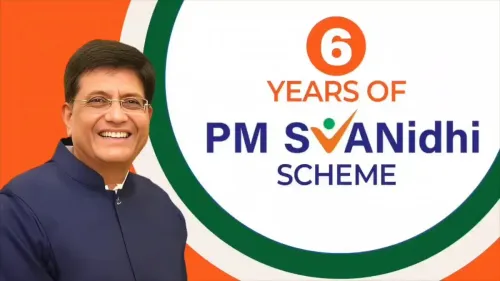
Goyal marks 6 years of PMSVANidhi, hails vendor empowerment
Synopsis
Union Commerce Minister Piyush Goyal on June 1, 2026 marked six years of PMSVANidhi, the central scheme that provides collateral-free loans and digital payment incentives to urban street vendors, calling it a cornerstone of India's informal-sector empowerment drive.
Key Takeaways
PMSVANidhi completed six years on June 1, 2026 , with Minister Piyush Goyal marking the anniversary on social media.
The scheme was launched in June 2020 under the Atmanirbhar Bharat package to support urban street vendors hit by COVID-19 lockdowns.
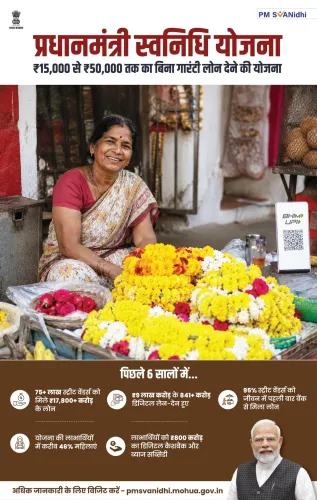
It offers collateral-free working capital loans starting at Rs 10,000 , with higher tranches available on timely repayment.
Digital transaction incentives via UPI and QR codes are a core feature, integrating vendors into the formal financial system.
The nodal ministry is the Ministry of Housing and Urban Affairs , which oversees vendor identification, loan disbursement, and digital adoption.
Updated six-year disbursement and repayment data from the ministry is awaited to verify the scheme's full impact.
Union Commerce and Industry Minister Piyush Goyal on Monday, June 1, 2026 marked six years of the Pradhan Mantri Street Vendor's AtmaNirbhar Nidhi (PMSVANidhi) scheme, crediting it with a pivotal role in making millions of hardworking street vendors self-reliant through collateral-free credit and digital payment adoption.
Context
Goyal's post, written in Hindi, stated: 'सड़क किनारे रेहड़ी-पटरी लगाने वाले लाखों परिश्रमी साथियों को आत्मनिrbhar बनाने में #6YearsOfPMSVANidhi योजना ने महत्वपूर्ण भूमिका निभाई है' — ('The PMSVANidhi scheme has played an important role in making lakhs of hardworking street-side vendors self-reliant'). He described the scheme's pillars — collateral-free loans, promotion of digital transactions, and dignified livelihoods — as 'the empowerment journey of a new India.'
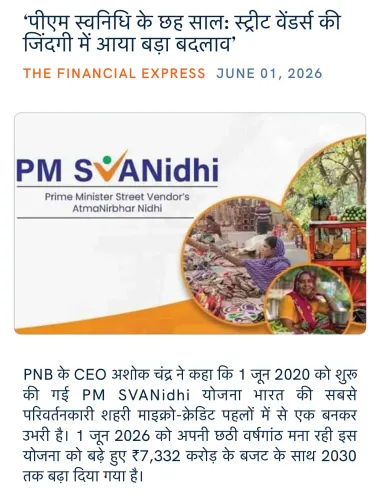
PMSVANidhi was launched in June 2020 under Prime Minister Narendra Modi's Atmanirbhar Bharat stimulus package, designed specifically to extend immediate financial relief to urban street vendors whose livelihoods were devastated by COVID-19 pandemic lockdowns.
Policy Backdrop
The scheme, administered by the Ministry of Housing and Urban Affairs, initially offered collateral-free working capital loans of up to Rs 10,000 to urban street vendors, with subsequent tranches and interest subsidies introduced to deepen financial inclusion. Vendors who repaid on time became eligible for enhanced credit limits in later tranches.
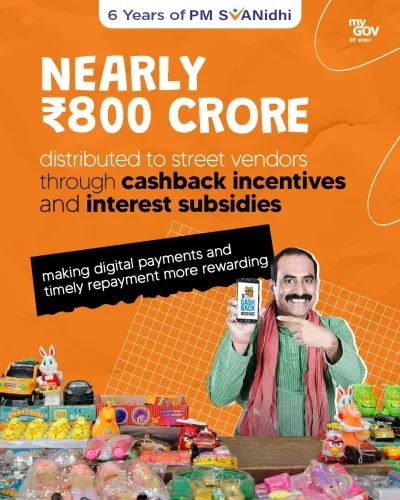
A defining feature of PMSVANidhi has been its integration of digital payment incentives — vendors transacting via UPI and QR codes received cashback rewards, nudging the informal sector toward formal financial behaviour. This aligns directly with the broader Atmanirbhar Bharat objective of bringing micro-entrepreneurs into the formal economy without imposing traditional banking requirements such as collateral or credit history.
The scheme represents a structural shift in how the central government approaches informal-sector welfare: rather than one-time transfers, it uses credit access and digital adoption as twin levers to build long-term financial resilience among urban poor households.
Stakeholders and Impact
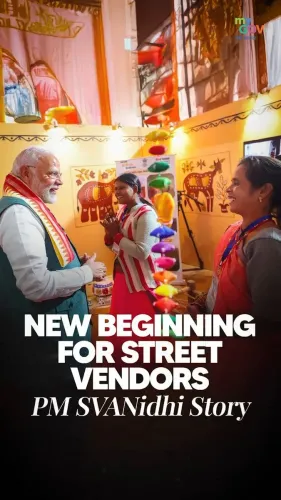
The primary beneficiaries are urban street vendors — those who operate roadside stalls, push-carts, and temporary setups across Indian cities — a demographic historically excluded from formal banking due to lack of collateral, documentation, or credit history. The scheme's collateral-free design directly addresses these barriers.
Beyond vendors themselves, the scheme has implications for urban local bodies responsible for vendor identification and certification, as well as public-sector banks and microfinance institutions that serve as lending partners. Digital payment platforms have also benefited from the scheme's explicit push toward cashless transactions among a previously cash-dependent segment.
What's Next
With the scheme completing six years, attention will turn to the Ministry of Housing and Urban Affairs for updated disbursement and repayment data that would substantiate the government's empowerment narrative with verified figures. Any announcements on scheme extension, enhanced loan tranches, or linkage with upcoming urban livelihood missions in future budget cycles will be closely watched by welfare economists and urban policy analysts.
The anniversary also sets the stage for the government to potentially announce a refreshed phase of PMSVANidhi, particularly as urban employment and informal-sector formalisation remain central to India's broader economic agenda heading into the next planning cycle.
Point of View
Particularly valuable in building political capital among urban informal workers ahead of policy review cycles. By framing collateral-free credit and digital payments as 'the empowerment journey of a new India,' the government is reinforcing the Atmanirbhar Bharat narrative as a living, expanding project rather than a pandemic-era emergency measure. The emphasis on dignified livelihoods also reflects a conscious pivot away from pure subsidy rhetoric toward productivity-linked inclusion. Whether the scheme's six-year data bears out these claims will be the real test of the narrative's durability.
NationPress
16 Sept 2026
Frequently Asked Questions
What is PMSVANidhi scheme and who is it for?
PMSVANidhi, or Pradhan Mantri Street Vendor's AtmaNirbhar Nidhi, is a central government scheme launched in June 2020 that provides collateral-free working capital loans to urban street vendors to help them sustain and grow their livelihoods.
How much loan does PMSVANidhi provide to street vendors?
The scheme initially offered loans of up to Rs 10,000 without any collateral requirement, with higher loan tranches available to vendors who repay on time, along with interest subsidies.
Which ministry runs the PMSVANidhi scheme?
The Ministry of Housing and Urban Affairs is the nodal ministry responsible for implementing PMSVANidhi, including vendor identification, loan disbursement through banking partners, and digital transaction incentives.
What is the connection between PMSVANidhi and Atmanirbhar Bharat?
PMSVANidhi was launched as part of Prime Minister Narendra Modi's Atmanirbhar Bharat stimulus package in June 2020, aimed at making informal-sector micro-entrepreneurs self-reliant by providing formal credit access without traditional banking requirements.
Why does PMSVANidhi promote digital payments for street vendors?
The scheme offers cashback rewards to vendors who transact via UPI and QR codes, incentivising adoption of digital payments and integrating previously cash-dependent street vendors into the formal financial ecosystem.