Goyal Marks 6 Years of PM SVANidhi, Cites 75 Lakh Vendors
Synopsis
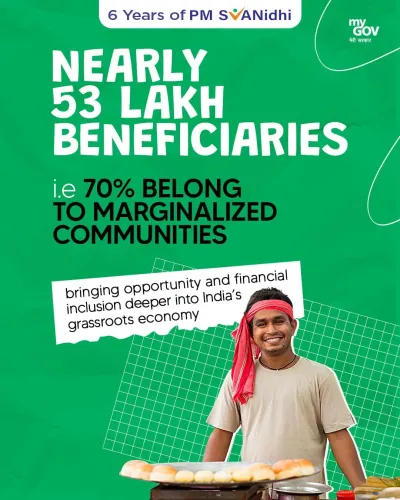
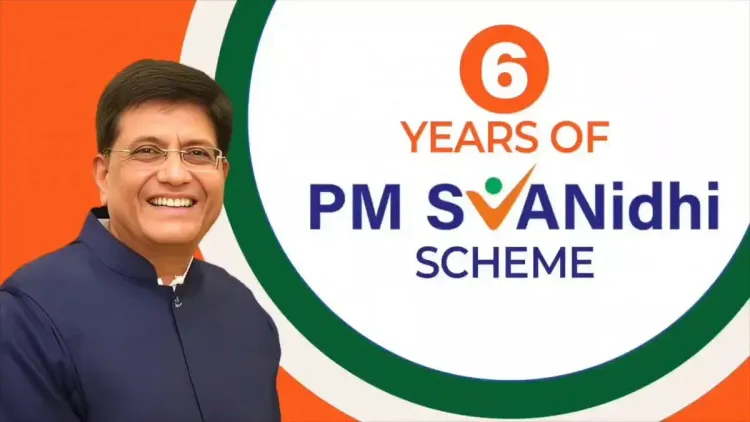
Union Minister Piyush Goyal on 1 June 2026 celebrated the sixth anniversary of PM SVANidhi, the central micro-credit scheme launched in 2020 to provide collateral-free loans to urban street vendors, stating the programme now reaches over 75 lakh beneficiaries across India.
Key Takeaways
PM SVANidhi completed six years on 1 June 2026 , marking its anniversary from its launch date of 1 June 2020.
Union Minister Piyush Goyal stated the scheme is benefiting over 75 lakh street vendors across urban India.
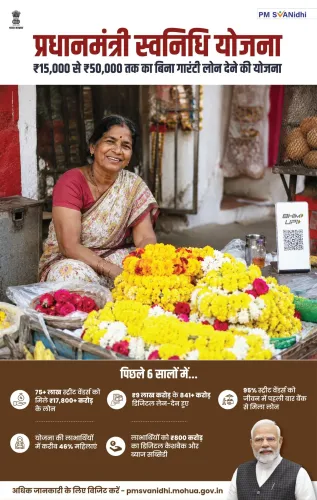
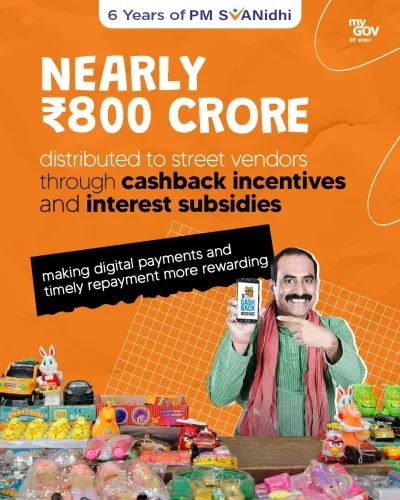
The scheme offers collateral-free working capital loans ranging up to Rs 50,000 , with interest subsidies for timely repayment.
It was launched under the Atmanirbhar Bharat Abhiyan by Prime Minister Narendra Modi to support vendors affected by COVID-19 lockdowns.
The Ministry of Housing and Urban Affairs implements the scheme through urban local bodies and digital lending platforms.
The scheme incentivises digital transactions, helping vendors build formal credit histories for the first time.
Union Commerce and Industry Minister Piyush Goyal on Monday, 1 June 2026, marked the sixth anniversary of the PM SVANidhi scheme, noting that the flagship micro-credit programme is now benefiting over 75 lakh street vendors across urban India.
Context
The Pradhan Mantri Street Vendor's AtmaNirbhar Nidhi (PM SVANidhi) was launched on 1 June 2020 as part of the Atmanirbhar Bharat Abhiyan, the government's emergency economic package in response to COVID-19 lockdowns that had left millions of informal street vendors without income or working capital. The scheme was designed to provide collateral-free loans, beginning at Rs 10,000 and scaling up to Rs 50,000, to help vendors restart their livelihoods through formal credit channels.
Prime Minister Narendra Modi had positioned the scheme as a direct intervention for one of urban India's most economically vulnerable groups — self-employed micro-entrepreneurs who operate outside the formal banking net. The nodal ministry overseeing implementation is the Ministry of Housing and Urban Affairs, which works through urban local bodies and digital lending platforms to disburse and track loans.
Policy Backdrop
PM SVANidhi sits within a broader government framework of targeted financial inclusion for the unorganised sector. It offers an interest subsidy on timely repayment and incentivises digital transactions, nudging beneficiaries toward formal financial behaviour. The scheme is often cited alongside PM Mudra Yojana as part of a layered credit-access architecture for micro and small entrepreneurs.
Over its six years, the scheme has expanded its loan tranches and onboarded a growing network of scheduled commercial banks, microfinance institutions, and small finance banks as lending partners. Anniversary milestones have typically been used by the government to release updated beneficiary data and signal possible expansions, though no formal announcement was attached to Goyal's post.
Stakeholders and Impact
The scheme's primary beneficiaries are urban street vendors — a category that includes fruit and vegetable sellers, tea stall operators, cobblers, and roadside food vendors — who collectively form a significant segment of India's informal urban workforce. Access to formal credit, even at small ticket sizes, can reduce their dependence on high-interest moneylenders and help them build a credit history for the first time.
Urban local bodies play a central role in identifying and certifying eligible vendors, issuing letters of recommendation that unlock loan eligibility. The scheme's reach across more than 75 lakh beneficiaries, as cited by Goyal, reflects the scale at which ground-level municipal machinery has been engaged in a welfare-to-credit delivery model.
What's Next
Observers will watch for any formal extension of the scheme's mandate or enhancement of loan ceilings in upcoming urban policy or budget announcements. Possible convergence with other credit programmes and the release of updated repayment and digital-transaction data from the Ministry of Housing and Urban Affairs will be key indicators of the scheme's long-term sustainability. As India's urban informal economy continues to grow, the government's ability to deepen financial inclusion through instruments like PM SVANidhi will remain a closely tracked policy metric.
Point of View
A constituency that is numerically significant but often overlooked in macro-economic policy narratives. The emphasis on the 75 lakh figure is a deliberate framing choice — scale communicates legitimacy and reach in Indian welfare politics. Positioning a Commerce Minister, rather than the Housing Ministry, as the voice of this anniversary also suggests a cross-ministerial effort to associate economic empowerment messaging with the broader Atmanirbhar Bharat brand. As the government approaches the next budget cycle, such milestone communications often precede scheme expansions or enhanced credit-ceiling announcements.
NationPress
19 Sept 2026
Frequently Asked Questions
What is PM SVANidhi scheme?
PM SVANidhi, or Pradhan Mantri Street Vendor's AtmaNirbhar Nidhi, is a central government micro-credit scheme that provides collateral-free working capital loans of up to Rs 50,000 to urban street vendors, along with interest subsidies for timely repayment and incentives for digital transactions.
When was PM SVANidhi launched?
PM SVANidhi was launched on 1 June 2020 by Prime Minister Narendra Modi as part of the Atmanirbhar Bharat Abhiyan to help street vendors recover from income losses caused by COVID-19 lockdowns.
How many beneficiaries does PM SVANidhi have?
According to a post by Union Minister Piyush Goyal on 1 June 2026, PM SVANidhi is benefiting over 75 lakh street vendors across urban India.
Who implements PM SVANidhi?
The Ministry of Housing and Urban Affairs is the nodal ministry for PM SVANidhi. It is implemented on the ground through urban local bodies, which identify and certify eligible vendors, and through a network of banks, microfinance institutions, and small finance banks.
What loans are available under PM SVANidhi?
PM SVANidhi offers collateral-free loans starting at Rs 10,000, with subsequent tranches going up to Rs 50,000 for vendors who repay on time. The scheme also provides an interest subsidy and rewards for adopting digital payment methods.