Raja Ram Mohan Roy death anniversary: Leaders hail his women empowerment legacy
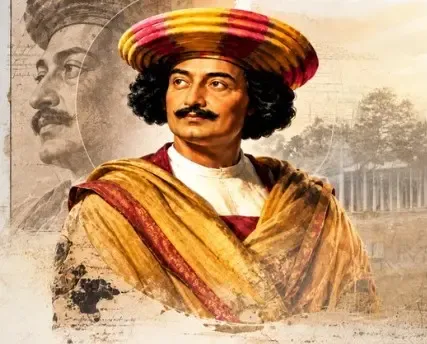
Synopsis
On Raja Ram Mohan Roy's death anniversary, Union Ministers and Chief Ministers from across India converged on one message: the 19th-century reformer's war on Sati and push for women's education remain as relevant as ever. The breadth of political voices — from Delhi to Uttar Pradesh to Rajasthan — signals how Roy's legacy transcends ideological boundaries nearly two centuries after his death.
Key Takeaways
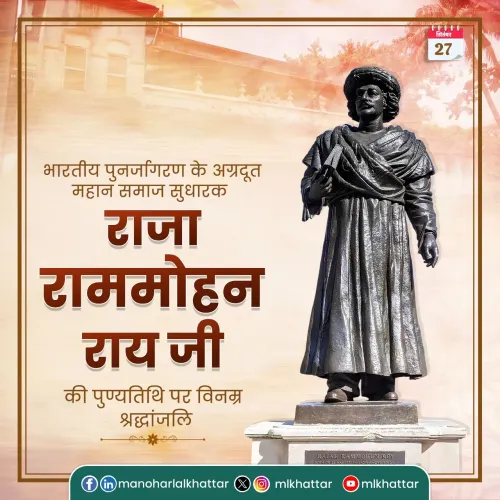
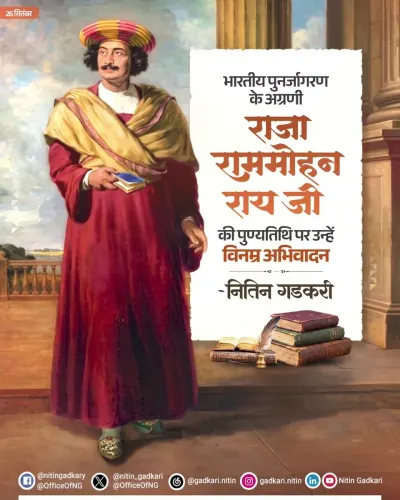
Union Minister Nitin Gadkari and Union Minister Manohar Lal paid tribute to Raja Ram Mohan Roy on his death anniversary on 27 September .
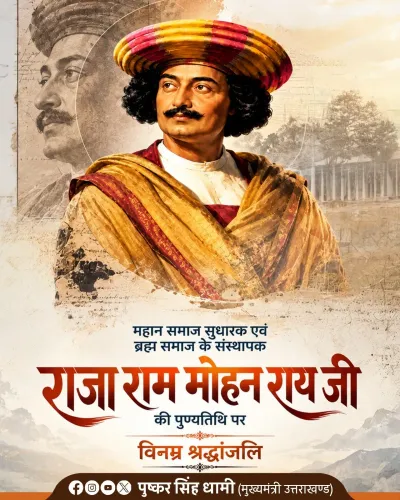
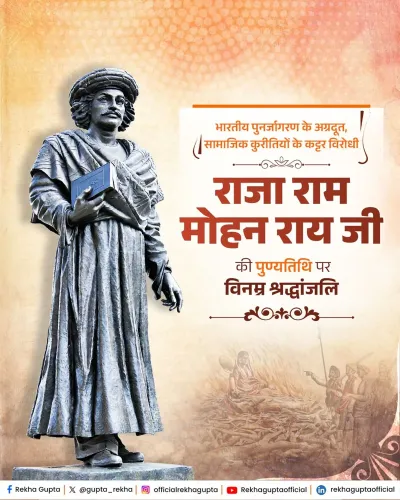
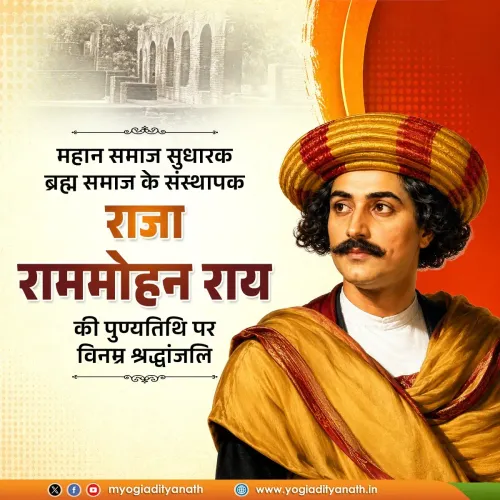
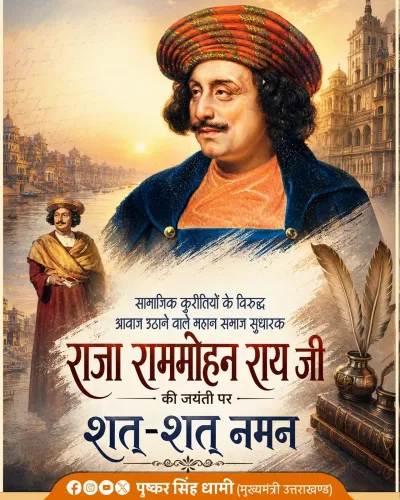
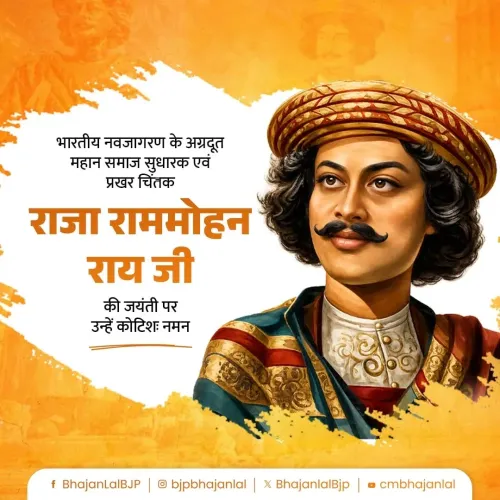
Delhi CM Rekha Gupta , UP CM Yogi Adityanath , Rajasthan CM Bhajanlal Sharma , and Uttarakhand CM Pushkar Singh Dhami also offered homage.
Leaders collectively praised Roy's 'unparalleled contribution' to women's empowerment and his fight against Sati .
Roy founded the Brahmo Samaj in 1828 and was pivotal in securing the abolition of Sati in 1829 .
Multiple leaders posted tributes on social media platform X , highlighting Roy's journalism and progressive vision.
Union Minister Nitin Gadkari, Union Minister Manohar Lal, and several Chief Ministers on Sunday, 27 September paid solemn tributes to social reformer Raja Ram Mohan Roy on his death anniversary, collectively honouring him as the 'pioneer' of the Indian renaissance and crediting him with making an 'unparalleled contribution' to women's empowerment and the abolition of regressive social practices.
Gadkari and Manohar Lal Lead Tributes
In a post on social media platform X, Union Minister Nitin Gadkari wrote: 'In the field of social and religious renaissance in India, reformer Raja Ram Mohan Roy ji holds a distinctive place. His journalism played the role of showing the right direction to the movements of the Indian freedom struggle. Humble salutations to him on his death anniversary today.'
Union Minister Manohar Lal described Roy as the pioneer of the Indian Renaissance, a great social reformer, educationist, and founder of the Brahmo Samaj. 'The work he did for education and women's empowerment is unparalleled. Through his welfare-oriented thoughts and farsightedness, he made an unparalleled contribution to freeing society from superstition and evil practices; that will always remain inspiring,' the Minister wrote on X.
Chief Ministers Remember Roy's Fight Against Sati
Delhi Chief Minister Rekha Gupta specifically remembered Roy's relentless struggle against the practice of Sati, stating: 'From the struggle against evil practices like Sati to the promotion of women's dignity and the spread of modern education, he freed society from rigid traditions and showed the path of new consciousness and progress. His vision of building an empowered India through social reform continues to inspire us even today.'
Uttar Pradesh Chief Minister Yogi Adityanath called Roy 'an eradicator of social evils' who 'empowered women and was a carrier of modern ideas,' adding that Roy's establishment of the Brahmo Samaj and his progressive vision towards nation-building 'remain exemplary for all of us.'
Rajasthan and Uttarakhand CMs Add Their Voice
Rajasthan Chief Minister Bhajanlal Sharma said Roy's 'contribution to the eradication of evil practices like Sati, the promotion of women's education, and laying the foundation of modern ideas is unforgettable,' and that his thoughts 'will forever inspire us all to build an egalitarian and progressive society.'
Uttarakhand Chief Minister Pushkar Singh Dhami echoed those sentiments, crediting Roy's 'tireless efforts for women's rights, education, and social equality' with infusing 'a new consciousness into Indian society.'
Roy's Enduring Legacy
Raja Ram Mohan Roy, widely regarded as the 'Father of the Indian Renaissance,' was instrumental in the abolition of Sati in 1829 under British India's Bengal Sati Regulation Act, one of the landmark legislative victories of India's early social reform movement. His founding of the Brahmo Samaj in 1828 laid the intellectual groundwork for a rationalist, monotheistic social order that challenged caste hierarchy and religious orthodoxy. Notably, the tributes on his death anniversary this year arrived from leaders across party lines and multiple states, underscoring the cross-ideological reverence his legacy commands in contemporary India.
Point of View
But the uniformity of the messaging — women's empowerment, abolition of Sati, modern education — risks reducing a genuinely radical thinker to a safe, ceremonial symbol. Roy challenged religious authority and caste hierarchy in ways that would be contested if proposed today. The more revealing question is not who paid tribute, but whether any policy action accompanied the words — on women's property rights, child marriage, or access to education — the actual agenda Roy fought for. Symbolic remembrance without policy accountability is, at best, incomplete homage.
NationPress
27 Sept 2026
Frequently Asked Questions
Who was Raja Ram Mohan Roy and why is he remembered?
Raja Ram Mohan Roy was a 19th-century Bengali social reformer widely regarded as the 'Father of the Indian Renaissance.' He is remembered for founding the Brahmo Samaj in 1828, campaigning successfully for the abolition of Sati in 1829, and championing women's education and modern rational thought in India.
When is Raja Ram Mohan Roy's death anniversary observed?
Raja Ram Mohan Roy's death anniversary is observed on 27 September. In 2026, tributes were paid on Sunday, 27 September, by Union Ministers and Chief Ministers from several states.
Which leaders paid tribute to Raja Ram Mohan Roy in 2026?
Union Ministers Nitin Gadkari and Manohar Lal, Delhi Chief Minister Rekha Gupta, Uttar Pradesh Chief Minister Yogi Adityanath, Rajasthan Chief Minister Bhajanlal Sharma, and Uttarakhand Chief Minister Pushkar Singh Dhami all paid tribute on 27 September 2026.
What was Raja Ram Mohan Roy's contribution to women's empowerment?
Roy is credited with being the primary force behind the abolition of the Sati practice in 1829 under the Bengal Sati Regulation Act, advocating for women's right to education, and opposing social customs that denied women inheritance and dignity. Leaders on his 2026 death anniversary described his contribution as 'unparalleled.'
What is the Brahmo Samaj and who founded it?
The Brahmo Samaj is a rationalist and monotheistic socio-religious reform movement founded by Raja Ram Mohan Roy in 1828. It rejected idol worship, casteism, and religious orthodoxy, laying the intellectual foundation for India's 19th-century social reform movement.