SC judges strength raised to 38: Lok Sabha passes amendment bill
Synopsis
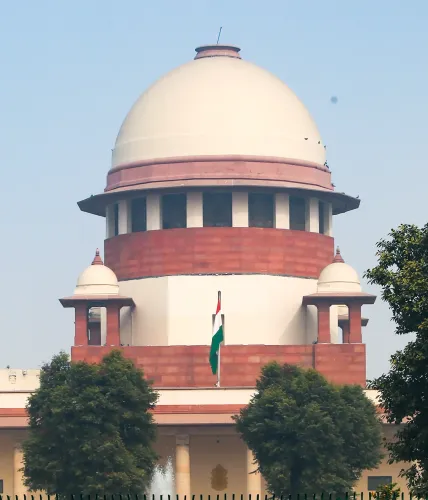
Parliament moved to permanently expand the Supreme Court bench from 34 to 38 judges on Monday — converting a May 2026 ordinance into law — even as Opposition disruptions over the Jantar Mantar police action forced an early adjournment of the Lok Sabha. The bench expansion is the most significant structural change to the apex court's composition in years.
Key Takeaways
The Lok Sabha passed the Supreme Court (Number of Judges) Amendment Bill, 2026 by voice vote on 3 August 2026 .
The sanctioned strength of Supreme Court judges rises from 33 to 37 (excluding CJI), taking total bench strength from 34 to 38 .
The Bill replaces an ordinance promulgated in May 2026 to address rising case pendency at the apex court.
Union Law Minister Arjun Ram Meghwal tabled the legislation amid loud Opposition sloganeering over Jantar Mantar police action.
The Bankers' Books Evidence Bill, 2026 and the Indian Statistical Institute Bill were also introduced in the House on the same day.
The Lok Sabha was adjourned for the remainder of the day after disruptions persisted despite appeals by the presiding officer.
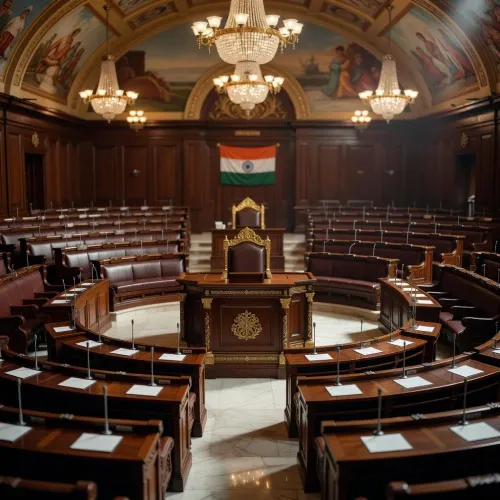
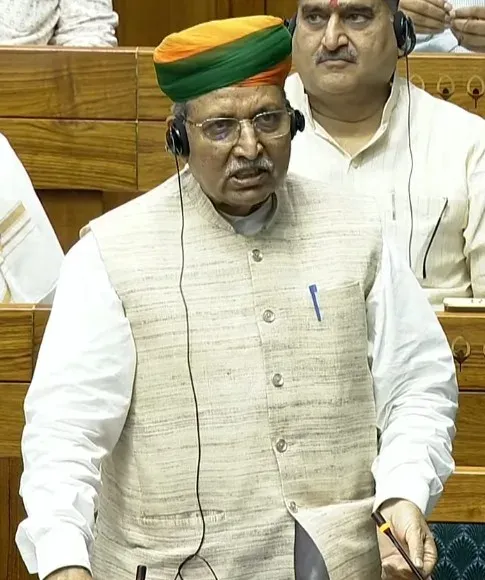
The Lok Sabha on Monday, 3 August passed the Supreme Court (Number of Judges) Amendment Bill, 2026, through a voice vote, clearing the way to expand the sanctioned strength of judges at the apex court from 34 to 38 — including the Chief Justice of India. The legislation, tabled by Union Law and Justice Minister Arjun Ram Meghwal, was passed even as Opposition members continued to disrupt proceedings with loud sloganeering, demanding accountability from Union Home Minister Amit Shah over police action at the Jantar Mantar protests.
What the Bill Changes
Under the amended legislation, the sanctioned strength of Supreme Court judges — excluding the Chief Justice — rises from 33 to 37, taking the total bench strength to 38. The Bill replaces the Supreme Court (Number of Judges) Amendment Ordinance, 2026, which was promulgated in May 2026 as an emergency executive measure to address the judiciary's mounting workload. The formal legislation now converts that ordinance into a permanent statutory provision.
The stated rationale is the growing pendency of cases before the apex court. India's Supreme Court has long grappled with a backlog running into tens of thousands of cases, and expanding bench strength is seen as a structural response to that institutional pressure.
Opposition Disruptions Overshadow Proceedings
The passage came amid sustained chaos on the floor of the House. Krishna Prasad Tenneti, who was presiding over the session, made repeated appeals for order, urging members to allow legislative business to proceed. Those appeals went largely unheeded. When disruptions showed no sign of abating, the Chair adjourned the Lok Sabha for the remainder of the day.
Opposition MPs were pressing for a statement from Home Minister Amit Shah on the police action taken against demonstrators at Jantar Mantar — a demand the treasury benches did not concede during the session.
Other Bills Introduced During the Day
Union Finance Minister Nirmala Sitharaman introduced the Bankers' Books Evidence Bill, 2026, which proposes to modernise the legal framework governing evidence from bankers' books, aligning it with contemporary digital banking practices and the evolving digital financial ecosystem.
Separately, Union Minister of State (Independent Charge) for Statistics and Programme Implementation Rao Inderjit Singh introduced the Indian Statistical Institute (ISI) Bill in the House. The proposed legislation has already drawn strong resistance from sections of the academic community and students of the Indian Statistical Institute, though specific objections were not detailed on the floor during Monday's disrupted session.
What Comes Next
With the amendment bill now cleared by the Lok Sabha, it will need to pass the Rajya Sabha before receiving Presidential assent. The government is expected to schedule the upper house vote in the ongoing session. Once enacted, the Centre will be able to appoint additional judges to fill the expanded bench — a process that itself depends on recommendations from the Supreme Court Collegium.
Point of View
Listing practices, and the collegium's pace of filling existing vacancies, not just the sanctioned ceiling. Notably, Monday's session illustrated how the government has learned to pass legislation through the noise: the voice-vote mechanism, while procedurally valid, bypasses the recorded scrutiny that contentious judicial-reform bills arguably warrant. The ISI Bill's introduction — amid academic resistance that received no floor debate time — is a pattern worth watching.
NationPress
17 Sept 2026
Frequently Asked Questions
What does the Supreme Court (Number of Judges) Amendment Bill, 2026 do?
The Bill increases the sanctioned strength of Supreme Court judges from 33 to 37, excluding the Chief Justice of India, raising the total bench strength from 34 to 38. It converts into permanent law an ordinance the government had promulgated in May 2026 to address rising case pendency at the apex court.
Why was the Supreme Court bench strength increased?
The stated reason is the growing backlog of cases and increasing workload before the Supreme Court. Expanding the number of judges is intended as a structural measure to help the court clear its pending docket more effectively.
Why was the Lok Sabha adjourned on 3 August 2026?
The House was adjourned for the remainder of the day after Opposition members continued to disrupt proceedings with sloganeering, demanding a statement from Home Minister Amit Shah on police action during the Jantar Mantar protests. The presiding officer's repeated appeals for order went unheeded.
What other bills were introduced in Lok Sabha on 3 August?
Union Finance Minister Nirmala Sitharaman introduced the Bankers' Books Evidence Bill, 2026, aimed at modernising the legal framework for digital banking evidence. Minister of State Rao Inderjit Singh also introduced the Indian Statistical Institute Bill, which has drawn resistance from the academic community and ISI students.
What happens next after the Lok Sabha passes the SC judges bill?
The Bill must now be passed by the Rajya Sabha and then receive Presidential assent before it becomes law. Once enacted, additional judges can be appointed to the expanded bench, subject to recommendations from the Supreme Court Collegium.