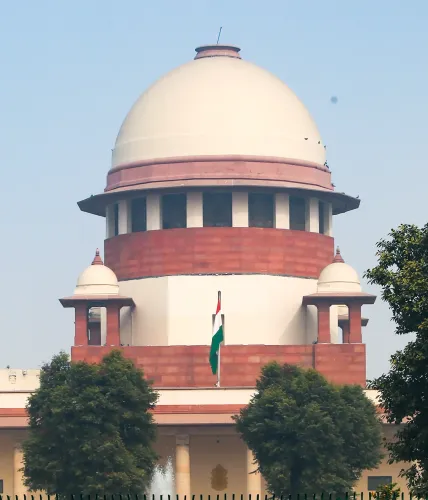
Supreme Court judge strength raised from 33 to 37 via ordinance

Synopsis
For the first time in seven years, India's Supreme Court is getting more judges. President Droupadi Murmu's ordinance adds four positions — raising sanctioned strength to 37 (38 including the CJI) — a structural response to the apex court's chronic case backlog that procedural fixes have failed to clear.
Key Takeaways
President Droupadi Murmu promulgated the Supreme Court (Number of Judges) Amendment Ordinance, 2026 on 17 May 2026 .
Sanctioned judge strength rises from 33 to 37 , excluding the Chief Justice of India; total bench strength is now 38 .
The Union Cabinet had cleared the proposal on 5 May 2026 under Prime Minister Narendra Modi .
The last expansion was in 2019 , when judge strength was raised from 30 to 33 .
The ordinance amends the Supreme Court (Number of Judges) Act, 1956 and takes immediate effect.
A corresponding amendment bill must be passed in Parliament to make the change permanent.
President Droupadi Murmu has promulgated the Supreme Court (Number of Judges) Amendment Ordinance, 2026, raising the sanctioned strength of judges at the apex court from 33 to 37, excluding the Chief Justice of India. The move, announced on 17 May 2026, brings the total bench strength — including the Chief Justice — to 38 judges, and is aimed at tackling the Supreme Court's mounting case backlog.
What the Ordinance Does
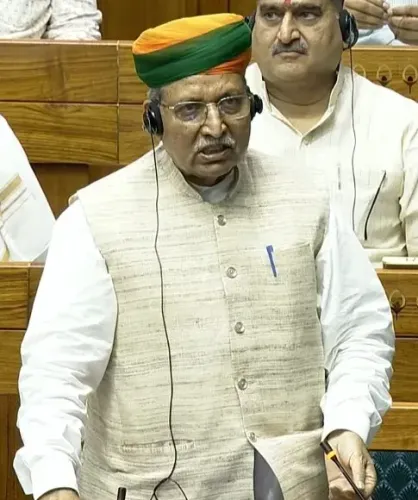
The ordinance amends the Supreme Court (Number of Judges) Act, 1956, adding four new judicial positions to the apex court's sanctioned strength. Union Minister of State (Independent Charge) for Law and Justice Arjun Ram Meghwal announced the development through a post on X, quoting the President's order verbatim.
According to the government, the expansion is a direct response to the increasing workload of the apex court and the rising volume of pending cases. The additional positions are expected to improve the pace of disposal of matters and reduce hearing delays.
Cabinet Clearance and Legislative Background
The ordinance follows a Union Cabinet decision chaired by Prime Minister Narendra Modi on 5 May 2026, which had cleared a proposal to introduce the Supreme Court (Number of Judges) Amendment Bill, 2026 in Parliament. With Parliament not in session, the government opted for the ordinance route to give the expansion immediate legal effect.
The Supreme Court (Number of Judges) Act was originally enacted in 1956 and has been revised several times since to keep pace with the judiciary's growing caseload. The last such revision came in 2019, when Parliament raised the judge count from 30 to 33 through the Supreme Court (Number of Judges) Amendment Act, 2019.
Why Pendency Demands Action
The Supreme Court has long grappled with a significant backlog of cases, a problem that cascades down to High Courts and district courts across the country. A larger bench strength allows the Chief Justice to constitute more benches simultaneously, directly accelerating the hearing of admission matters, constitutional questions, and long-pending appeals.
Notably, this is the first expansion in judicial strength at the Supreme Court in seven years, underscoring both the scale of the pendency problem and the political will to address it through structural means rather than procedural fixes alone.
What Comes Next
The ordinance takes immediate effect, but the government will need to introduce and pass the corresponding amendment bill when Parliament reconvenes to give the change permanent statutory standing. Judicial appointments to the four new positions will follow the existing collegium process, and the pace of those appointments will ultimately determine how quickly the expanded bench translates into faster justice delivery.
Point of View
Or whether they join the long queue of positions approved on paper but vacant in practice. An ordinance signals urgency; the appointment calendar will reveal whether that urgency is genuine.
NationPress
23 Oct 2026
Frequently Asked Questions
What is the Supreme Court (Number of Judges) Amendment Ordinance, 2026?
It is an ordinance promulgated by President Droupadi Murmu that raises the sanctioned strength of Supreme Court judges from 33 to 37, excluding the Chief Justice of India, bringing the total bench to 38. It amends the Supreme Court (Number of Judges) Act, 1956, and takes immediate legal effect.
Why has the government increased the number of Supreme Court judges?
The government cited the apex court's increasing workload and the rising volume of pending cases as the primary reasons. A larger bench allows more simultaneous sittings, which is expected to speed up disposal of cases and reduce hearing delays.
When was the Supreme Court's judge strength last increased before this?
The last expansion was in 2019, when Parliament passed the Supreme Court (Number of Judges) Amendment Act, 2019, raising the count from 30 to 33, excluding the Chief Justice of India. The latest ordinance is the first increase in seven years.
Who announced the ordinance and how?
Union Minister of State for Law and Justice Arjun Ram Meghwal announced the development through a post on X, sharing the text of President Murmu's order.
Will the ordinance need parliamentary approval?
Yes. An ordinance has immediate legal effect but lapses if the corresponding bill is not passed by Parliament within six weeks of its next session. The government had already cleared the Supreme Court (Number of Judges) Amendment Bill, 2026 in Cabinet on 5 May 2026 for introduction in Parliament.