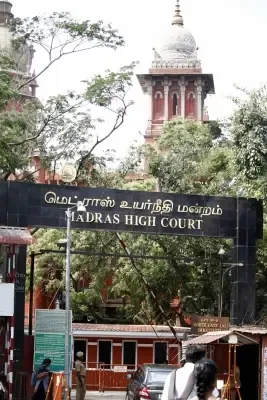
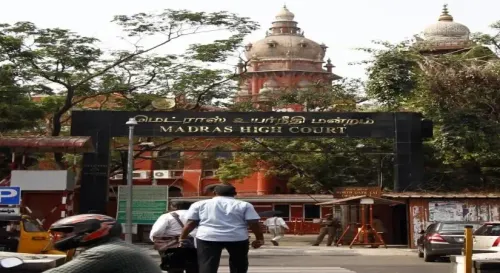
Madras HC dismisses KN Nehru's review plea in ED-linked corruption FIR case
Synopsis
The Madras High Court has shut the door on ex-Tamil Nadu Minister KN Nehru's bid to quash the directive for a corruption FIR, with the new state government — unlike its predecessor — actively backing prosecution. The case is now a litmus test for whether Tamil Nadu's post-2026 election political reset translates into genuine accountability for senior leaders.
Key Takeaways
The Madras High Court on 26 October 2026 dismissed former Tamil Nadu Minister K.N.
Nehru's review petition against an order to register a corruption FIR.
The bench of Chief Justice S.A.
Dharmadhikari and Justice G.
Arul Murugan rejected his challenge to the court's earlier February directive to the DVAC .
The FIR is based on materials shared by the Enforcement Directorate (ED) ; the DVAC has already registered the case.
The new government, following the 2026 Assembly elections , reversed the previous administration's stance and withdrew its own review petition.
Section 362 of the Code of Criminal Procedure was cited to argue High Courts cannot review criminal orders, a submission the bench accepted.
The Madras High Court on Monday, 26 October 2026, dismissed a review petition filed by former Tamil Nadu Minister and senior Dravida Munnetra Kazhagam (DMK) leader K.N. Nehru, challenging an earlier court directive to register a corruption case against him based on materials furnished by the Enforcement Directorate (ED). The bench of Chief Justice S.A. Dharmadhikari and Justice G. Arul Murugan rejected the plea seeking reconsideration of the court's February order to the Directorate of Vigilance and Anti-Corruption (DVAC) to register an FIR forthwith.
Background and the February Order
Nehru and his brothers had contested the February directive, arguing they were not afforded an opportunity to be heard before it was issued — a breach, they maintained, of the principles of natural justice. Senior advocate Siddharth Luthra, appearing for Nehru, submitted that the right to be heard prior to an FIR registration order being passed was a foundational procedural safeguard, and that a violation of natural justice warranted reconsideration regardless of objections to the maintainability of a review in criminal proceedings.
The State Government's Shifting Position
The state government had initially also sought a review of the February order. However, its stance changed following the 2026 Assembly elections, which brought a new administration to power. Advocate General Vijay Narayan subsequently informed the court that the DVAC had already registered an FIR against Nehru, and that the new government intended to withdraw its own review petition.
The bench questioned how the FIR had been registered when the State had previously undertaken not to initiate action. Narayan responded that the assurance given by the former Advocate General — acting on the previous government's instructions — did not legally bind the incoming administration. He further alleged that the previous government had attempted to delay prosecution and shield a senior minister from scrutiny.
Legal Arguments on Review Powers
Senior advocate Siddhartha Dave, appearing for the DVAC, countered that the law did not require a proposed accused to be heard before a court directed the registration of an FIR. He cited Section 362 of the Code of Criminal Procedure, arguing that courts — including High Courts — were statutorily barred from reviewing decisions in criminal matters. Dave also raised a standing objection, questioning Nehru's entitlement to seek review of an order originally passed on another person's petition.
Narayan additionally contended that Nehru was aware of the proceedings but chose to wait until the order was delivered before mounting a challenge — a sequence of events, he argued, that undermined the natural justice claim.
Court's Decision and Interim Protections
The bench had earlier reserved its verdict after hearing all parties and extended interim protection to Nehru at that stage. It also restrained the State from taking any action against Nehru pending the outcome of the hearing. On Monday, the court dismissed Nehru's review petition, ending that line of challenge. With the dismissal now on record, the DVAC-registered FIR against the former minister stands, and the investigation is expected to proceed. How the new administration pursues the case will be closely watched, given its political and legal significance for accountability norms in Tamil Nadu.
Point of View
Only to accelerate once the political wind shifts. The previous Tamil Nadu government's undertaking not to act — later disowned by the new administration — raises uncomfortable questions about how assurances given in court on behalf of a government should be treated when that government changes. The case also clarifies a critical procedural point: under Section 362 of the CrPC, High Courts cannot review criminal orders, limiting the avenues available to accused persons seeking to forestall FIR registration through the courts. Whether this sets a template for faster accountability in Tamil Nadu, or merely reflects the cyclical nature of political prosecution, remains to be seen.
NationPress
26 Oct 2026
Frequently Asked Questions
Why did the Madras High Court dismiss KN Nehru's review petition?
The court dismissed Nehru's petition because it found no valid ground to reconsider its February order directing the DVAC to register a corruption FIR. The DVAC had argued that Section 362 of the Code of Criminal Procedure bars High Courts from reviewing decisions in criminal matters, a position the bench accepted.
What is the corruption case against KN Nehru about?
The case involves corruption allegations against former Tamil Nadu Minister K.N. Nehru, with the Enforcement Directorate sharing materials that prompted the Madras High Court to direct the DVAC to register an FIR. The specific nature of the alleged corruption is linked to the ED's investigation, though detailed charges were not disclosed in court proceedings reported so far.
Why did the Tamil Nadu government change its stand in court?
The state government's position shifted after the 2026 Assembly elections brought a new administration to power. The new government's Advocate General informed the court that the previous administration's assurance not to act against Nehru did not bind the incoming government, and subsequently withdrew the earlier review petition.
What happens next after the court's dismissal?
With Nehru's review petition dismissed and the DVAC FIR already registered, the investigation is expected to proceed. The court had earlier restrained the state from acting against Nehru during the hearing; that protection no longer stands following Monday's dismissal.
What did Nehru's legal team argue in his defence?
Senior advocate Siddharth Luthra argued that Nehru had a right to be heard before the court directed the FIR's registration, and that denying this right violated principles of natural justice. He maintained that this procedural violation justified reconsideration of the February order.