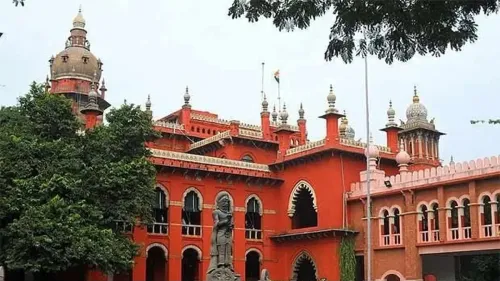
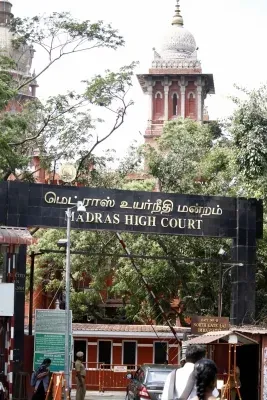
Madras HC rejects Anbil Mahesh's anticipatory bail in ₹100 crore school corruption case

Synopsis
The Madras High Court has rejected former Tamil Nadu Education Minister Anbil Mahesh's bid for anticipatory bail in an alleged ₹100 crore corruption case — a case where the prosecution added Prevention of Corruption Act charges and named him an accused after initially targeting a private schools association. With a separate FIR-quashing petition pending, Mahesh's legal battle is far from over, but Monday's ruling shuts a critical escape hatch.
Key Takeaways
The Madras High Court on 26 October 2025 dismissed former Tamil Nadu Education Minister Anbil Mahesh's anticipatory bail petition.
The case involves alleged corruption worth ₹100 crore linked to the granting of recognition and approvals to private schools in Tamil Nadu.
Lakshminarayan rejected the plea after Mahesh was named an accused under Sections 7 and 12 of the Prevention of Corruption Act .
The case originated from a complaint by a former general secretary of the Tamil Nadu Private Schools Association against its president B.T.
Mahesh separately seeks to quash the FIR against him; that petition remains pending before the high court.
The Madras High Court on Monday, 26 October 2025, dismissed the anticipatory bail petition of former Tamil Nadu Education Minister Anbil Mahesh in an alleged ₹100 crore corruption case tied to the granting of recognition, licences, and approvals to private schools in the state. Justice V. Lakshminarayan rejected the plea after the prosecution added provisions of the Prevention of Corruption Act to the case and named Mahesh as an accused.
Background of the Case
The case traces back to a complaint filed by a former general secretary of the Tamil Nadu Private Schools Association against its president, B.T. Arasukumar, and other office-bearers. The complainant alleged that association representatives collected money from private schools as membership and subscription fees, promising to secure no-objection certificates, licences, recognition, and renewals — but failed to deliver on those assurances.
Police initially registered the FIR under Sections 316(5) and 318(4), read with Section 3(5), of the Bharatiya Nyaya Sanhita, with allegations at that stage directed at the association's president and other office-bearers. The case's scope widened significantly when the prosecution submitted an alteration report before the Metropolitan Magistrate, adding offences under Sections 7 and 12 of the Prevention of Corruption Act and naming Mahesh as a fresh accused.
What Mahesh Argued in Court
Contesting his inclusion in the case, Mahesh maintained that there was no material on record to establish that he had personally received any illegal gratification. He argued that no specific overt act had been attributed to him to substantiate his alleged involvement, and that the complaint and witness statements themselves indicated that certain individuals had merely invoked his name while collecting funds from private schools — a claim he said could not be equated with personal wrongdoing.
He also questioned the timing of the original complaint, contending that it was lodged after the elections and the change of government, and suggested that internal differences between the complainant and the association president may have driven the allegations. The court, however, was not persuaded and dismissed his anticipatory bail application.
Parallel Legal Challenge
Separately, Mahesh has filed a petition before the Madras High Court seeking to quash the FIR registered against him. That challenge remains pending. The dismissal of anticipatory bail means Mahesh now faces a heightened risk of arrest as the corruption investigation proceeds, though the quashing petition could potentially provide relief if the court finds merit in it.
Significance and What Comes Next
This is a significant legal setback for the former minister, who served in the DMK-led government in Tamil Nadu. The Prevention of Corruption Act provisions carry serious implications, including mandatory custodial investigation in certain circumstances. Notably, the case also shines a light on the broader ecosystem of private school regulation in the state, where critics have long alleged that approvals and licences are susceptible to rent-seeking. The outcome of the quashing petition before the high court will be the next critical development to watch.
Point of View
But also removes a protective shield for the accused. The timing angle — that the complaint emerged post-election — is a legitimate point that the quashing petition will have to address squarely. Tamil Nadu's private school licensing ecosystem has long operated in a grey zone, and this case may force greater transparency, regardless of how the criminal proceedings conclude.
NationPress
26 Oct 2026
Frequently Asked Questions
Why did the Madras High Court reject Anbil Mahesh's anticipatory bail?
The Madras High Court dismissed Anbil Mahesh's anticipatory bail petition on 26 October 2025 because the court was not persuaded by his arguments that no specific overt act had been attributed to him and that others had merely used his name while collecting funds. Justice V. Lakshminarayan rejected the plea in the ₹100 crore alleged corruption case related to private school approvals in Tamil Nadu.
What is the ₹100 crore corruption case against Anbil Mahesh?
The case stems from a complaint by a former general secretary of the Tamil Nadu Private Schools Association, alleging that association representatives collected money from private schools by promising no-objection certificates, licences, and renewals that were never delivered. The prosecution later added Prevention of Corruption Act charges and named Mahesh, the former Education Minister, as an accused.
What are the specific legal sections invoked against Anbil Mahesh?
The FIR was initially registered under Sections 316(5) and 318(4), read with Section 3(5), of the Bharatiya Nyaya Sanhita. The prosecution subsequently added Sections 7 and 12 of the Prevention of Corruption Act through an alteration report before the Metropolitan Magistrate, directly implicating Mahesh.
What happens next for Anbil Mahesh after this ruling?
Mahesh has separately filed a petition before the Madras High Court to quash the FIR against him, which remains pending. The rejection of anticipatory bail means he faces a heightened risk of arrest while that petition is heard. The outcome of the quashing petition will be the next significant legal milestone.
Why does Mahesh contest the timing of the complaint?
Mahesh argued that the original complaint was filed after the elections and the change of government in Tamil Nadu, suggesting a political motive. He also contended that internal differences between the complainant and the Tamil Nadu Private Schools Association president may have driven the allegations rather than genuine evidence of wrongdoing on his part.