Maharashtra CM Fadnavis orders Blockchain, AI for tribal caste verification

Synopsis
Maharashtra CM Devendra Fadnavis has ordered a full digital overhaul of the Scheduled Tribe caste verification system — deploying Blockchain to seal certificates against forgery and AI to weed out duplicate applications. Combined with a raised income ceiling for welfare schemes and Forest Rights Act enforcement, this is one of the most sweeping tribal governance reforms the state has announced in a single sitting.
Key Takeaways
Maharashtra CM Devendra Fadnavis directed the use of Blockchain and AI to reform Scheduled Tribe (ST) caste verification on 2 July .
All caste validity certificates will be converted into a blockchain-secured digital system to prevent forgery and duplication.
AI tools will detect duplicate applications and conduct preliminary document screening.
Income ceiling for tribal welfare schemes raised to a minimum of ₹4 lakh annually .
The Tribal, Forest, and Revenue departments will jointly hold camps to distribute certificates to the Pardhi community .
Fadnavis ordered expedited amendment of the Scheduled Tribes Certificate (Scrutiny and Verification) Act and time-bound action on all pending departmental matters.
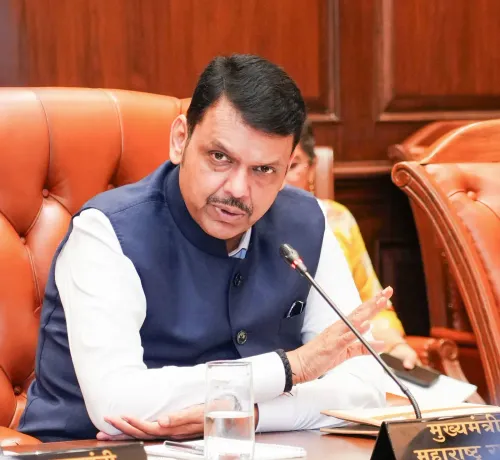
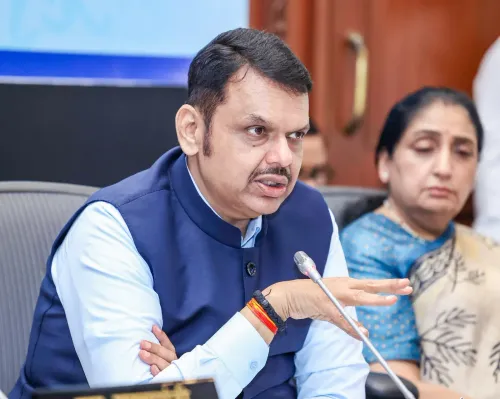
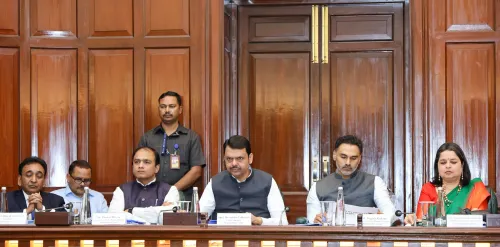
Maharashtra Chief Minister Devendra Fadnavis on Thursday, 2 July directed state officials to overhaul the Scheduled Tribe (ST) caste verification process using Blockchain technology and artificial intelligence, aiming to make the system more transparent, tamper-proof, and citizen-friendly. The directives were issued at the 52nd meeting of the Maharashtra State Tribal Advisory Council in Mumbai.
Blockchain and AI at the Core
Fadnavis instructed officials to convert all caste validity certificates into a blockchain-secured digital verification system, creating an unalterable record that prevents duplication and forgery. Alongside this, AI-driven tools will be deployed to detect duplicate applications, carry out preliminary document screening, and streamline the overall verification workflow.
The Chief Minister emphasised that the entire caste verification process must shift fully online, with a distinct technology roadmap guiding the transition to a secure digital ecosystem.
Key Directives for Tribal Welfare
The Tribal, Forest, and Revenue departments have been jointly tasked with organising special camps to distribute essential certificates and documentation to the Pardhi community. Fadnavis also directed coordination with the Finance Department to ensure that funds under the Tribal Component Programme remain strictly proportional to the Scheduled Tribe population.
On educational welfare, the Chief Minister called for a review of income eligibility criteria across schemes run by the Tribal Development Department, directing that the income ceiling be raised to a minimum of ₹4 lakh annually so that a greater number of tribal students can access government benefits.
Legal and Administrative Reforms
Fadnavis urged departments to expedite the amendment process of the Scheduled Tribes Certificate (Scrutiny and Verification) Act. He called for filling vacant Project Officer positions, appointing special legal experts to handle pending court cases, and strengthening state and district-level monitoring mechanisms to track fund utilisation by the Tribal Development Department.
The General Administration Department (GAD) and the Tribal Development Department were directed to work in tandem and execute time-bound actions on all pending matters.
Forest Rights and Local Economic Empowerment
Reviewing the implementation of the Forest Rights Act (FRA), the Chief Minister stressed mission-based initiatives for forest conservation and the economic empowerment of tribal communities. He directed that local tribal populations receive overriding priority in fisheries within dam reservoirs and other new local economic projects.
Fadnavis also asked the Rural Development and Tribal Development departments to review policies governing Gram Sabha rights over Minor Forest Produce (MFP) — including bamboo, tendu leaves, and apta leaves — and take necessary administrative steps to strengthen those rights.
What Comes Next
With strict orders issued across multiple departments for time-bound execution, the success of this initiative will depend on inter-departmental coordination and the pace of technology rollout. The move signals a broader shift in Maharashtra's tribal governance approach — from paper-heavy processes to a digitally auditable, AI-assisted framework that critics of the old system have long demanded.
Point of View
But Maharashtra's tribal administration has a long record of reform announcements that stall at implementation. The real question is whether the GAD and Tribal Development Department — two bodies with historically poor coordination — can actually execute a unified technology stack on a defined timeline. Raising the income ceiling to ₹4 lakh is overdue and will expand scheme access, but without filling vacant Project Officer posts first, the delivery pipeline remains broken. The 52nd Tribal Advisory Council meeting producing this many directives in one sitting is notable; whether even half are actioned before the 53rd is the metric that matters.
NationPress
2 Jul 2026
Frequently Asked Questions
What did Maharashtra CM Devendra Fadnavis announce for tribal caste verification?
Fadnavis directed officials to use Blockchain technology to convert all ST caste validity certificates into a tamper-proof digital system, and deploy AI to detect duplicate applications and streamline document screening. The directives were issued at the 52nd Maharashtra State Tribal Advisory Council meeting on 2 July.
How will Blockchain improve the ST caste certificate process?
Blockchain creates an unalterable digital record of each caste validity certificate, making it impossible to forge or duplicate. The system is designed to make verification more secure, transparent, and accessible to citizens without physical paperwork.
What is the new income ceiling for tribal welfare schemes in Maharashtra?
CM Fadnavis directed that the income eligibility ceiling for schemes run by the Tribal Development Department be raised to a minimum of ₹4 lakh annually, up from the existing limit, so that more tribal students can qualify for educational and welfare benefits.
Which communities or groups are directly targeted by these new directives?
The directives primarily benefit Scheduled Tribe communities across Maharashtra. Special camps for certificate distribution are specifically aimed at the Pardhi community. Gram Sabhas will also see strengthened rights over Minor Forest Produce such as bamboo, tendu leaves, and apta leaves.
What legal reforms did Fadnavis order alongside the technology push?
The Chief Minister called for expediting the amendment of the Scheduled Tribes Certificate (Scrutiny and Verification) Act, filling vacant Project Officer posts, and appointing special legal experts for pending court cases — all on a time-bound basis.