Maharashtra drought relief 2026: Loan stay, ₹6,728 crore EGS funds, 305 talukas covered
Synopsis
Maharashtra has placed 75 per cent of its talukas under drought emergency measures, stayed all farm loan recoveries, and unlocked ₹6,728 crore for rural employment — the most expansive drought response the state has announced in recent years. The cabinet's decision to add 43 new talukas after internal political pressure reveals how deeply the El Niño-driven rainfall deficit has cut into rural constituencies.
Key Takeaways
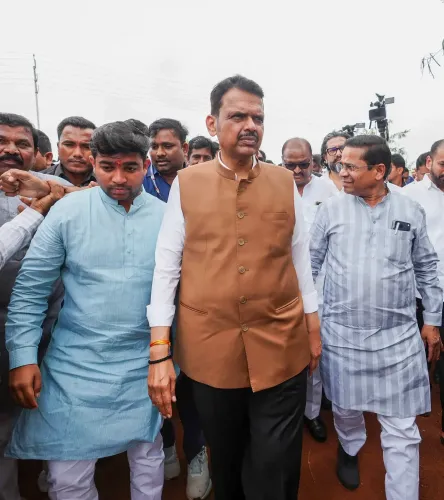
Maharashtra CM Devendra Fadnavis announced a sweeping drought relief package on 1 October 2026 .
All agricultural loan recoveries have been stayed; banks must restructure crop loans by 30 April 2027 .
Over 305 talukas — nearly 75 per cent of the state — are now under 'Trigger-1' drought mitigation measures, after 43 new talukas were added. ₹6,728 crore unlocked under the Employment Guarantee Scheme to prevent distress migration and generate local rural employment.
A 12-point relief package covers 265 talukas , including land revenue waiver, electricity bill concessions for pumps above 7.5 HP , and exam fee waiver for Class 10 and 12 students.
District Collectors and police directed to prevent banks and credit societies from approaching farmers for loan recovery during the crisis.
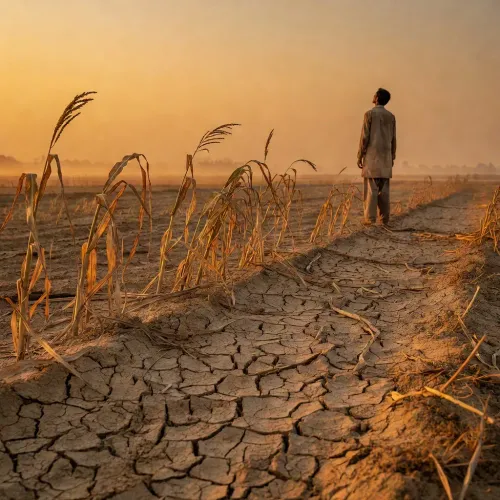
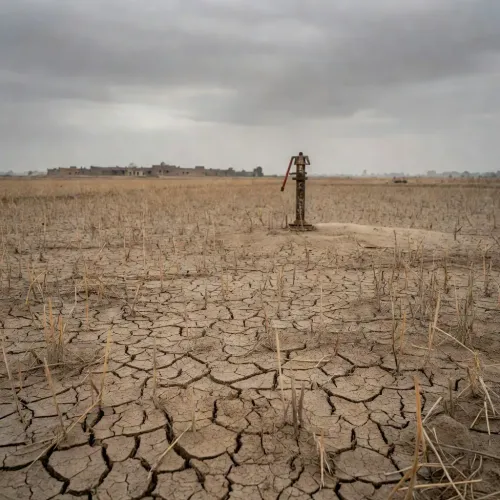
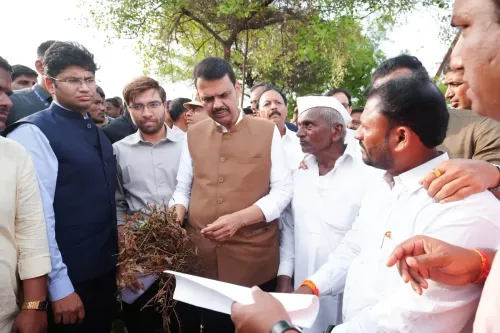
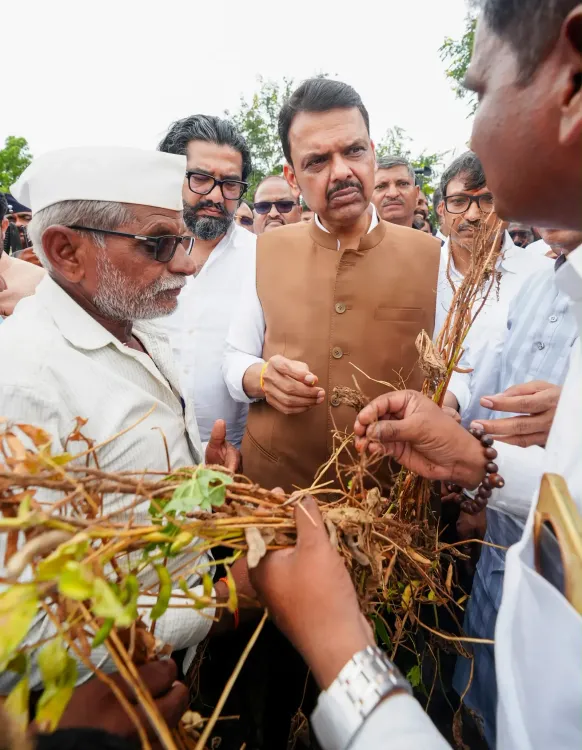
The Maharashtra government, led by Chief Minister Devendra Fadnavis, on Thursday, 1 October 2026, announced a sweeping drought relief package for the state's distressed farming community, staying all agricultural loan recoveries across drought-hit regions and unlocking ₹6,728 crore under the Employment Guarantee Scheme. The package covers over 305 talukas — nearly 75 per cent of the state — declared under 'Trigger-1' drought mitigation measures, amid a severe crisis driven by persistent rainfall deficits and heightened El Niño threats.
Loan Relief and Banking Directives
In a landmark move, the state government issued formal orders staying all agricultural loan recoveries across drought-declared regions with immediate effect. Banks have been directed to restructure existing crop loans, with a strict deadline of 30 April 2027 to complete the process, while ensuring fresh crop credit remains fully accessible for the upcoming Kharif season.
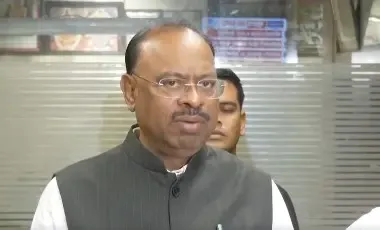
Revenue Minister and Drought Relief Sub-Committee Chairman Chandrashekhar Bawankule issued a stern directive to local administrations, instructing District Collectors and police authorities to prevent bank or credit society representatives from approaching farmers for loan recovery during the crisis period. This directive applies to all declared scarcity zones and signals an unusually firm administrative stance toward lenders.
Expanded Drought Coverage and the 43 New Talukas
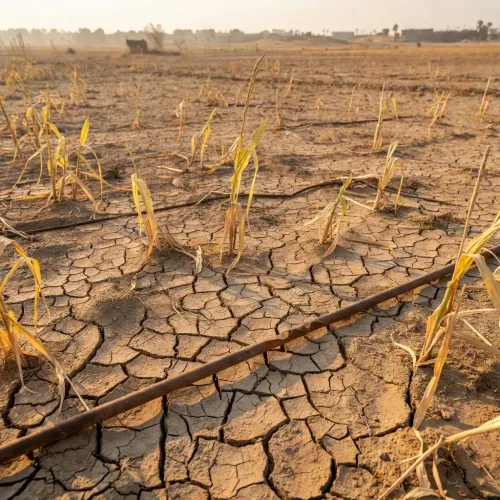
Following significant pushback from ministers and ruling alliance MLAs over pockets excluded from earlier notifications, the cabinet added 43 new talukas to the official drought list. The total now stands at over 305 talukas, encompassing approximately 75 per cent of Maharashtra's administrative geography. The expansion underscores the scale of the agricultural crisis, which has disrupted both Kharif sowing patterns and drinking water availability across large swaths of the state.
Notably, the pressure to expand coverage came from within the ruling alliance itself — a signal that ground-level distress in rural constituencies is acute enough to override administrative caution. This is consistent with a broader pattern seen during past Maharashtra drought cycles, where initial coverage lists have routinely been revised upward after political feedback.
Employment and Livelihood Measures
To prevent distress migration and sustain rural livelihoods, the Employment Guarantee Scheme (EGS) department has unlocked ₹6,728 crore. The funds are earmarked for local employment generation across irrigation works, cattle sheds, orchard plantations, borewell recharge units, bamboo cultivation, and public lake repairs. Work norm criteria under the Viksit Bharat Guarantee for Rozgar and Ajeevika Mission — formerly the Mahatma Gandhi National Rural Employment Guarantee Act — have also been relaxed to maximise deployment in affected areas.
12-Point Relief Package: What It Covers
For the designated 265 talukas, the state has rolled out a 12-point relief and concessions package. Key provisions include:
Full waiver of land revenue for affected farmers; restructuring of existing agricultural loans and an immediate stay on all recovery actions; exemption or concessions on electricity bills for agricultural pumps above 7.5 HP capacity (pumps up to 7.5 HP are already exempt); waiver of examination fees for Class 10 and Class 12 students in all drought-affected zones; and strict orders preventing disconnection of agricultural pump power supplies in declared scarcity villages.
Additional measures include targeted foodgrain distribution systems to prevent shortages for farmers and daily-wage agricultural workers, arrangements to ensure adequate fodder supply for cattle, immediate rollout of water conservation works, and deployment of water tankers wherever drinking water shortages are reported. Comprehensive planning for drinking and livestock water resources is also mandated under the package.
What Comes Next
With drinking water shortages intensifying and crop yields severely impacted across affected districts, the administration has placed water management and rural employment at the forefront of its emergency response. The loan restructuring deadline of 30 April 2027 and the ₹6,728 crore EGS outlay set the immediate operational timeline. Whether the scale of the response matches the depth of the crisis — and whether funds reach farmers before the Kharif window closes — will determine its real impact.
Point of View
Suggesting the initial bureaucratic assessment underestimated distress. The loan recovery stay is a strong short-term signal, but its durability depends on bank compliance — a variable the state cannot fully control. The ₹6,728 crore EGS allocation is large, but past Maharashtra drought responses have seen funds lapse or reach beneficiaries too late to prevent migration. The real accountability test will come at the Kharif credit window: whether restructured loans translate into fresh sowing capital, or whether farmers remain locked out of the formal credit system despite the order on paper.
NationPress
1 Oct 2026
Frequently Asked Questions
What is the Maharashtra drought relief package announced on 1 October 2026?
The Maharashtra government announced a sweeping relief package on 1 October 2026 covering over 305 talukas, staying all agricultural loan recoveries, unlocking ₹6,728 crore for rural employment, and rolling out a 12-point concessions package for 265 talukas. The package was announced by Chief Minister Devendra Fadnavis amid a severe drought driven by rainfall deficits and El Niño conditions.
Which talukas are covered under Maharashtra's drought declaration?
Over 305 talukas — approximately 75 per cent of Maharashtra — are now covered under 'Trigger-1' drought mitigation measures. The cabinet added 43 new talukas to the list following pressure from ministers and ruling alliance MLAs who flagged excluded areas.
What happens to farm loans under the Maharashtra drought relief order?
All agricultural loan recoveries across drought-hit regions have been immediately stayed. Banks have been directed to restructure existing crop loans by 30 April 2027 and ensure fresh crop credit is accessible for the Kharif season. District Collectors and police have been directed to stop banks or credit societies from approaching farmers for recovery.
What does the 12-point relief package include for affected farmers?
The 12-point package for 265 talukas includes full waiver of land revenue, loan restructuring and recovery stay, electricity bill exemptions for agricultural pumps above 7.5 HP, exam fee waivers for Class 10 and 12 students, foodgrain distribution, fodder supply arrangements, water tanker deployment, and water conservation works.
How much has Maharashtra allocated for rural employment under drought relief?
The Employment Guarantee Scheme department has unlocked ₹6,728 crore to generate local employment in drought-affected areas. Projects include irrigation works, cattle sheds, borewell recharge units, orchard plantations, bamboo cultivation, and public lake repairs. Work norms under the rural employment guarantee scheme have also been relaxed to maximise deployment.