Maharashtra drought relief: Pre-Diwali aid for farmers, 10% water cut ordered
Synopsis
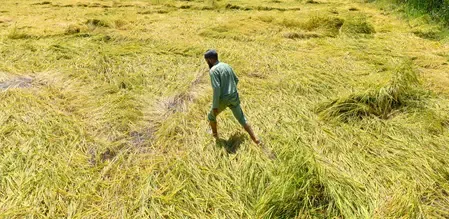
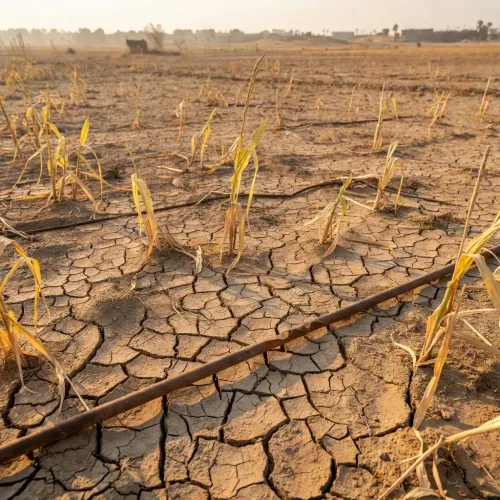
Maharashtra's Cabinet Sub-Committee on Drought Relief has ordered a 10% water cut, fast-tracked pre-Diwali payouts to farmers, and banned coercive bank recovery — all as a Central government assessment team prepares to inspect six severely affected districts. With only 8% of targeted crop loans disbursed, the pressure on both state machinery and banks is acute.
Key Takeaways
The Maharashtra Cabinet Sub-Committee on Drought Relief , chaired by Revenue Minister Chandrashekhar Bawankule , met on 6 October 2026 and announced a multi-pronged drought response.
A 10 per cent water supply cut will apply to both urban and rural areas; construction must use recycled STP water, not treated drinking water.
Only 8 per cent of targeted crop loans have been disbursed; all banks directed to halt coercive recovery practices against farmers.
Field crop-loss assessments ( panchnamas ) are 45 per cent complete; officials directed to finish surveys so aid reaches farmers before Diwali .
AgriStack registration will not be mandatory for Konkan farmers; non-registered farmers remain eligible for relief.
A Central government assessment team is expected on 10 or 12 October to visit Beed-Dharashiv , Yavatmal-Washim , and Ahilyanagar-Solapur .
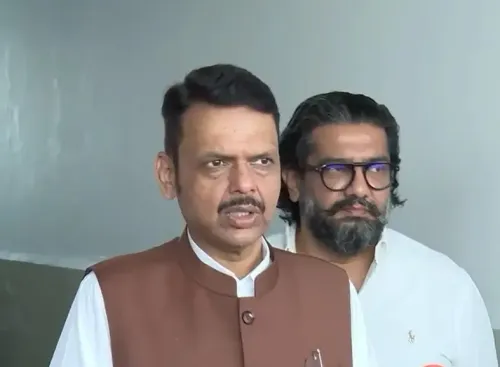
The Maharashtra government on Tuesday, 6 October 2026, announced a sweeping package of drought-relief measures, including financial assistance to affected farmers before the Diwali festival, a 10 per cent reduction in water supply across urban and rural areas, and a ban on coercive loan-recovery practices targeting distressed cultivators. The decisions emerged from a meeting of the Cabinet Sub-Committee on Drought Relief chaired by Revenue Minister Chandrashekhar Bawankule.
Key Decisions from the Drought Relief Meeting
A mandatory 10 per cent cut in water supply will take effect in both urban and rural zones. Separately, construction activity across the state has been directed to source water exclusively from Sewage Treatment Plants (STPs) using recycled water, freeing up treated drinking water for household consumption.
Relief and Rehabilitation Minister Makarand Patil proposed earmarking 5 per cent of relief funds for inspection-related activities. The meeting also stressed timely and transparent settlement of crop insurance claims, with District Collectors and the Chief Secretary directed to hold district-level consultations on agricultural lending.
Crop Loan Disbursement and Bank Accountability
Bawankule flagged a serious concern: only 8 per cent of targeted crop loans have been disbursed so far. He warned banks against demanding repeated documentation from existing borrowers and directed all nationalised banks, private banks, and financial institutions to immediately halt recovery calls and coercive collection methods against farmers. Strict action will be taken against violators, the minister said.
Field assessments (panchnamas) for crop-loss surveys have crossed 45 per cent completion. Officials have been directed to expedite the remainder so that financial assistance can reach farmers before Diwali. Village-level KYC verification and heirship records for loan-waiver beneficiaries are to be completed on priority to ensure no eligible farmer is excluded.
AgriStack, Konkan Relief and Illegal Money-Lending
Bawankule clarified that farmers not registered on the AgriStack platform will remain eligible for relief benefits. Following a proposal by Fisheries Minister Nitesh Rane, AgriStack registration will not be made mandatory for farmers in the Konkan region. The government also decided to intensify action against illegal private money-lending in drought-affected areas, specifically naming Erandol and Raver in Jalgaon district.
Livestock Support and Fodder Strategy
To support livestock owners, fodder will now be distributed directly through Gram Panchayats rather than relying solely on traditional fodder camps. Government-owned wasteland, forest land, and areas along irrigation reservoirs will be utilised for large-scale fodder cultivation. Paddy straw from Vidarbha and Konkan will be processed into cattle feed instead of being burnt — a move that also addresses stubble-burning concerns. Silage bags, hydroponics, and Azolla projects will be promoted through the National Livestock Mission (NLM) and Corporate Social Responsibility (CSR) funding.
With Kharif crops under stress, the state plans to encourage moisture-resilient Rabi crops such as gram (chana) and sorghum (jowar) wherever soil conditions permit. Plans to construct groundwater recharge shafts and revive defunct rural water-supply schemes were also discussed. District-level monitoring committees headed by Guardian Ministers will oversee local water-management plans.
Central Team Visit to Six Severely Affected Districts
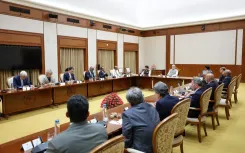
A Central government assessment team is expected to visit Maharashtra on 10 or 12 October to evaluate drought conditions on the ground. The team will be split into three groups conducting field visits across six severely affected districts: Beed-Dharashiv, Yavatmal-Washim, and Ahilyanagar-Solapur. The meeting was attended by Water Resources Minister Girish Mahajan, Transport Minister Pratap Sarnaik, Water Supply Minister Gulabrao Patil, Rural Development Minister Jaykumar Gore, and Agriculture Minister Dattatray Bharne, along with senior officials.
With the Central team visit imminent and Diwali approaching, the Maharashtra government faces a narrow window to demonstrate that relief reaches farmers before the festival season — and before rural distress deepens further.
Point of View
Not just a weather crisis. Banning coercive bank recovery is the right instinct, but without parallel enforcement against informal money-lenders — called out by name in Jalgaon — the most vulnerable borrowers remain exposed. The Central government visit on 10 or 12 October will be the real audit: if the field reality diverges sharply from state-reported panchnama figures, it could trigger a larger fiscal commitment from the Centre. Maharashtra's pattern in drought years has been to announce wide-ranging measures close to a festival deadline; the test, as always, is last-mile delivery.
NationPress
6 Oct 2026
Frequently Asked Questions
What drought relief measures has the Maharashtra government announced?
The Maharashtra government announced a 10 per cent water supply cut, a ban on coercive loan recovery by banks, pre-Diwali financial assistance for affected farmers, and a push to expedite crop-loss field surveys. The decisions were taken at a Cabinet Sub-Committee on Drought Relief meeting chaired by Revenue Minister Chandrashekhar Bawankule on 6 October 2026.
Why has Maharashtra cut water supply by 10 per cent?
The 10 per cent reduction is a conservation measure in response to drought conditions affecting both urban and rural areas. Construction activities have also been directed to use recycled water from Sewage Treatment Plants instead of treated drinking water.
When will drought relief reach Maharashtra farmers?
The state has directed officials to complete crop-loss assessments (panchnamas) — currently 45 per cent done — on priority, with the explicit goal of ensuring financial assistance reaches affected farmers before the Diwali festival. Village-level KYC verification and heirship records for loan-waiver beneficiaries are also being fast-tracked.
What is the Central government's role in Maharashtra's drought assessment?
A Central government assessment team is expected to visit Maharashtra on 10 or 12 October 2026. The team will be divided into three groups and will conduct field visits in six severely affected districts: Beed-Dharashiv, Yavatmal-Washim, and Ahilyanagar-Solapur.
Are farmers without AgriStack registration eligible for drought relief in Maharashtra?
Yes. Revenue Minister Chandrashekhar Bawankule clarified that farmers not registered on the AgriStack platform will remain eligible for relief benefits. Following a proposal by Fisheries Minister Nitesh Rane, AgriStack registration will specifically not be made mandatory for farmers in the Konkan region.