Maharashtra drought: Minister Bawankule orders drinking water, power supply priority
Synopsis
With Maharashtra in the grip of a drought-like situation, Revenue Minister Chandrashekhar Bawankule has put districts on a war footing — ordering drinking water and power supply to jump the queue ahead of routine development works, fast-tracking crop damage panchnamas, and pushing district collectors to rein in Mahavitaran. The speed of ground-level execution will decide whether farmers see relief before the agricultural season is lost.
Key Takeaways
Revenue Minister Chandrashekhar Bawankule chaired a drought review meeting on Wednesday alongside Chief Secretary Rajesh Agrawal and senior officials.
Drinking water, water conservation, agriculture, and power supply have been declared priorities over routine development works like cement roads.
Agricultural Assistants , Gram Sevaks , and Talathis are to jointly conduct physical crop damage assessments (panchnamas) to be presented at Gram Sabhas .
An SOP for the panchnama methodology is to be prepared immediately to standardise the process across districts.
District Collectors have been directed to hold urgent meetings with Mahavitaran officials over mounting power supply complaints.
CM Devendra Fadnavis , DCM Eknath Shinde , and DCM Sunetra Pawar are touring affected areas to review ground conditions.
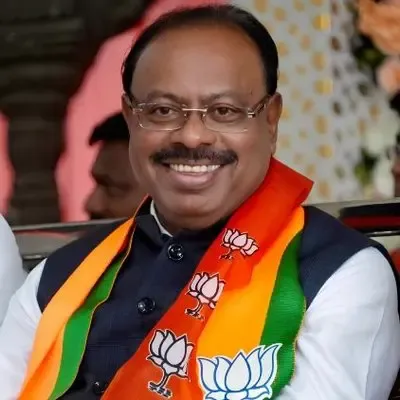
Revenue Minister Chandrashekhar Bawankule on Wednesday directed district administrations across Maharashtra to prioritise drinking water availability, water conservation, agriculture, and power supply, as the state grapples with a drought-like situation caused by delayed and erratic rainfall. The instructions came at a high-level review meeting on the state's drought conditions and the rollout of the Seva Sankalp Abhiyan, attended by senior officials including Chief Secretary Rajesh Agrawal.
Key Directives Issued
Minister Bawankule made clear that, in the current situation, drinking water and water conservation must take precedence over routine development works such as cement roads. He stressed that emergency agricultural relief and stable power supply are the immediate priorities for district administrations over the coming days.
He further noted that Chief Minister Devendra Fadnavis, Deputy Chief Minister Eknath Shinde, Deputy Chief Minister Sunetra Pawar, and other ministers are touring various parts of the state to personally assess ground conditions — underlining the scale of the administration's response.
Crop Damage Assessment Process
To accurately gauge the extent of crop losses from the rainfall break, Bawankule directed that Agricultural Assistants, Gram Sevaks, and Talathis must jointly carry out direct physical inspections and prepare damage assessments (panchnamas). These assessments are then to be presented at the Gram Sabha level for transparency and accountability.
A Standard Operating Procedure (SOP) clearly defining the methodology for conducting these panchnamas is to be prepared immediately, he added — a measure aimed at ensuring uniform and legally defensible surveys across districts.
Water Conservation and Groundwater Recharge
Bawankule called for an acceleration of digital crop surveys and water conservation works, with specific emphasis on measures that allow water to percolate into the ground to raise groundwater levels. District-wise planning is to be undertaken to recharge available water resources, ensuring that both agricultural needs and long-term water security are addressed systematically.
Power Supply and Anganwadi Services
Amid a surge in complaints against state-run power distribution company Mahavitaran, the minister directed District Collectors to immediately convene meetings with Mahavitaran officials to restore administrative control over electricity supply. He also emphasised that essential services at Anganwadis must continue to function without disruption throughout the drought-like period.
The administration's multi-pronged response reflects the broader pressure Maharashtra faces this season — with farmers in rain-shadow districts among the worst affected. Whether the measures translate into timely relief on the ground will depend heavily on the speed of panchnama completion and the state's ability to fast-track water recharge works before the agricultural window closes.
Point of View
Field surveys, and directive circulars — but the real test is always in the last mile. The instruction to prepare an SOP for panchnamas suggests that past surveys have been inconsistent, which often delays compensation disbursal for the very farmers who can least afford to wait. The Mahavitaran directive, too, points to a structural gap: power supply complaints during an agrarian crisis are not incidental — they directly affect irrigation pump sets. The administration's credibility this season will be measured by how quickly panchnamas are completed and whether water recharge works are operational before the soil dries beyond recovery.
NationPress
23 Sept 2026
Frequently Asked Questions
What is the drought-like situation in Maharashtra in 2026?
Maharashtra is experiencing a drought-like situation in 2026 due to delayed and erratic rainfall, severely impacting farmers and citizens across several districts. The state government has activated emergency measures including crop damage surveys, water conservation drives, and priority power supply to affected areas.
What did Revenue Minister Bawankule direct at the drought review meeting?
Revenue Minister Chandrashekhar Bawankule directed that drinking water, water conservation, agriculture, and power supply be prioritised over routine development works. He also ordered the immediate preparation of an SOP for crop damage panchnamas and instructed district collectors to hold urgent meetings with Mahavitaran officials.
What is the Seva Sankalp Abhiyan mentioned in the meeting?
The Seva Sankalp Abhiyan is a state government initiative whose implementation was reviewed alongside drought relief measures at Wednesday's high-level meeting. Its rollout is being coordinated as part of the broader administrative response to the drought-like conditions in Maharashtra.
How will crop damage be assessed for affected farmers?
Agricultural Assistants, Gram Sevaks, and Talathis have been directed to jointly conduct direct physical inspections and prepare damage assessment panchnamas. These will then be presented at the Gram Sabha level, and a standardised SOP is to be drawn up immediately to ensure uniform methodology across districts.
Why is Mahavitaran under scrutiny during the drought?
Mahavitaran, Maharashtra's state-run power distribution company, has received a large number of complaints about supply disruptions, which critically affect farm operations, particularly irrigation. District Collectors have been told to immediately convene meetings with Mahavitaran officials to restore administrative control over electricity supply in affected areas.