What Are the Key Features of the Viksit Maharashtra 2047 Vision Document?
Synopsis
In a landmark decision, the Maharashtra Cabinet has approved the Vision Document for Viksit Maharashtra-2047, detailing ambitious plans for development and infrastructure enhancements, including a major railway project. This comprehensive framework aims to involve citizen feedback and artificial intelligence for effective implementation.
Key Takeaways
Maharashtra Cabinet approves Viksit Maharashtra 2047 Vision Document.
New railway line connecting Solapur , Tuljapur , and Osmanabad sanctioned.
Citizen feedback will influence the final document.
AI will assist in analyzing responses and proposals.
New departments established for FDI and International Relations .
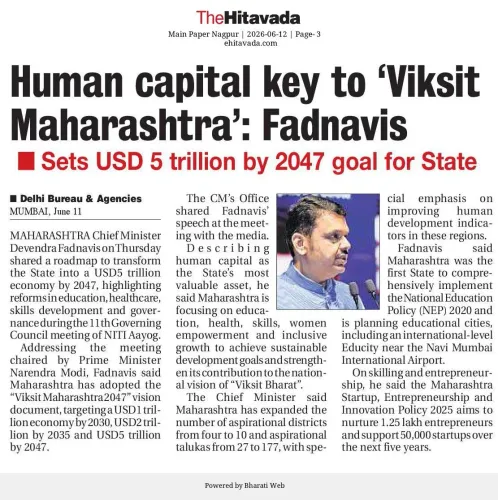
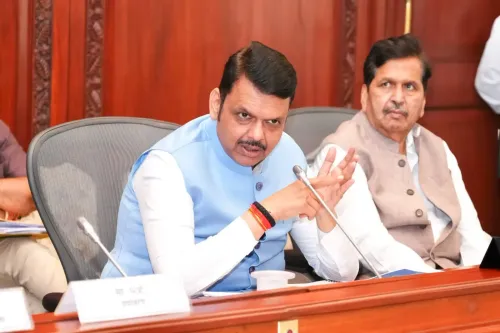
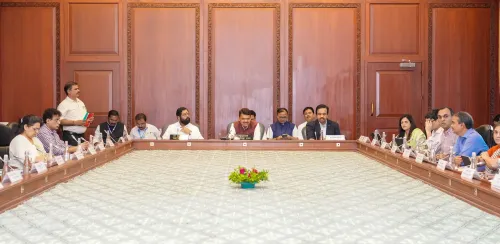
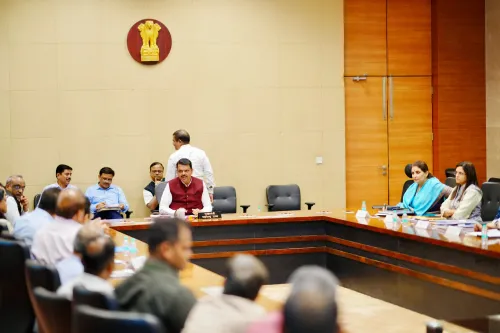
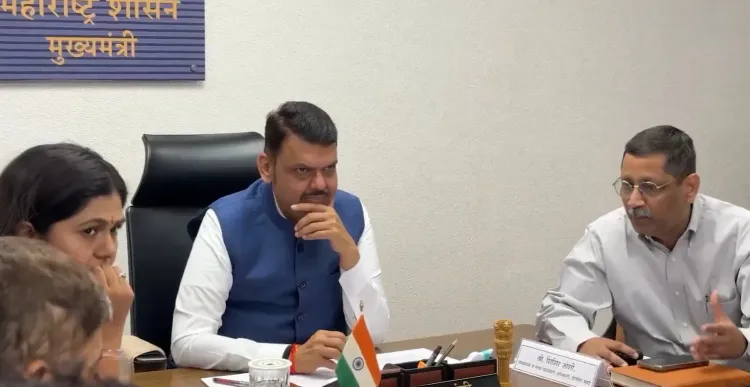
Mumbai, Oct 28 (NationPress) The Maharashtra Cabinet, led by Chief Minister Devendra Fadnavis, has officially endorsed the Vision Document for Viksit Maharashtra-2047, alongside approving the revised expenditure exceeding Rs 3000 crore for the new broad gauge railway line connecting Solapur-Tuljapur-Osmanabad.
The cabinet also established a Viksit Maharashtra Vision Management Unit (VMU), which will operate under the chief minister's guidance to ensure effective execution of the vision document.
Fadnavis mentioned that the final version of the document will be crafted by incorporating feedback from the state’s residents, analyzed through Artificial Intelligence.
The vision document outlines approximately 16 concepts at both state and district levels, with 100 initiatives aimed at promoting progressive, sustainable, inclusive, and effective governance.
According to Fadnavis, responses have been collected from nearly 7 lakh stakeholders, which has informed the development of this document.
“The vision document encompasses goals for 2030, 2035 (marking 75 years of the state’s establishment), and 2047, when a developed India is to be realized. The roadmap is set, and the cabinet has approved this plan. It will be published soon,” he added.
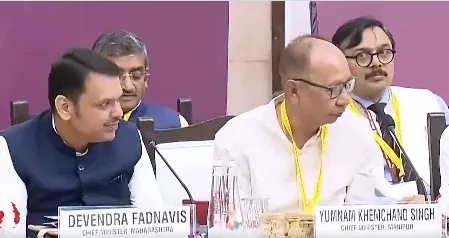
During an Advisory Committee meeting on October 20, Fadnavis stated that Prime Minister Narendra Modi envisions a fully developed India by the centenary of independence in 2047.
Maharashtra is committed to realizing this vision, and the state's Vision Document will be instrumental in that journey.
Fadnavis described the draft document as a historical record that should guide future planning and policy-making.
“This document will allow Maharashtra to compete globally, not just with other states. It should be transformed into a video format for easier understanding by citizens,” he stated.
He emphasized the need for agencies to develop a system that leverages artificial intelligence for evaluating proposals. Identifying and correcting any deficiencies in proposals ahead of time will save valuable time. Departments need to act swiftly to verify AI-generated outcomes. The Urban Development and Revenue departments must expedite this process.
Additionally, Fadnavis confirmed that the cabinet approved the revised funding of over Rs 3000 crore for the new broad gauge railway line, with the central government contributing 50 percent of the project costs, which is vital for enhancing connectivity to pilgrimage sites like Solapur and Tuljapur.
To bolster the state’s efforts in attracting foreign direct investment and maintaining Maharashtra's leadership, the cabinet approved the expansion of the Protocol sub-department under the General Administration Department.
Approval was also granted for the creation of three new departments: Foreign Direct Investment (FDI), International Relations (Outreach), and Diaspora Affairs, along with necessary positions for each.
Moreover, the cabinet sanctioned amendments to the Mumbai Municipal Corporation Act, 1888, Maharashtra Municipal Corporation Act, 1949, and the Maharashtra Municipal Councils, Nagar Panchayats and Industrial Towns Act, 1965, instituting a six-month deadline for candidates contesting reserved seats in general or by-elections to provide a caste validity certificate.
Similarly, the cabinet approved an ordinance granting a one-month deadline for submitting a caste validity certificate after election to reserved seats in general or by-elections for Gram Panchayat, Zilla Parishad, and Panchayat Samiti.
Lastly, the cabinet endorsed the establishment of both a District and Additional Sessions Court and a Civil Court Senior Level Court in Shirpur, Dhule district. This includes the creation of a Government Prosecutor's Office, along with necessary positions and funding for both initiatives.
Point of View
It's essential to recognize that the Maharashtra Cabinet's endorsement of the Viksit Maharashtra-2047 Vision Document signifies a pivotal moment for the state's future. By integrating citizen feedback and leveraging technology, Maharashtra is setting a precedent for progressive governance that could serve as a model for other states across India.
NationPress
7 Oct 2026
Frequently Asked Questions
What is the Viksit Maharashtra 2047 Vision Document?
The Viksit Maharashtra 2047 Vision Document is a strategic framework developed by the Maharashtra Cabinet, outlining plans for the state's development by the year 2047.
What major projects are included in the Vision Document?
The document includes significant projects like the new broad gauge railway line connecting Solapur, Tuljapur, and Osmanabad, along with various initiatives aimed at enhancing governance.
How will citizen feedback be integrated into the document?
Citizen feedback will be collected and analyzed using artificial intelligence to inform the final version of the Vision Document.
What is the budget allocated for the new railway line?
The revised budget for the new broad gauge railway line is over Rs 3000 crore.
What other departments were approved by the cabinet?
The cabinet approved new departments for Foreign Direct Investment, International Relations, and Diaspora Affairs to enhance Maharashtra's global engagement.