Maharashtra GCC Policy 2025 guidelines approved, targets 400 new hubs and 4 lakh jobs

Synopsis
Maharashtra has moved from announcement to action — the operational guidelines for its GCC Policy 2025 are now law. With tiered capital subsidies, a diversity-linked payroll bonus, and a 10-year stamp duty and electricity duty waiver, the state is making a structured, incentive-heavy pitch for 400 new global hubs and 4 lakh high-skilled jobs, directly challenging Karnataka and Telangana for India's GCC crown.
Key Takeaways
Maharashtra officially notified the operational guidelines for the GCC Policy 2025 on 20 August 2025 , signed by Principal Secretary Dr P.
Projects are classified into five tiers — Small to Ultra Mega — based on investment (₹50 crore to ₹750-plus crore) and employment (250 to 1,000-plus jobs).
Capital subsidy of up to 20 per cent on plant and machinery, capped between ₹10 crore and ₹100 crore , disbursed over five years .
Full stamp duty exemption in Zone II and 75 per cent in Zone I; complete Electricity Duty waiver for 10 years .
Payroll subsidy of up to ₹50,000 per employee annually, with a 10 per cent bonus for units with at least 50 per cent diversity in hiring.
Chief Minister Devendra Fadnavis targets 400 new GCCs , 4,00,000 jobs , and ₹50,000 crore in investment by 2030 .
The Maharashtra government has officially approved and notified the operational guidelines and standard operating procedures for the Maharashtra Global Capability Centre (GCC) Policy 2025, establishing a comprehensive framework for fiscal and non-fiscal incentives to captive global hubs setting up or expanding in the state. The formal Government Resolution (GR), issued by Dr P. Anbalagan, Principal Secretary (Industries, Investment, and Services), was released on Wednesday, 20 August 2025.
What the Policy Covers
The policy is aimed at positioning Maharashtra as a premier destination for technology, research and development (R&D), and specialised business functions. It applies exclusively to fully integrated captive hubs established by multinational corporations (MNCs) or Indian global entities to serve their parent or group companies. Notably, call centres, business process outsourcing (BPO) units, and pure sales or distribution entities are explicitly excluded from availing incentives under this framework.
Projects are classified into five tiers based on Fixed Capital Investment (FCI) or direct employment generated within two years of commercial operation. The tiers range from Small (minimum investment of ₹50–100 crore, 250–500 jobs) to Ultra Mega (above ₹750 crore, 1,000-plus jobs), with Medium, Large, and Mega categories in between.
Incentive Structure and Zone-Based Benefits
The GR designates Zone I as the Mumbai Metropolitan Region (MMR) and Pune Metropolitan Region (PMR), while Zone II covers the rest of Maharashtra to encourage balanced regional development. Eligible units can avail a capital subsidy of up to 20 per cent on plant and machinery investments made after 1 April 2025, capped between ₹10 crore for Small units and ₹100 crore for Mega units, disbursed in five equal annual instalments.
New GCC units opting for rented premises can claim 10 per cent (Zone I) or 20 per cent (Zone II) of actual rent or ready-reckoner rate, capped annually between ₹1 crore and ₹4 crore. Units cannot combine capital subsidy with rental assistance. A payroll subsidy of up to ₹50,000 per employee annually is available for up to 100 employees over three years, with an additional 10 per cent bonus for units maintaining at least 50 per cent diversity in hiring — covering women and persons with disabilities.
GCCs will also benefit from a 100 per cent stamp duty exemption on acquisitions or leases in Zone II IT Parks, SEZs, and STPIs, a 75 per cent exemption in Zone I Public IT Parks, and a complete waiver of Electricity Duty for 10 years. R&D and sustainability grants of up to ₹50 lakh annually (25 per cent reimbursement) are available, with an extra 10 per cent top-up for joint research with Maharashtra-based universities. Green building certification costs are reimbursed up to 30 per cent.
Governance and Compliance Framework
The Commissionerate of Services will serve as the primary implementing authority, responsible for issuing Registration Certificates and disbursing incentives. The Maharashtra GCC Growth Council, chaired by the Principal Secretary (Industries), will function as an overarching policy think tank. A dedicated Policy Monitoring Unit (PMU) has been allocated 1 per cent of the total policy budget — capped at ₹10 crore annually — for global promotion, capacity building, and impact assessment.
Beneficiary units must remain operational for a minimum period of 10 years from the date of initial registration. Non-compliance or submission of false information will trigger immediate withdrawal of benefits and monetary recovery with penalties.
Political Context and Broader Ambitions
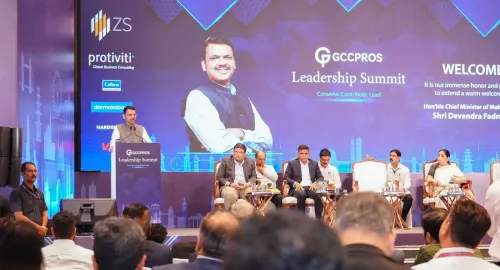
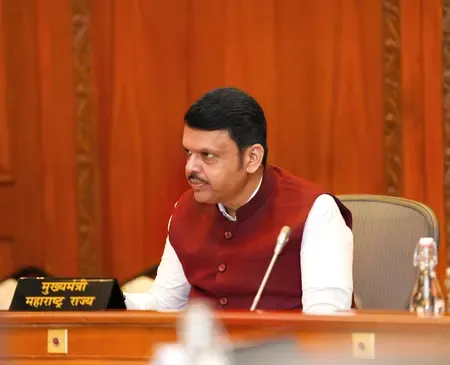
The release of operational guidelines follows Chief Minister Devendra Fadnavis's announcement on 11 August 2025 at the GCCProj Leadership Summit, where he outlined an ambitious target to establish 400 new GCCs, generate 4,00,000 high-skilled jobs, and attract ₹50,000 crore in investments. Fadnavis underscored that the nature of GCCs in India has fundamentally shifted — from low-cost back-office support to high-value innovation centres.
'By 2030, Global Capability Centres will no longer be limited to support operations. They will serve as core hubs for engineering, artificial intelligence, product development, cybersecurity, financial services, data analytics, and research and development,' Chief Minister Fadnavis said, adding that key strategic decisions for global enterprises will increasingly originate from these centres. This comes amid intensifying competition between Maharashtra, Karnataka, and Telangana for GCC investment, with Bengaluru currently hosting the largest concentration of such hubs in India.
What Comes Next
With operational guidelines now in place, the policy framework is ready for immediate implementation. Industry observers will watch closely whether Maharashtra's zone-based incentive model and diversity-linked payroll bonuses differentiate it sufficiently to draw GCCs away from established tech corridors. The PMU's global promotion mandate and the GCC Growth Council's oversight role will be critical in translating the policy's ambitious targets into verifiable outcomes.
Point of View
Not design. The diversity-linked payroll bonus and zone-based differentiation are genuinely novel, yet the 10-year lock-in and penalty clauses could deter smaller or risk-averse entrants. More critically, the state is entering a race where Bengaluru's ecosystem advantages — talent density, peer networks, established vendor chains — are not neutralised by subsidy alone. The PMU's global promotion mandate and the GCC Growth Council's oversight are only as good as their staffing and political continuity.
NationPress
5 Oct 2026
Frequently Asked Questions
What is the Maharashtra GCC Policy 2025?
The Maharashtra GCC Policy 2025 is a state government initiative to attract Global Capability Centres — fully integrated captive hubs of MNCs and Indian global entities — by offering fiscal incentives including capital subsidies, stamp duty waivers, payroll support, and R&D grants. The operational guidelines were officially notified on 20 August 2025.
What incentives are available under the Maharashtra GCC Policy 2025?
Eligible GCCs can avail a capital subsidy of up to 20 per cent on plant and machinery (capped at ₹10–₹100 crore), rental assistance of 10–20 per cent, payroll subsidy of up to ₹50,000 per employee annually, a 100 per cent stamp duty exemption in Zone II, and a full Electricity Duty waiver for 10 years. An additional 10 per cent payroll bonus applies to units with at least 50 per cent diversity in hiring.
Who is eligible for incentives under the Maharashtra GCC Policy?
The policy applies exclusively to fully integrated captive hubs set up by multinational corporations or Indian global entities to serve their parent or group companies. Call centres, BPO units, and pure sales or distribution entities are explicitly excluded.
What are Maharashtra's targets under the GCC Policy?
Chief Minister Devendra Fadnavis announced targets of 400 new GCCs, 4,00,000 high-skilled jobs, and ₹50,000 crore in investments by 2030, as outlined at the GCCProj Leadership Summit on 11 August 2025.
What are the compliance requirements for GCCs under the policy?
Beneficiary units must remain operational for a minimum of 10 years from the date of initial registration. Non-compliance or submission of false information will result in immediate withdrawal of incentives and monetary recovery with penalties.