Maharashtra drought: 265 tehsils hit as soybean crops wither in Beed

Synopsis
Maharashtra's drought crisis has crossed a tipping point — 265 tehsils officially declared affected, over 20 of 36 districts logging historic rainfall deficits, and the IMD confirming the monsoon has withdrawn. With soybean crops failing across Marathwada and Vidarbha and opposition warnings of a nine-to-ten-month drought, the state government's crop assessment and relief response is now under intense scrutiny.
Key Takeaways
The Maharashtra government has declared 265 tehsils drought-affected, including all seven tehsils of Akola district .
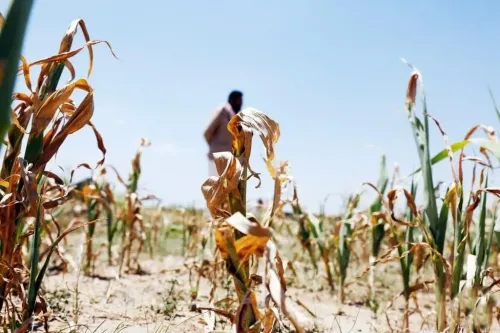
Soybean crops in Beed , Marathwada , Vidarbha and Central Maharashtra are on the verge of complete failure due to prolonged water shortage.
More than 20 of Maharashtra's 36 districts recorded an unprecedented rainfall deficit this season, according to the Saamana editorial.
The IMD has officially announced the monsoon's withdrawal from most parts of Maharashtra, ending hopes of late-season crop recovery.
Shiv Sena (UBT) has warned of a potential nine-to-ten-month severe drought and accused the state government of inadequate response.
The Revenue Department is conducting crop damage assessments; a relief package announcement is awaited.
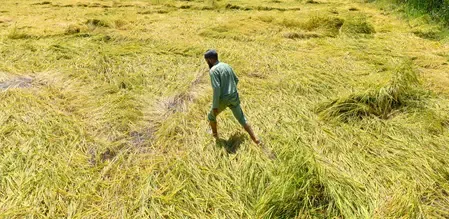
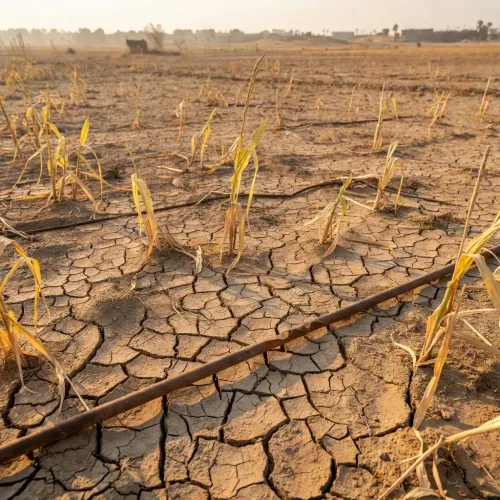
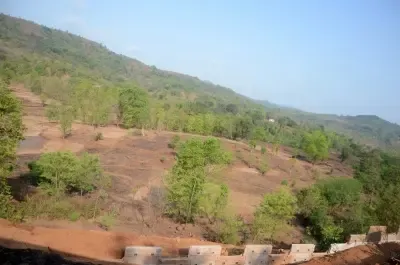
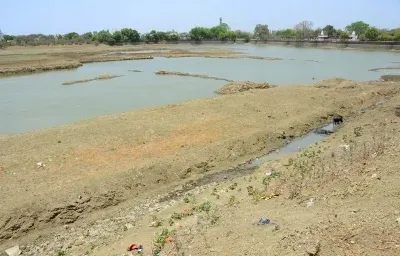
Severe drought conditions are devastating agricultural land across Maharashtra, with farmers in Yevta village of Beed district among the worst affected as their soybean crops wither from acute water scarcity. The state government has formally declared 265 tehsils drought-affected — including all seven tehsils of Akola district — as a prolonged rainfall gap leaves cultivators staring at catastrophic losses.
Ground Reality in Beed
In Yevta village, farmer Sheikh Rashid's four-acre soybean field is on the verge of complete destruction due to persistent water shortage. Rashid described the anguish shared by farmers across the region. 'The situation is quite serious. All the farmers had hoped for a good harvest, but nature took away our dreams. Ministers visited our fields. We have suffered significant losses due to the lack of water. They understood our problems and also took steps to address them,' he said.
Rashid added that the prolonged water shortage has left farmers deeply worried about their livelihoods and the losses they may be forced to bear following the near-total failure of this season's harvest.
Scale of the Drought Crisis
Soybean — a primary cash crop for farmers across Marathwada, Vidarbha, and Central Maharashtra — has been particularly hard hit. According to an editorial published in the Shiv Sena (Uddhav Balasaheb Thackeray) party mouthpiece 'Saamana' on Monday, more than 20 of Maharashtra's 36 districts recorded an unprecedented rainfall deficit this season. The editorial warned that Maharashtra is staring at a potential nine-to-ten-month-long severe drought — a scale it described as unprecedented.
The Thackeray faction's editorial further stated that the monsoon's departure without yielding return showers had 'shattered the final hopes of farmers,' leaving more than half of Maharashtra severely scorched.
Monsoon Withdrawal Deepens Concern
The India Meteorological Department (IMD) has officially announced the withdrawal of the monsoon from most parts of Maharashtra, dashing residual hopes among farmers who had been banking on late-season rainfall to rescue their standing crops. This development comes as the Revenue Department conducts field-level crop damage assessments to evaluate the full extent of agricultural losses across affected districts.
This is not the first time Maharashtra's farmers have faced a severe dry spell — the state experienced significant drought years in 2015-16 and 2018-19 — but the breadth of the current deficit, spanning over 20 districts, signals an especially acute crisis.
Political Pressure Mounts on the State Government
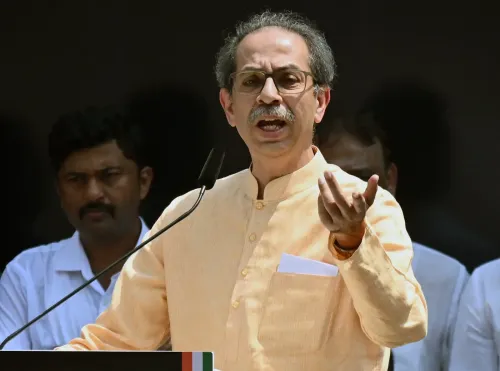
The opposition has sharpened its attack on the ruling dispensation. The Shiv Sena (UBT) launched a pointed critique on Monday, using the 'Saamana' editorial to accuse the government of inadequate response. The party's intervention signals that the drought is fast becoming a political flashpoint ahead of ongoing state-level accountability debates.
The state government, for its part, has initiated field inspections and is expected to announce a relief package once crop damage assessments are complete. Analysts and farmer groups argue that timely disbursement of compensation will be critical to preventing a deeper agrarian distress spiral.
What Comes Next
With the monsoon now withdrawn and no immediate rainfall relief in sight, the pressure on the Maharashtra government to announce a comprehensive drought relief package is intensifying. Farmer organisations are demanding swift compensation disbursal, input subsidies, and loan waivers for the worst-affected districts. How quickly the administration acts on crop assessment findings is likely to determine the severity of the human cost of this season's drought.
Point of View
Yet crop damage assessments are still ongoing, meaning relief disbursements remain weeks away at best. The Thackeray camp's nine-to-ten-month drought warning, if accurate, implies a prolonged agrarian crisis that will outlast any single relief package. What is missing from the official response is a clear timeline: when will assessments conclude, when will compensation reach farmers, and what structural measures will address the chronic rainfall volatility that hits Marathwada and Vidarbha almost every other year?
NationPress
5 Oct 2026
Frequently Asked Questions
How many tehsils has Maharashtra declared drought-affected in 2026?
The Maharashtra government has declared 265 tehsils drought-affected, including all seven tehsils of Akola district. The declaration follows a prolonged gap in rainfall that has severely damaged soybean and other key crops across multiple regions.
Which crops and regions are worst affected by the Maharashtra drought?
Soybean, a primary cash crop, has been the hardest hit, particularly in Marathwada, Vidarbha, Central Maharashtra, and Beed district. More than 20 of Maharashtra's 36 districts have recorded an unprecedented rainfall deficit this season.
Has the monsoon officially withdrawn from Maharashtra?
Yes. The India Meteorological Department (IMD) has officially announced the withdrawal of the monsoon from most parts of Maharashtra. This has extinguished farmers' remaining hopes of late-season rainfall to revive their damaged crops.
What has the opposition said about the Maharashtra drought?
The Shiv Sena (Uddhav Balasaheb Thackeray) on Monday launched a sharp critique through an editorial in its mouthpiece 'Saamana', warning that Maharashtra faces an unprecedented nine-to-ten-month severe drought. The editorial said more than half the state is severely scorched and blamed the monsoon's departure without return showers for shattering farmers' final hopes.
What relief measures is the Maharashtra government taking?
The Revenue Department is currently conducting field-level crop damage assessments across affected districts to evaluate the scale of agricultural losses. A formal relief package is expected once these assessments are completed, though no timeline has been publicly announced.