MMR integrated bus transport: Maharashtra sets up study, technical groups
Synopsis
Maharashtra has formally constituted a Technical Group and a Study Group to build a single, unified bus transit system across the Mumbai Metropolitan Region — covering eight municipal corporations. With a Telescopic Fare model, shared ticketing, and a 31 July 2026 deadline for the final proposal, this is the most structured attempt yet to stitch together the MMR's fragmented public transport network.
Key Takeaways
Maharashtra's Urban Development Department issued a GR on 15 June 2025 to form a Technical Group and a Study Group for MMR bus transit integration.
The Technical Group , chaired by BEST's AGM (Traffic and Operations) , must submit findings by 15 July 2026 .
The Study Group , led by the General Manager of BEST , includes Municipal Commissioners from 8 cities and must deliver a final proposal by 31 July 2026 .
A 'Telescopic Fare' system — reducing per-km cost for longer distances — is among the key proposals being evaluated.
The initiative is part of NITI Aayog's G-HUB pilot to transform select urban areas into integrated growth hubs.
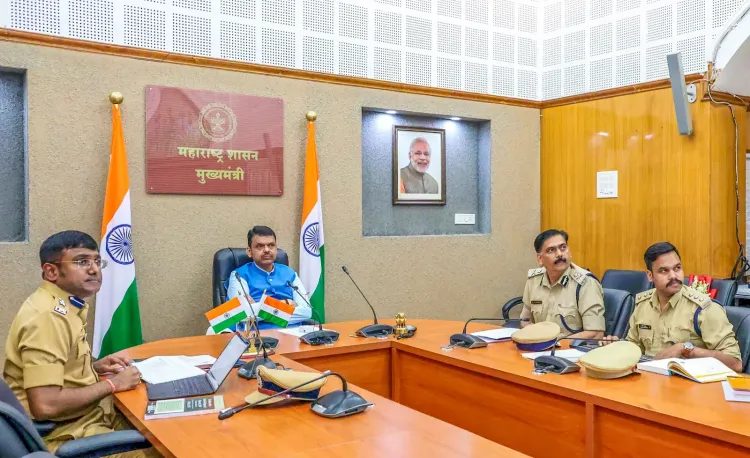
Maharashtra's Urban Development Department on Monday, 15 June 2025, issued a Government Resolution (GR) to establish a Technical Group and a Study Group tasked with designing a comprehensive integrated bus transportation system across the Mumbai Metropolitan Region (MMR). The move aims to eliminate fragmented ticketing, misaligned schedules, and operator boundaries that currently hinder millions of daily commuters travelling between Mumbai and its satellite cities.
Context and Policy Framework
The initiative is anchored within NITI Aayog's pilot concept of converting select urban zones into 'Growth Hubs' (G-HUB) — integrated economic clusters designed to synchronise infrastructure, mobility, and governance. A G-HUB Regulatory Board, chaired by the Chief Minister, and a coordination committee headed by the Chief Secretary, have already been operationalised to steer this agenda. Acting on the Board's directives, a Task Force was constituted on 10 June 2025 to draft the initial integrated plan, culminating in Monday's formal GR.
What the Technical Group Will Do
The Technical Group will be chaired by the Assistant General Manager (Traffic and Operations) of the Brihanmumbai Electric Supply and Transport (BEST). Its membership draws transport managers from municipal corporations across Navi Mumbai, Thane, Mira Bhayander, Kalyan Dombivli, Vasai Virar, and Panvel.
The group's mandate covers rationalising bus routes across municipal boundaries, harmonising service schedules for seamless inter-city connections, building a collaborative technology-integration roadmap for shared infrastructure among all Public Transport Operators (PTOs), and recommending fare-rationalisation formulas along with revenue-sharing models for inter-jurisdictional routes. Its detailed findings must be submitted to the Study Group by 15 July 2026.
Role and Composition of the Study Group
The overarching Study Group will be led by the General Manager of BEST, with Municipal Commissioners from Thane, Navi Mumbai, Kalyan-Dombivli, Vasai-Virar, Mira-Bhayander, Bhiwandi-Nizampur, Ulhasnagar, and Panvel as key members.
Its primary objectives span policy implementation, passenger convenience, and financial sustainability. Specifically, it will evaluate and establish a uniform fare structure across the MMR, design a 'Telescopic Fare' system — where the per-kilometre fare decreases progressively for longer distances — to improve affordability for long-distance commuters, and finalise revenue distribution and reconciliation mechanisms under a unified ticketing framework. The Study Group is mandated to submit its final comprehensive proposal to the state government by 31 July 2026.
Impact on Commuters
According to the GR, the planned integration is expected to significantly reduce the friction faced by commuters who currently must navigate changing operators, disjointed ticketing systems, and conflicting schedules when moving across the metropolitan belt. By deploying smart technology, uniform ticketing, and optimised multi-city routing, the Maharashtra government aims to deliver a unified urban transit ecosystem for the entire MMR. Notably, this is among the first structured policy steps in the region to bring multiple municipal transport undertakings under a single operational framework.
Point of View
But the real test lies in the July 2026 deadlines: past urban transport reform exercises in Indian metros have produced detailed reports that gathered dust. The Telescopic Fare proposal is particularly worth watching — if implemented, it could meaningfully shift long-distance commuters from private vehicles to public transit. But revenue-sharing between municipal corporations with competing fiscal interests is notoriously difficult to finalise, and the GR offers no enforcement mechanism beyond the deadline itself.
NationPress
15 Sept 2026
Frequently Asked Questions
What is the Maharashtra government's plan for MMR bus transport integration?
The Maharashtra Urban Development Department has constituted a Technical Group and a Study Group to design a unified bus transportation system across the Mumbai Metropolitan Region. The initiative covers route rationalisation, uniform ticketing, a Telescopic Fare model, and revenue-sharing among eight municipal transport undertakings, with a final proposal due by 31 July 2026.
What is the Telescopic Fare system being proposed for MMR buses?
The Telescopic Fare system is a pricing model where the per-kilometre fare decreases progressively as the journey distance increases, making long-distance commutes more affordable. The Study Group has been tasked with formulating and finalising this fare structure for inter-city routes across the MMR.
Which cities are covered under the MMR bus integration plan?
The plan covers Mumbai and its satellite cities — Navi Mumbai, Thane, Kalyan-Dombivli, Vasai-Virar, Mira-Bhayander, Bhiwandi-Nizampur, Ulhasnagar, and Panvel — bringing their respective municipal transport undertakings under a single integrated framework.
What are the deadlines for the Technical Group and Study Group?
The Technical Group must submit its detailed findings to the Study Group by 15 July 2026. The Study Group is then mandated to deliver its final comprehensive proposal to the state government by 31 July 2026.
How does the G-HUB concept relate to this transport initiative?
The MMR bus integration is part of NITI Aayog's Growth Hub (G-HUB) pilot, which aims to transform select urban areas into economically integrated clusters. A G-HUB Regulatory Board chaired by the Chief Minister and a coordination committee headed by the Chief Secretary are already operational, and their directives led to the formation of the Task Force on 10 June 2025 that preceded Monday's GR.