Maharashtra Government Implements Control Rooms for LPG Supply Assurance
Synopsis
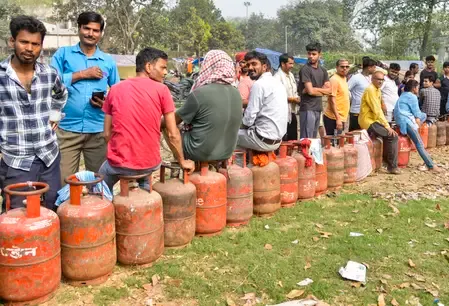
In response to the ongoing Iran-Israel conflict, the Maharashtra government has set up control rooms and committees to ensure a stable supply of LPG cylinders. With increased refinery production and prioritized distribution, citizens can remain assured about gas availability during critical times.
Key Takeaways
Maharashtra government sets up control rooms to manage LPG supply.
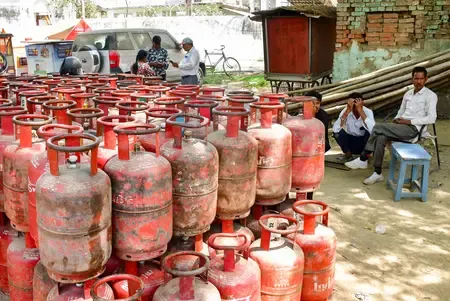
Daily LPG demand in the state is approximately 9,000 metric tonnes .
Refineries are increasing production to ensure adequate supply.
Priority is given to essential services like hospitals and schools.
District-level committees will monitor the supply chain and maintain order.
Mumbai, March 12 (NationPress) In light of the intensifying Iran-Israel conflict, the Maharashtra government has taken proactive steps to guarantee a steady supply of domestic and commercial gas cylinders.
To mitigate any potential disruptions and enhance coordination in the event of a shortage, the government has announced the formation of specialized committees at the district level.
Anil Diggikar, the Additional Chief Secretary of the Food, Civil Supplies and Consumer Protection Department, has instructed all relevant agencies to implement measures to ensure smooth LPG supply and oversee distribution throughout the state.
The department reassured the public that the supply of domestic LPG will remain consistent, alleviating any concerns.
The average daily demand for LPG in Maharashtra is approximately 9,000 metric tonnes. To accommodate this demand, refinery production has been ramped up to around 11,000 metric tonnes daily over the past few days.
Officials confirmed that there is no shortage of domestic LPG, and ample stock is available. For commercial LPG, priority allocation is being implemented in accordance with Central Government policies.
Priority is also being given to essential services, including hospitals, mid-day meal programs, Ashram schools, community kitchens, and mess facilities within government institutions.
There is also a sufficient supply of Piped Natural Gas (PNG) for domestic use. The state has ample reserves of petrol and diesel, with refineries functioning at full capacity, producing approximately 15,000 kilolitres of petrol and 38,000 kilolitres of diesel each day.
The department urged citizens to remain calm, emphasizing that adequate arrangements have been established. The availability of domestic LPG cylinders in March exceeds the average supply recorded over the past six months.
The district-level committees will comprise the District Collector, Superintendent of Police, District Supply Officer, and representatives from government gas companies. Their responsibilities include monitoring the supply chain, maintaining order, and providing daily reports.
In the Mumbai–Thane rationing area, a committee will operate under the Controller of Rationing, assisted by the Deputy Commissioner of Police and Deputy Controller (Rationing), with coordination managed by the Joint Commissioner of Police (Administration).
Authorities have been directed to investigate the use of alternative fuels, such as coal or kerosene, while complying with Maharashtra Pollution Control Board regulations. Committees will also liaise with hotel and restaurant associations to promote the use of alternatives whenever possible.
Institutions providing essential services—such as hospitals, government hostels, and educational mess facilities—will receive priority in supply. A comprehensive list of these institutions will be released, along with a distinct priority order.
To counter misinformation, updates will be shared daily via radio, FM stations, television, and print media. Communication will be managed by the Directorate General of Information and Public Relations, alongside district committees.
Measures will be taken against false or misleading information circulating on social media. Oil companies have been instructed to promptly address any technical issues with gas booking applications and missed-call services.
Control rooms will be established at the state, divisional, district, and taluka levels, incorporating a WhatsApp feature for grievance resolution.
In anticipation of upcoming religious festivals, additional efforts will be made to ensure a consistent LPG supply to public institutions.
Point of View
The Maharashtra government's proactive approach to managing LPG supply amidst geopolitical tensions demonstrates its commitment to public welfare and stability. By prioritizing essential services and ensuring transparent communication, the government aims to mitigate panic and maintain order during challenging times.
NationPress
3 Oct 2026
Frequently Asked Questions
Why is the Maharashtra government setting up control rooms?
To ensure a smooth and uninterrupted supply of LPG cylinders amidst the escalating Iran-Israel conflict.
How much LPG does Maharashtra consume daily?
The average daily demand for LPG in Maharashtra is around 9,000 metric tonnes.
What measures are being taken for essential services?
Essential services like hospitals and schools are being prioritized for LPG supply during this period.
Is there a shortage of LPG in Maharashtra?
No, the authorities have confirmed that there is no shortage of domestic LPG and sufficient stock is available.
What should citizens do if they face issues with gas supply?
Citizens can use the WhatsApp facility established by the control rooms for grievance redressal.