Maharashtra Government Guarantees Fuel Supply Amid Tensions

Synopsis
In Maharashtra, the government reassures residents of ample fuel availability despite rising geopolitical tensions affecting oil supply chains. Key officials confirm that stocks of petrol, diesel, and LPG are stable, ensuring no need for panic. Read on for details on supply measures and regulatory actions in place.
Key Takeaways
Maharashtra government reassures fuel availability.
Fuel stock levels are adequate for public demand.
Regulatory measures for LPG and PNG distribution implemented.
Daily dispatch rates of petrol and diesel remain consistent.
Vigilance teams established to prevent exploitation during the crisis.
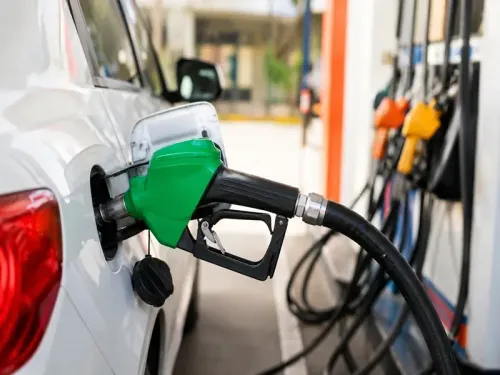
Mumbai, April 6 (NationPress) In light of increasing geopolitical tensions in the Middle East affecting global oil supply chains, the Maharashtra government, alongside major Oil Marketing Companies (OMCs), has confidently reassured residents about the availability of fuel throughout the state.
Officials from Bharat Petroleum Corporation Limited (BPCL), Indian Oil Corporation Limited (IOCL), and Hindustan Petroleum Corporation Limited (HPCL) have stated that there are adequate stocks of petrol, diesel, and Liquefied Petroleum Gas (LPG) to satisfy public demand. Supply operations are under constant surveillance to avert any disruptions.
Additional Chief Secretary of the Food and Civil Supply Department, Anil Diggikar, highlighted that despite the international pressures on oil markets, the state's infrastructure is functioning at full capacity to guarantee consistent fuel replenishment. He emphasized that there is no cause for concern, as the government is diligently overseeing the steady supply of fuel in collaboration with OMCs.
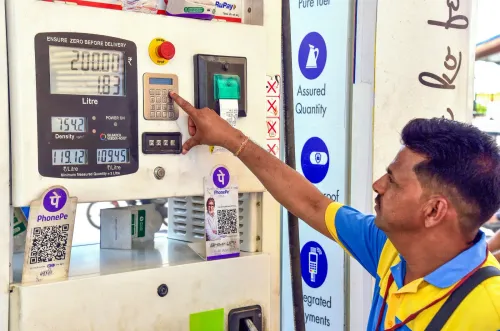
Maharashtra is supported by 24 strategic depots—10 operated by Indian Oil Corporation, 8 by Bharat Petroleum, and 6 by Hindustan Petroleum—serving approximately 8,126 petrol stations. Currently, OMCs dispatch around 18,500 kilolitres of petrol and 40,000 kilolitres of diesel each day.
From April 1 to April 4, average sales figures recorded were consistent with those from January to March 2026, with daily averages of 18,605 kilolitres of petrol and 44,484 kilolitres of diesel, as reported by Umesh Kulkarni, a spokesperson for the OMCs present at the press conference.
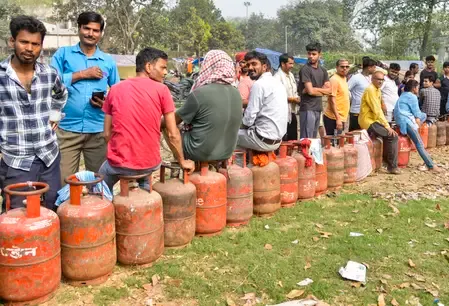
Chandrakant Dange, the State Rationing Controller, stated that the government has implemented specific regulations concerning LPG and Piped Natural Gas (PNG) to ensure equitable distribution during this critical period. Domestic LPG supplies remain stable, with deliveries aligned with customer bookings, supported by approximately 23 bottling plants and over 2,229 distributors catering to around 3.5 crore consumers.
Dange noted that a booking interval restriction is currently enforced to guarantee fair distribution. “Hospitals, educational institutions, and social services are assured 100% supply, while semi-essential industries are being maintained at supply levels ranging from 20% to 70%. A Delivery Authentication Code (DAC) is now mandatory for all registered deliveries,” he added.
To address the supply emergency, the state government issued deemed permissions on March 27, 2026, for pending City Gas Distribution (CGD) pipeline applications. These measures include operational windows of 24 hours for entities and the waiving of certain restoration charges to hasten network expansion.
This initiative will facilitate the prompt establishment of PNG supply infrastructure for residential areas. To prevent exploitation during this crisis, District Collectors were instructed on March 8, 2026, to form vigilance teams.
According to Dange, strict enforcement under the Essential Commodities Act, 1955, has resulted in significant seizures. Additionally, the state government has requested authorities to increase LPG supply by 25% to accommodate 5-kilogram cylinders for migrants.
Point of View
It is critical to highlight the Maharashtra government's proactive measures to ensure fuel stability amid external pressures. The collaboration with OMCs and implementation of regulatory measures reflects a commitment to public welfare during a tumultuous period for global oil supply chains.
NationPress
15 Oct 2026
Frequently Asked Questions
Is there a fuel shortage in Maharashtra?
No, the Maharashtra government has confirmed that there is sufficient fuel availability, with adequate stocks of petrol, diesel, and LPG to meet public demand.
What measures are being taken for fuel distribution?
The state has implemented specific regulatory measures for LPG and PNG to ensure equitable distribution, along with constant monitoring of supply operations.
How is the government ensuring fair LPG distribution?
A booking interval restriction is in place, and hospitals, educational institutions, and social services are guaranteed 100% supply.
What is the current daily fuel dispatch rate?
OMCs are currently dispatching approximately 18,500 kilolitres of petrol and 40,000 kilolitres of diesel daily.
What actions were taken to combat supply emergencies?
The government has expedited approvals for City Gas Distribution pipeline applications and set up vigilance teams to prevent exploitation.