Mahua Moitra Questions 'Logical Discrepancy' in Bengal Voter Rolls
Synopsis
TMC MP Mahua Moitra has questioned the legal standing of a 'Logical Discrepancy' category in West Bengal's electoral rolls, alleging that 92 lakh voters were flagged and 27 lakh were denied the right to vote, tagging CM Mamata Banerjee and Abhishek Banerjee for action.
Key Takeaways
Mahua Moitra publicly challenged the legality of a voter-roll category called 'Logical Discrepancy' used in West Bengal .
She alleged 92 lakh voters were classified under this category as part of what she called an 'interim measure'.
Of those, 27 lakh voters were allegedly denied their right to vote.
The post directly tags CM Mamata Banerjee and Abhishek Banerjee , pressuring TMC leadership to escalate the issue.
The Election Commission of India is the constitutional authority over electoral rolls and has not publicly responded to this specific allegation.
West Bengal has a documented history of electoral roll disputes, particularly around the 2021 assembly elections .
A pointed question about the integrity of West Bengal's electoral rolls landed on social media on Wednesday, October 28, 2026, when TMC MP Mahua Moitra challenged the legal standing of a practice called 'Logical Discrepancy' — and demanded to know whether 92 lakh voters in Bengal had been used as guinea pigs in an electoral experiment.
The 'Logical Discrepancy' question at the centre of the storm
Moitra's post cuts to a precise constitutional nerve: 'If the legality of Logical Discrepancy is suspect then how could it be an interim measure?' The framing matters. An 'interim measure' implies a temporary administrative arrangement — but Moitra's argument is that a legally questionable tool cannot be legitimised simply by labelling it provisional. The post tags TMC supremo and West Bengal Chief Minister Mamata Banerjee and TMC national general secretary Abhishek Banerjee, signalling this is a matter the party's top leadership is being asked to take forward publicly.
At stake, according to Moitra's figures, are 92 lakh entries flagged as 'Logical Discrepancy' in the state's voter rolls — of which 27 lakh voters were allegedly denied their right to vote. If accurate, that would represent one of the largest single-category voter-exclusion incidents in recent Indian electoral history.
Bengal's electoral rolls: a long-running fault line
West Bengal, governed by the All India Trinamool Congress since 2011, has been the site of repeated disputes over the accuracy and revision of electoral rolls. As far back as the 2021 assembly elections, opposition parties raised alarms about large-scale deletions and revisions that they argued skewed participation. The Election Commission of India, as the constitutional authority over rolls and conduct, sits at the centre of every such dispute — and TMC leaders have a documented history of contesting its decisions in the state.
The broader pattern here is federal: parties in power in state governments and those aligned with the central government regularly clash over the Election Commission's perceived neutrality. Questioning an administrative category's legal basis — rather than just its outcome — is a sharper, more legally grounded form of that challenge.
27 lakh disenfranchised: the human scale of the allegation
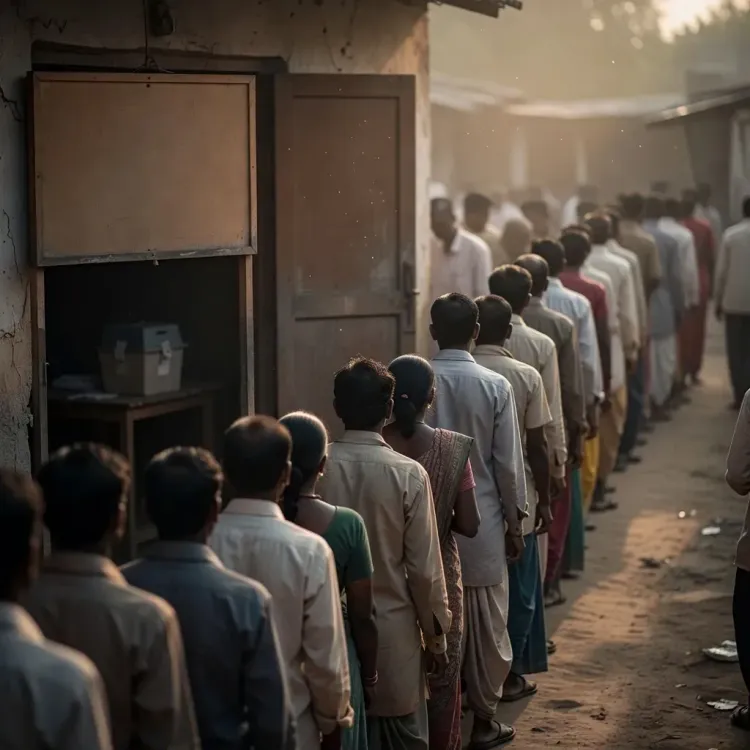
Strip away the procedural language and the allegation is stark: 27 lakh people in Bengal were turned away from the ballot. That is not a rounding error or a data-entry glitch — it is a constituency-level number, larger than the winning margins in dozens of Indian parliamentary seats. Moitra's rhetoric — 'guinea pigs' — is deliberately visceral, framing voters not as administrative entries but as citizens whose franchise was treated as expendable during a procedural experiment.
Whether the specific figures and the 'Logical Discrepancy' category's legal status can be substantiated in court or before election authorities remains an open question. What is not in question is that Moitra has placed the issue squarely before her own party's leadership, suggesting she expects — and is publicly demanding — an escalation.
The next move belongs to the Election Commission of India, and to Banerjee and Abhishek Banerjee. If 27 lakh disenfranchised voters are not answered for, that silence will speak volumes before the next election cycle begins.
Point of View
A harder argument to dismiss. The tagging of both Mamata Banerjee and Abhishek Banerjee signals intra-party pressure as much as public accountability. This fits a longer TMC pattern of contesting Election Commission actions in Bengal through both political messaging and legal channels. If the 27 lakh disenfranchisement figure is substantiated, it could become a significant flashpoint heading into the next electoral cycle in the state.
NationPress
28 Oct 2026
Frequently Asked Questions
What is 'Logical Discrepancy' in voter rolls?
'Logical Discrepancy' (LD) is an administrative category used in electoral roll revision to flag entries with inconsistencies in voter data. Mahua Moitra has questioned its legal basis when applied as an 'interim measure' in West Bengal.
How many voters were allegedly affected in West Bengal?
According to Mahua Moitra's post, 92 lakh voters in Bengal were flagged under 'Logical Discrepancy', of whom 27 lakh were allegedly denied the right to vote.
Why did Mahua Moitra tag Mamata Banerjee and Abhishek Banerjee?
Moitra tagged CM Mamata Banerjee and Abhishek Banerjee to publicly pressure TMC's top leadership to take up the voter disenfranchisement issue at a higher political and legal level.
Has the Election Commission of India responded to these allegations?
No public response from the Election Commission of India to Moitra's specific allegations about the 'Logical Discrepancy' category or the 27 lakh figure has been confirmed as of the time of this report.
What is the history of electoral roll disputes in West Bengal?
West Bengal has seen repeated disputes over electoral rolls, with opposition parties raising concerns about large-scale deletions and revisions as far back as the 2021 assembly elections . TMC leaders have consistently contested Election Commission actions in the state.