Mahua Moitra shares video of bloodied Delhi protestor, targets Modi
Synopsis
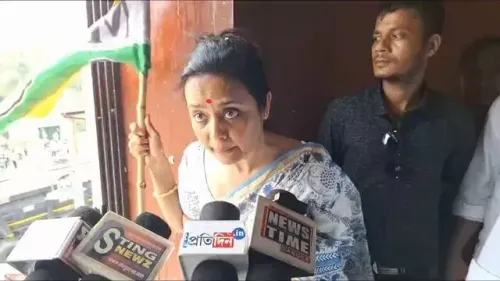
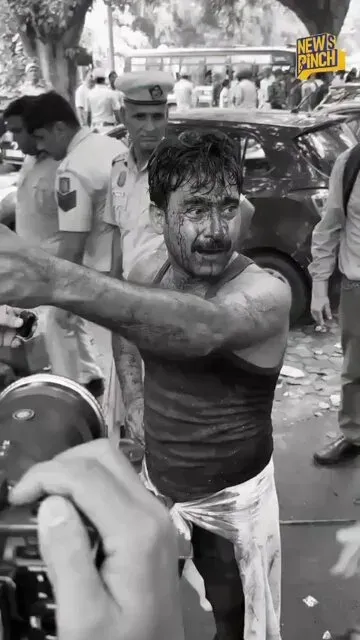
TMC MP Mahua Moitra shared a video on 20 July 2026 showing a bloodied protestor on Delhi's streets, quoting him as saying 'Modi needs treatment, not I' — a sharp attack on the Prime Minister framed as the voice of public dissent.
Key Takeaways
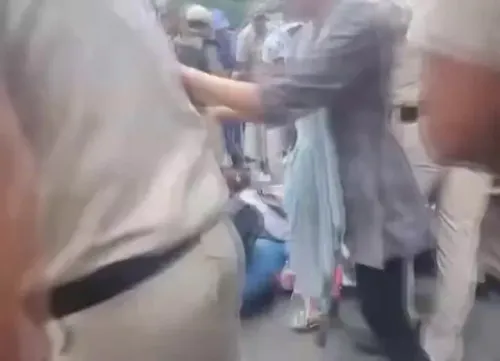
TMC MP Mahua Moitra posted a video on 20 July 2026 showing a bloodied individual on the streets of Delhi .
The post quotes the protestor as saying 'Modi needs treatment, not I', directly targeting Prime Minister Narendra Modi .
The specific protest, its trigger, and the identity of the individual shown remain unverified by NationPress.
Opposition parties, including AITC , routinely amplify protest footage from Delhi to challenge the central government's governance record.
Delhi's law-and-order apparatus falls under the Union government , making any police action a politically sensitive matter.
No official response from the Ministry of Home Affairs or Delhi Police has been issued at the time of publication.
TMC MP Mahua Moitra on Monday, 20 July 2026, shared a video on X purportedly showing a bloodied protestor on the streets of Delhi, using the footage to launch a pointed attack on Prime Minister Narendra Modi and his government's handling of dissent.
Context
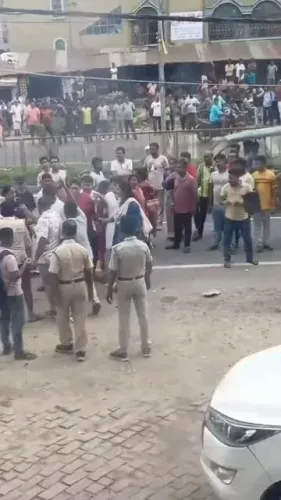
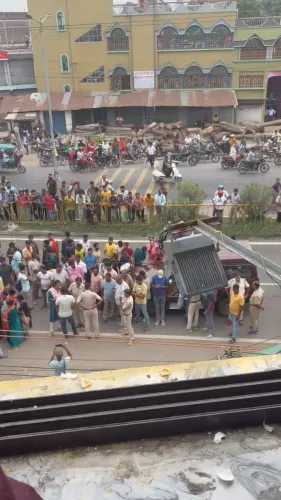
Moitra posted the video with the caption quoting the injured protestor: 'Modi needs treatment, not I', closing with 'Jai Hind'. The post, shared with her large social-media following, frames the unidentified demonstrator's words as a direct indictment of the BJP-led central government. The video, the sole media attached to the post, shows what appears to be a visibly injured individual on a Delhi street.
The specific circumstances of the protest — its location within the capital, its trigger, and the identity of the individual shown — have not been independently confirmed. NationPress is seeking clarification from relevant authorities.
Policy Backdrop
Opposition MPs, particularly those from regional parties such as the All India Trinamool Congress (AITC), have a well-documented pattern of amplifying protest footage from Delhi on social media to highlight what they describe as the central government's suppression of dissent. Moitra, the Lok Sabha MP from Krishnanagar, West Bengal, has been among the most vocal parliamentary critics of the Modi government across a range of governance issues.
Street demonstrations in the capital have long served as flashpoints in the broader contest between the ruling BJP and opposition parties, with social-media amplification becoming a central tool of extra-parliamentary pressure. Such incidents frequently precede demands for statements in Parliament or formal inquiries directed at the Ministry of Home Affairs.
Stakeholders and Impact
The post directly implicates the Prime Minister and, by extension, the central government's law-and-order apparatus in Delhi, which falls under the jurisdiction of the Union government. Protestors, civil-society groups, and opposition parties are the primary stakeholders watching how authorities respond to the footage and the claims it carries.
For the AITC, sharing such content reinforces its national positioning as a bulwark against what the party characterises as authoritarian governance — a narrative it has cultivated ahead of future electoral contests. The post had garnered significant engagement within hours of being published on the evening of 20 July 2026.
What's Next
Attention will now turn to whether the Ministry of Home Affairs or the Delhi Police issues any statement addressing the incident depicted in the video. Opposition members may raise the matter in Parliament, particularly if the footage continues to circulate widely.
Any official response — or the absence of one — is likely to become the next flashpoint in the ongoing political battle over the government's treatment of public protest in the capital.
Point of View
Rather than Moitra's own commentary, is a deliberate rhetorical device: it insulates her from direct attribution while amplifying the charge against the Prime Minister. This tactic fits a broader pattern in which regional opposition parties, especially the AITC, seek national relevance by positioning themselves as defenders of civil liberties against an overreaching centre. How the government responds — or chooses not to — will itself become part of the political narrative.
NationPress
21 Jul 2026
Frequently Asked Questions
What did Mahua Moitra post about Modi on 20 July 2026?
Mahua Moitra shared a video on X showing a bloodied protestor on Delhi's streets, quoting him as saying 'Modi needs treatment, not I', and closed the post with 'Jai Hind'.
Who is Mahua Moitra?
Mahua Moitra is the All India Trinamool Congress Lok Sabha MP from Krishnanagar, West Bengal, and a prominent critic of the BJP-led central government.
What was the protest about in Delhi on 20 July 2026?
The specific trigger and location of the protest depicted in Moitra's video have not been independently verified. NationPress is seeking clarification from authorities.
Has the government responded to Mahua Moitra's post about the Delhi protestor?
As of publication, neither the Ministry of Home Affairs nor Delhi Police has issued an official response to the video or Moitra's post.
Why do opposition MPs share protest videos on social media?
Opposition MPs, particularly from regional parties like AITC, routinely amplify protest footage from Delhi to highlight what they describe as the central government's handling of dissent and to build national political narratives ahead of elections.