Mahua Moitra Warns Wangchuk: Don't Dilute Ladakh Protest
Synopsis
TMC MP Mahua Moitra publicly warned Ladakhi activist Sonam Wangchuk on 24 July 2026 not to accept a government suggestion that protesters submit a report to PM Modi, arguing it would dilute 26 days of hard-won moral high ground in the Ladakh statehood movement.
Key Takeaways
Mahua Moitra posted a direct public warning to Sonam Wangchuk on 24 July 2026 .
She described the suggestion for protesters to tour the country and submit a report to PM Modi as a 'government trap'.
Moitra argued the protest had built significant moral authority over 26 days that should not be diluted.
The Ladakh agitation centres on demands for statehood and Sixth Schedule protections following the 2019 reorganisation that made Ladakh a legislature-less Union Territory.
Opposition MPs have increasingly used social media to engage with and strategically advise protest movements against the Centre.
TMC MP Mahua Moitra on Friday, 24 July 2026 publicly cautioned Ladakhi activist Sonam Wangchuk against accepting a government suggestion that protesters travel across the country and present a report to Prime Minister Narendra Modi, calling it a potential trap that could undermine the moral force of the ongoing agitation.
Context
Moitra addressed Wangchuk directly on X, writing: 'We respect you. But suggestion for protestors to go around the country and present PM ji with a report will not fly. Please do not fall into govt's trap and dilute the moral high ground you achieved in 26 days. Movement is far beyond that.'
The post signals that opposition lawmakers are closely watching the trajectory of the Ladakh protest movement and are concerned that a procedural concession — submitting a report rather than securing concrete commitments — could defuse momentum without delivering results.
Policy Backdrop
The agitation is rooted in the Jammu and Kashmir Reorganisation Act, 2019, which bifurcated the erstwhile state and converted Ladakh into a Union Territory without a legislature. Since then, residents and civil society leaders have demanded full statehood, Sixth Schedule protections for tribal communities, and safeguards for land and local employment.
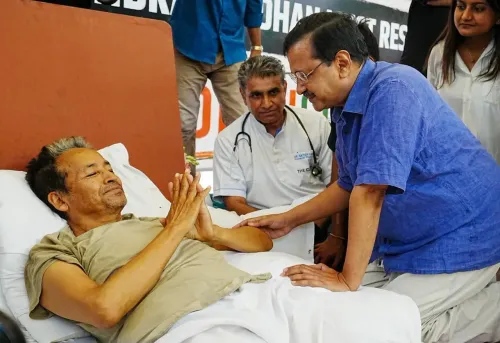
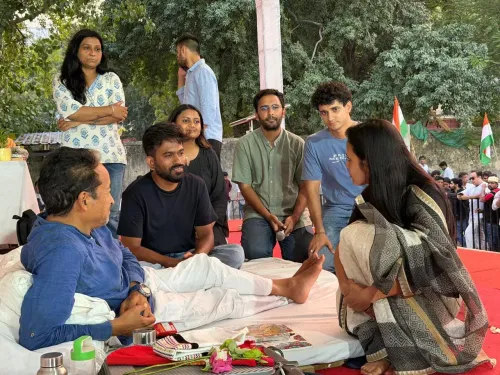
Sonam Wangchuk, a Ladakhi engineer, educationist, and climate activist, has emerged as the most prominent face of these demands, lending the movement significant national visibility. Moitra's post suggests the protest had by this point crossed 26 days, building what she describes as considerable moral authority.
Stakeholders and Impact
The immediate stakeholders are the residents of Ladakh — a high-altitude Union Territory with a sparse but strategically located population — whose constitutional protections remain unresolved more than six years after reorganisation. The movement has drawn support from across the political spectrum, with opposition parties framing the Centre's approach as dismissive of legitimate democratic aspirations.
Moitra's intervention reflects a broader pattern in which national opposition MPs use social media to shape protest strategy and signal solidarity, while also cautioning movements against what they see as co-optation by the ruling establishment. Her warning that the 'movement is far beyond' a report-submission exercise suggests she views any such step as a dilution of the demand for structural constitutional change.
What's Next
All eyes are now on whether Wangchuk and protest leaders will respond to Moitra's caution and hold their ground, or whether a negotiated process — however limited — will take shape. Any formal response from the Ministry of Home Affairs on scheduling talks or addressing Ladakh's statehood demands would be a key indicator of how the Centre intends to manage the agitation. The coming days will test whether the protest can sustain its pressure or whether procedural overtures succeed in diffusing it.
Point of View
She is pre-emptively contesting any narrative that the Centre is engaging in good faith dialogue. The intervention also reveals a tension between grassroots protest energy and the parliamentary opposition's desire to keep such movements on a maximalist footing. If Wangchuk accepts any procedural compromise, opposition parties risk losing a potent critique of the Centre's handling of the 2019 reorganisation.
NationPress
24 Jul 2026
Frequently Asked Questions
Why did Mahua Moitra warn Sonam Wangchuk about the Ladakh protest?
Mahua Moitra warned Wangchuk on 24 July 2026 that accepting a government suggestion to submit a report to PM Modi would dilute the moral high ground built over 26 days of protest, which she described as a potential government trap to defuse the movement.
What are the Ladakh protesters demanding?
Ladakhi protesters, led by figures like Sonam Wangchuk, are demanding full statehood for Ladakh, Sixth Schedule tribal protections, and safeguards for land and local employment — rights they say were lost when Ladakh became a legislature-less Union Territory under the 2019 reorganisation.
What is the Jammu and Kashmir Reorganisation Act 2019?
The Jammu and Kashmir Reorganisation Act 2019 bifurcated the state of Jammu and Kashmir into two Union Territories — Jammu and Kashmir (with a legislature) and Ladakh (without one) — which Ladakhi leaders argue stripped the region of democratic representation and constitutional safeguards.
Who is Sonam Wangchuk?
Sonam Wangchuk is a Ladakhi engineer, educationist, and climate activist who has become the most prominent face of the campaign for Ladakh's statehood and Sixth Schedule protections, gaining national attention for sustained protest actions.
What is the Sixth Schedule and why does Ladakh want it?
The Sixth Schedule of the Indian Constitution provides special protections for tribal communities in certain northeastern states, including autonomy over land, resources, and local governance. Ladakhi leaders argue these protections are essential given the region's tribal demographics and vulnerability to outside land acquisition.