Cyclone Arnab: Odisha CM Majhi assures Ganjam full support, briefs Central team
Synopsis
Cyclone Arnab has left Ganjam district buried under sand deposits from the Rushikulya River, with roads, homes, and farmland damaged. Odisha CM Majhi is pushing the Central assessment team not just for emergency funds but for long-term resilience investment — signalling that this disaster is forcing a broader infrastructure rethink for one of India's most cyclone-prone states.
Key Takeaways
Odisha CM Mohan Charan Majhi met Ganjam district MLAs and a Central assessment team on 5 November 2026 following Cyclone Arnab and subsequent floods.
Majhi directed Revenue Minister Suresh Pujari to ensure immediate relief and restore damaged infrastructure in Ganjam.
The Central team, led by Ravi Shankar (Joint Secretary, Union Ministry of Home Affairs), visited Ganjam and Gajapati districts to assess damage.
The overflowing Rushikulya River has deposited large amounts of sand across fields, roads, and buildings; long-term desilting has been recommended.
A full damage assessment is expected to take another seven to eight days .
The Central team praised the state's rapid restoration of roads and electricity in affected areas.
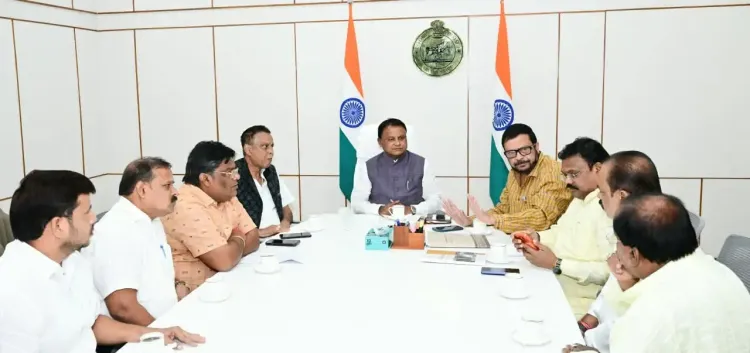
Odisha Chief Minister Mohan Charan Majhi on Thursday, 5 November held detailed discussions with legislators from Ganjam district over the extensive damage caused by Cyclone Arnab and the subsequent floods, assuring residents that the state government would ensure they face no further difficulties. The meeting, held at Lok Seva Bhawan in Bhubaneswar, also preceded a separate briefing with a Central assessment team that visited the state to survey the disaster's scale.
Key Discussions at Lok Seva Bhawan
Revenue Minister Suresh Pujari and Fisheries and Animal Resources Development Minister Gokulananda Mallik were present alongside the MLAs, who apprised Chief Minister Majhi in detail of the ground-level damage. 'The state government is fully aware of the situation in Ganjam district and will ensure that the people of the district do not face any difficulties,' Majhi said. He directed Revenue Minister Pujari to take immediate steps to deliver adequate relief and restore infrastructure damaged by the cyclone and floods.
CM Urges Central Team on Long-Term Disaster Measures
Earlier on Thursday, Chief Minister Majhi met the Central assessment team and urged it to recommend not only immediate relief and reconstruction assistance but also long-term measures to address the recurring natural disasters affecting Odisha. Majhi stressed that floods, cyclones, and heatwaves frequently disrupt the state's developmental activities, and that Odisha urgently needed cyclone- and flood-resilient infrastructure to provide lasting protection to its residents.
Central Team's Findings on Ground Damage
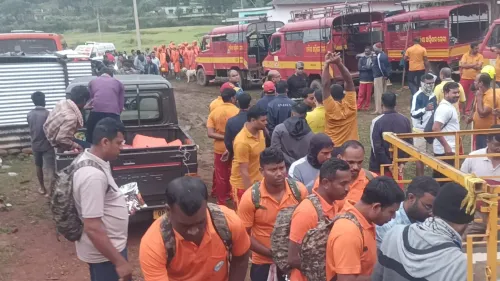
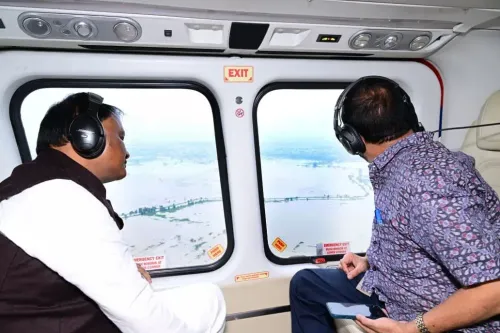
The Central team, led by Ravi Shankar, Joint Secretary in the Union Ministry of Home Affairs, visited Ganjam and Gajapati districts to assess the disaster's impact firsthand. In Ganjam, the overflowing Rushikulya River has inundated several areas, leaving large sand deposits across agricultural fields, roads, houses, and government offices. While many structures have not collapsed, their foundations have been weakened. Ravi Shankar noted that long-term desilting of the Rushikulya River would be necessary, and that a comprehensive damage assessment would take another seven to eight days to complete.
State Government Response Appreciated
Ravi Shankar commended the Odisha government for its prompt response, noting that relief and restoration work had progressed rapidly after the cyclone and floods. He said most roads have been restored to a motorable condition and electricity supply has been reinstated in the affected areas. The Central team's full report, expected within days, is likely to form the basis for financial assistance from the Centre.
What Comes Next
With the Central team's assessment still ongoing, Odisha's recovery timeline will hinge on the recommendations submitted to New Delhi. The push for resilient infrastructure signals that this disaster is prompting a longer-term policy conversation — not just an emergency relief exercise. Ganjam and Gajapati districts, among the worst-affected, will remain under close administrative watch as restoration work continues.
Point of View
Floods, and heatwaves has long exposed the limits of emergency-response-only thinking, and Majhi's explicit push for long-term resilient infrastructure in his Central team briefing is a notable shift in framing. The real question is whether New Delhi's assessment report will move beyond routine NDRF disbursements to fund structural solutions like Rushikulya desilting and cyclone-proof construction — interventions that would actually reduce the state's recurring vulnerability. Odisha has historically received post-disaster praise for its evacuation machinery, yet the same districts face the same devastation cycle after cycle. The 2026 Cyclone Arnab damage is a fresh test of whether Centre-state disaster dialogue can graduate from relief arithmetic to prevention investment.
NationPress
6 Nov 2026
Frequently Asked Questions
What is Cyclone Arnab and how badly has it affected Odisha?
Cyclone Arnab is a recent cyclone that struck Odisha, triggering severe flooding particularly in Ganjam and Gajapati districts. The Rushikulya River overflowed and deposited large amounts of sand across agricultural fields, roads, houses, and government offices, weakening building structures across the region.
What did CM Mohan Charan Majhi tell the Central assessment team?
Chief Minister Majhi urged the Central team to recommend not only immediate relief and reconstruction funds but also long-term measures in its report. He specifically called for cyclone- and flood-resilient infrastructure as a lasting solution to Odisha's recurring natural disaster problem.
Who led the Central team that visited Odisha, and what did they find?
The Central team was led by Ravi Shankar, Joint Secretary in the Union Ministry of Home Affairs. The team visited Ganjam and Gajapati districts and noted extensive flood damage, including sand-covered farmlands and weakened homes, recommending long-term desilting of the Rushikulya River.
When will the Central team's damage assessment be ready?
According to team leader Ravi Shankar, a comprehensive assessment of the widespread damage caused by Cyclone Arnab will take approximately seven to eight days to complete. The report is expected to form the basis for central financial assistance to Odisha.
What immediate relief steps have been taken in Ganjam district?
CM Majhi directed Revenue Minister Suresh Pujari to take immediate steps to deliver adequate relief and restore infrastructure damaged by the cyclone and floods. The Central team noted that most roads have been brought back to a motorable condition and electricity supply has been restored in affected areas.