Sukanta Majumdar cites Congress ties of former CECs, fires back at Opposition
Synopsis
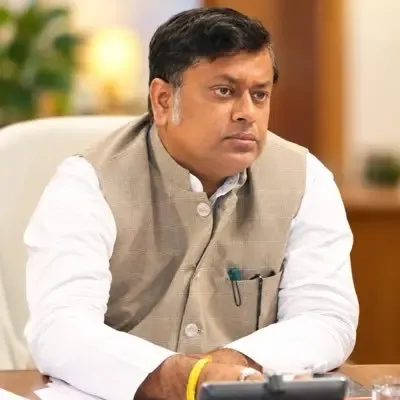
Union Minister Sukanta Majumdar turned the tables on the Opposition in Guwahati by naming four former Chief Election Commissioners — Sukumar Sen, R.K. Trivedi, T.N. Seshan, and M.S. Gill — and citing their alleged Congress ties or post-retirement political roles, asking critics to examine the ECI's own history before questioning its current conduct.
Key Takeaways
Union Minister Sukanta Majumdar addressed reporters in Guwahati on 31 October , defending the Election Commission of India against Opposition criticism.
He cited Sukumar Sen's brother serving as a Congress MP and Law Minister under Nehru in 1957.
Trivedi was appointed Governor of Gujarat after his CEC tenure by the Rajiv Gandhi government.
Seshan later contested a Lok Sabha seat on a Congress ticket against BJP's L.K.
Advani , losing the contest.
Gill joined Congress post-retirement, served as Rajya Sabha MP from Punjab (2004–2016) , and became a UPA Union Minister .
Majumdar urged citizens, especially the youth, to independently examine the historical record of former election commissioners.
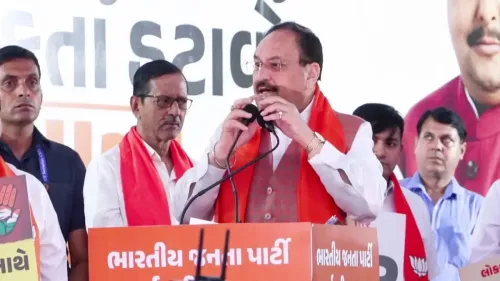
Union Minister Sukanta Majumdar on Saturday, 31 October hit back at the Opposition over its criticism of the Election Commission of India (ECI), invoking the post-retirement political associations of several former Chief Election Commissioners (CECs) to question the credibility of the allegations being levelled against the poll body. Majumdar was speaking to reporters in Guwahati, Assam.
Key Argument: Former CECs and Their Congress Connections
Majumdar named four former Chief Election Commissioners — Sukumar Sen, R.K. Trivedi, T.N. Seshan, and M.S. Gill — while highlighting what he described as their alleged political connections or post-retirement associations with the Indian National Congress (Congress).
On Sukumar Sen, India's first Chief Election Commissioner, Majumdar pointed out that his younger brother was reportedly a Congress Member of Parliament in 1957 and also served as a Law Minister in the government led by Prime Minister Jawaharlal Nehru.
Regarding R.K. Trivedi, who served as CEC from 1982 to 1985, Majumdar stated that Trivedi was subsequently appointed Governor of Gujarat during the government led by Rajiv Gandhi.
Seshan, Gill and Post-Retirement Politics
T.N. Seshan, widely credited with transforming the Election Commission through sweeping electoral reforms in the 1990s, was cited by Majumdar as having later contested the Lok Sabha election against Bharatiya Janata Party (BJP) veteran L.K. Advani on a Congress ticket, a contest Seshan lost.
On M.S. Gill, the Minister said Gill joined Congress after his retirement and served as a Rajya Sabha member from Punjab between 2004 and 2016. Gill also held the position of Union Minister for Youth Affairs and Sports in the United Progressive Alliance (UPA) government.
What the Minister Said
'Today, the same people are questioning us,' Majumdar said, challenging the Opposition's criticism of the ECI and its current appointment process. He urged citizens — particularly the youth — to examine the historical record of former election commissioners rather than accepting political allegations at face value.
Notably, Majumdar made a pointed appeal to younger generations, encouraging them to independently gather information and form their own views rather than relying entirely on partisan narratives. This framing positions the BJP's defence of the ECI as an educational and civic exercise, not merely a political counter-attack.
Context and Broader Significance
The remarks come amid an ongoing political row over the Election Commission's functioning and appointment process — a debate that has intensified in recent election cycles. Critics from the Opposition, including Congress, have raised concerns about the independence and transparency of the ECI's appointment mechanism. Majumdar's counter draws on a long historical arc, arguing that political associations with the poll body's former heads are not a new phenomenon and that the current critique is selective.
The exchange reflects a broader pattern in Indian politics where constitutional bodies increasingly become contested terrain, with each side marshalling historical precedents to buttress its position. How the Opposition responds to Majumdar's specific historical citations is likely to shape the next phase of this debate.
Point of View
Which critics argue has grown more opaque under the present legislative framework. The examples he cites span decades and vary considerably in their relevance: a sibling's political career in 1957 is a different category of concern from a post-retirement cabinet appointment. By bundling these together, the BJP risks conflating correlation with institutional compromise. The deeper question — whether the ECI's structural independence is adequately safeguarded by law — remains unanswered by historical whataboutery, however well-sourced.
NationPress
31 Oct 2026
Frequently Asked Questions
What did Sukanta Majumdar say about the Election Commission controversy?
Union Minister Sukanta Majumdar defended the Election Commission on 31 October in Guwahati by citing the alleged Congress-linked post-retirement associations of four former Chief Election Commissioners — Sukumar Sen, R.K. Trivedi, T.N. Seshan, and M.S. Gill. He argued that the Opposition's current criticism is historically inconsistent given these past connections.
Which former Chief Election Commissioners did Majumdar name?
Majumdar named four former CECs: Sukumar Sen (India's first CEC), R.K. Trivedi (CEC 1982–1985), T.N. Seshan, and M.S. Gill. Each was cited for an alleged association with Congress — through family ties, post-retirement gubernatorial appointment, a contested election on a Congress ticket, or direct party membership and ministerial role.
What is the Opposition's criticism of the Election Commission?
The Opposition has questioned the Election Commission's appointment process and functioning, raising concerns about the body's independence. The specific allegations have intensified in recent election cycles, prompting BJP ministers like Majumdar to respond with historical counter-examples.
What did T.N. Seshan do after his tenure as Chief Election Commissioner?
According to Majumdar, T.N. Seshan — widely credited with major electoral reforms — later contested a Lok Sabha election against BJP veteran L.K. Advani on a Congress ticket, though he lost the contest. Seshan's later political foray is considered notable given his reputation as a fiercely independent election reformer.
What did M.S. Gill do after retiring as Chief Election Commissioner?
M.S. Gill joined Congress after retirement and served as a Rajya Sabha member from Punjab between 2004 and 2016. He also served as Union Minister for Youth Affairs and Sports in the UPA government, making his post-retirement career one of the most politically prominent among former CECs.