Mandaviya: 1 Crore Youth Take Anti-Drug Pledge at 28,000 Sites
Synopsis
Union Minister Mansukh Mandaviya announced that over 1 crore youth took a simultaneous anti-drug pledge at 28,000-plus locations across India on 2 August 2026, with PM Modi unveiling a 100-week roadmap enlisting spiritual and social organisations to sustain the Nasha Mukt Bharat Abhiyan toward the Viksit Bharat 2047 goal.
Key Takeaways
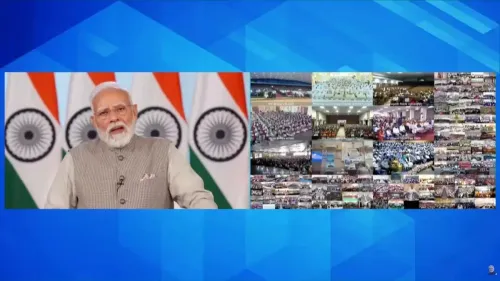
Over 1 crore youth took a simultaneous nasha mukti pledge at more than 28,000 locations across India on 2 August 2026 .
PM Narendra Modi announced a 100-week roadmap to sustain the anti-drug campaign beyond the single-day event.
Spiritual and social organisations will lead the campaign on a rotating weekly basis throughout the 100-week period.
The drive is linked to the government's Viksit Bharat 2047 vision, with youth described as the 'Amrit Peedhi' (Amrit Generation).
The campaign builds on the Nasha Mukt Bharat Abhiyan , first launched in August 2020 by the Ministry of Social Justice and Empowerment.
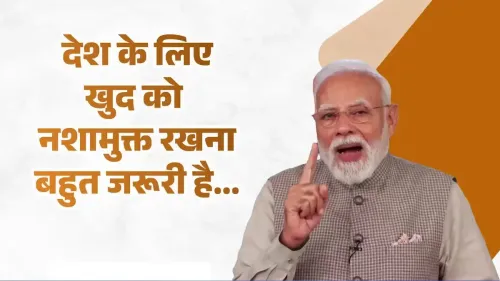
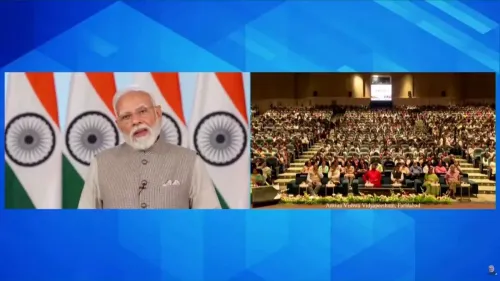
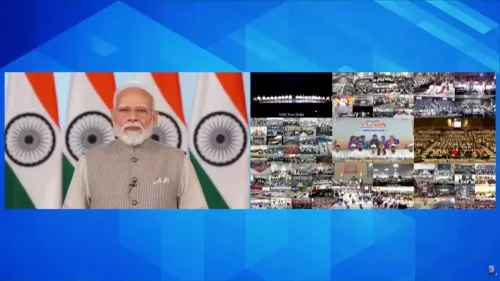
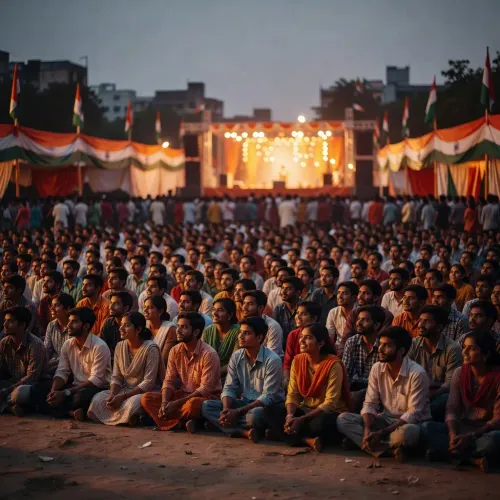
A single pledge, spoken simultaneously at more than 28,000 locations across India — that is the scale of what Union Labour and Sports Minister Mansukh Mandaviya called a historic step toward a drug-free nation on Sunday, 2 August 2026. According to the Minister, over 1 crore young Indians took a collective nasha mukti (anti-drug) oath in an event held under the leadership of Prime Minister Narendra Modi.
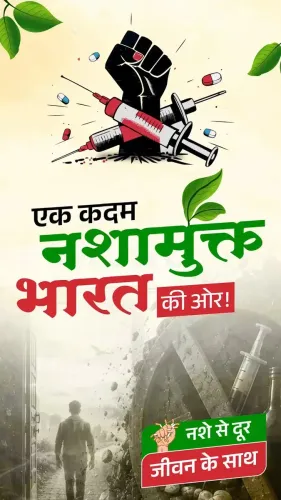
Mandaviya wrote on X: 'नशामुक्त भारत की ओर ऐतिहासिक कदम!' — 'A historic step toward a drug-free India!' — framing the mass pledge drive as the opening move in a sustained, structured campaign. He credited PM Modi with laying out a 100-week roadmap to carry this resolve through to concrete outcomes.
100 Weeks, One Mission: The Roadmap Behind the Pledge
The 100-week structure is not ceremonial. According to Mandaviya's post, India's spiritual and social organisations will take turns leading the campaign each week — a deliberate design that distributes ownership beyond government agencies and into civil society. The ambition: sustain momentum across nearly two years without letting a single-day event fade into a hashtag.
This approach echoes the architecture of the Nasha Mukt Bharat Abhiyan, the national anti-drug campaign launched in August 2020 by the Ministry of Social Justice and Empowerment. That drive targeted districts and communities with awareness and de-addiction programming; Sunday's pledge event appears to dramatically expand its scale and visibility.
The 'Amrit Generation' and the 2047 Target
Mandaviya explicitly linked the anti-drug drive to the government's flagship long-term vision: Viksit Bharat 2047, the blueprint for a developed India by the centenary of independence. He described today's youth as the 'Amrit Peedhi' — the 'Amrit Generation' — whose freedom from substance abuse is framed as a prerequisite for building that future.
The framing is politically deliberate and policy-consistent. The central government has repeatedly positioned non-state actors — religious bodies, social organisations, community groups — as force-multipliers for welfare goals that the state machinery alone cannot reach at village level. A 100-week relay of weekly leadership by such bodies is a direct expression of that strategy.
Why the Scale of Sunday's Event Matters
Mass pledge events are a familiar tool in Indian public health campaigns, from polio eradication drives to sanitation missions. What sets this apart, if the figures hold, is simultaneity at this magnitude — 1 crore participants, 28,000-plus venues, one moment. That kind of coordinated reach, if sustained through the 100-week calendar, could embed the anti-drug message in communities well beyond urban centres where awareness campaigns typically concentrate.
Drug abuse among youth has been a persistent concern flagged in parliamentary debates and social-sector reports, with particular attention to states in the north and northeast. The #NashaMuktYuva campaign now has a formal timeline and a distributed delivery mechanism — the next test is whether the weekly relay of organisational leadership translates into measurable de-addiction outcomes.
One crore pledges in a single afternoon is a striking opening act. Whether the 100 weeks that follow match the ambition of the launch will define whether this is a movement or a moment.
Point of View
Community-anchored campaigns to advance social welfare goals the state cannot deliver alone. By routing the 100-week roadmap through spiritual and social organisations rather than government departments, the administration is effectively outsourcing last-mile delivery to civil society, a model it has tested in sanitation and nutrition drives. The explicit tethering of anti-drug messaging to Viksit Bharat 2047 also serves a political function: it frames youth welfare as inseparable from national development, giving the Abhiyan a patriotic register that broadens its appeal. The real question the 100-week calendar will answer is whether distributed weekly ownership sustains public attention or dissipates it.
NationPress
2 Aug 2026
Frequently Asked Questions
What is the Nasha Mukt Bharat Abhiyan?
The Nasha Mukt Bharat Abhiyan is a national anti-drug awareness and de-addiction campaign coordinated by India's Ministry of Social Justice and Empowerment, first launched in August 2020 to mobilise districts and communities — particularly youth — against substance abuse.
How many youth participated in the anti-drug pledge on 2 August 2026?
According to Union Minister Mansukh Mandaviya's post, over 1 crore (10 million) youth participated simultaneously at more than 28,000 locations across India, though these figures are as stated by the Minister and have not been independently verified.
What is PM Modi's 100-week roadmap for the drug-free India campaign?
PM Modi announced a 100-week roadmap under which spiritual and social organisations will take turns leading the Nasha Mukt Bharat campaign each week, aiming to sustain anti-drug momentum across nearly two years and link it to the Viksit Bharat 2047 development vision.
What is Viksit Bharat 2047?
Viksit Bharat 2047 is the Indian government's vision for a fully developed India by 2047, the centenary of independence, with youth identified as central contributors to achieving that goal.
What role will spiritual organisations play in the Nasha Mukt Yuva campaign?
According to Mandaviya, India's spiritual and social organisations will lead the Nasha Mukt Bharat Abhiyan on a rotating weekly basis over the 100-week roadmap, acting as community-level anchors to sustain the anti-drug message beyond the initial pledge event.