Mandaviya marks 6 years of PM-SVANidhi, credits Modi's vision
Synopsis
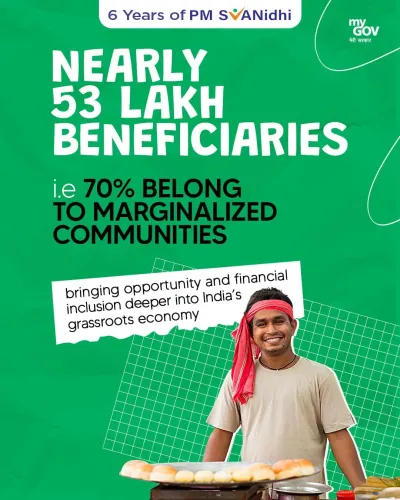
Union Minister Mansukh Mandaviya marked six years of PM-SVANidhi on 1 June 2026, crediting PM Modi's vision for helping lakhs of street vendors access collateral-free working capital loans and move toward financial self-reliance.
Key Takeaways
PM-SVANidhi completed six years on 1 June 2026 , having been launched on 1 June 2020 under the Atmanirbhar Bharat package.
The scheme provides collateral-free working capital loans of up to Rs 50,000 to urban street vendors.
Union Minister Mansukh Mandaviya credited PM Narendra Modi's visionary leadership for the scheme's role in empowering street vendors.
The scheme is implemented through the Ministry of Housing and Urban Affairs with urban local bodies handling ground-level delivery.
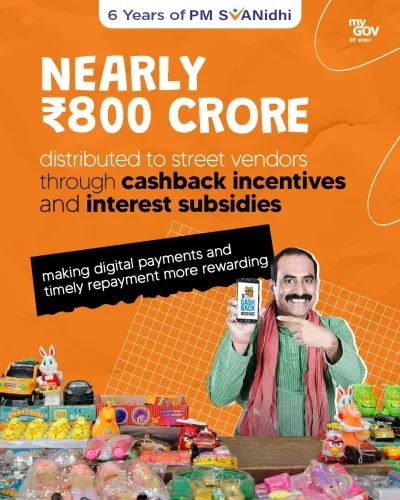
PM-SVANidhi incentivises digital payments by making vendors eligible for higher loan limits in subsequent cycles.
The scheme builds on earlier financial inclusion efforts including Jan Dhan accounts and Mudra loans .
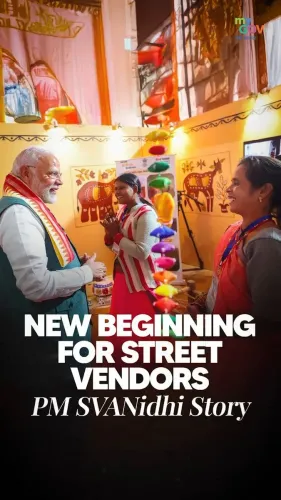
Union Labour and Sports Minister Mansukh Mandaviya on Monday, 1 June 2026 marked the sixth anniversary of the PM Street Vendor's AtmaNirbhar Nidhi (PM-SVANidhi) scheme, crediting Prime Minister Narendra Modi's 'visionary leadership' for empowering lakhs of hardworking street vendors toward self-reliance.
Context
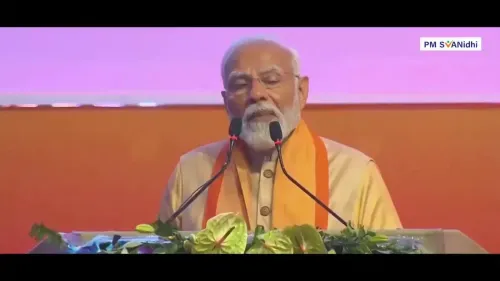
Mandaviya posted on X in Hindi, stating that under the 'दूरदर्शी नेतृत्व' ('visionary leadership') of Prime Minister Modi, PM-SVANidhi has played an 'important role in making lakhs of hardworking street vendor companions self-reliant.' The post was accompanied by a video and carried the hashtag #6YearsOfPMSVANidhi, marking the scheme's completion of six years since its launch.
The scheme was launched on 1 June 2020 as part of the Atmanirbhar Bharat package, specifically to provide relief to urban street vendors whose livelihoods were severely disrupted by COVID-19 restrictions.
Policy Backdrop
PM-SVANidhi is a central sector scheme that provides collateral-free working capital loans of up to Rs 50,000 to street vendors operating on public spaces across urban India. It is implemented through the Ministry of Housing and Urban Affairs, with state urban local bodies responsible for on-ground delivery.
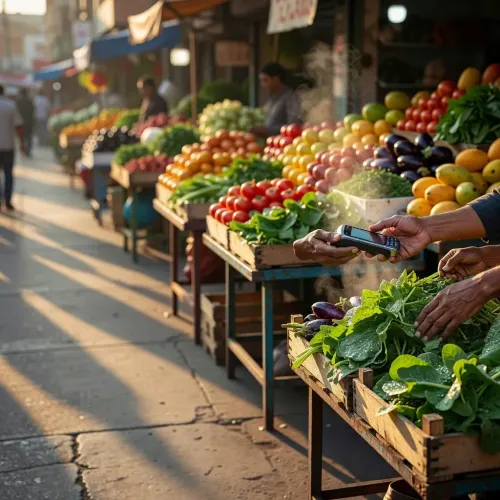
The scheme is part of a broader arc of financial inclusion efforts pursued by the government since 2014, building on programmes such as Jan Dhan accounts and Mudra loans. A distinctive feature of PM-SVANidhi is its emphasis on digital payments — vendors who transact digitally become eligible for enhanced credit limits in subsequent loan cycles, nudging the informal economy toward formalisation.
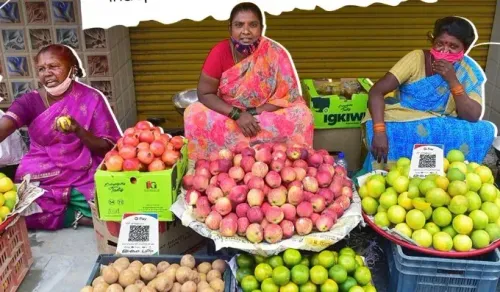
The scheme targets one of urban India's most economically vulnerable groups: vendors of fruits, vegetables, street food, and daily-use goods who typically lack access to formal banking credit and operate without fixed premises.
Stakeholders and Impact
Street vendors represent a significant segment of India's urban informal workforce, concentrated in cities and towns across every state. Before PM-SVANidhi, this group had limited recourse beyond informal moneylenders who charged high interest rates, leaving vendors in cycles of debt.
By channelling collateral-free credit through scheduled commercial banks, small finance banks, and microfinance institutions, the scheme aimed to break that cycle and bring vendors into the formal financial system. The push toward digital transactions also linked vendors to consumer-facing payment infrastructure for the first time.
Urban local bodies — municipal corporations and town councils — are central to the scheme's delivery, as they issue the certificates of vending that serve as the primary eligibility document for loan applications.
What's Next
Attention will now turn to the Ministry of Housing and Urban Affairs for updated data on cumulative disbursements and repayment rates as the scheme enters its seventh year. Any cabinet decision on extending or expanding PM-SVANidhi's scope — including potential revisions to loan ceilings or geographic coverage — will be closely watched by welfare economists and urban policy advocates.
The anniversary also sets the stage for the government to highlight the scheme's outcomes ahead of upcoming urban local body elections in several states, where street vendor welfare has emerged as a grassroots political issue.
Point of View
Associating the BJP's welfare record with a scheme that directly touches the urban informal economy — a constituency that delivered significant electoral goodwill in past cycles. The timing, exactly six years to the launch date, suggests a coordinated government-wide communication push rather than a spontaneous tribute. For the Labour Minister specifically, the endorsement signals an effort to claim broader welfare ownership even for schemes outside his direct portfolio. Watched alongside the government's ongoing push on Mudra and Jan Dhan, it reinforces a consistent narrative of bottom-up economic formalisation as a BJP governance signature.
NationPress
22 Sept 2026
Frequently Asked Questions
What is PM-SVANidhi scheme?
PM-SVANidhi, or Pradhan Mantri Street Vendor's AtmaNirbhar Nidhi, is a central government scheme launched on 1 June 2020 that provides collateral-free working capital loans of up to Rs 50,000 to urban street vendors to help them rebuild livelihoods and access formal credit.
When was PM-SVANidhi launched?
PM-SVANidhi was launched on 1 June 2020 as part of the Atmanirbhar Bharat relief package, primarily to support street vendors whose incomes were disrupted by COVID-19 lockdown restrictions.
Who implements PM-SVANidhi?
The scheme is implemented by the Ministry of Housing and Urban Affairs, with state urban local bodies and municipal corporations handling on-ground delivery, including issuance of vending certificates that serve as the key eligibility document.
What did Mansukh Mandaviya say about PM-SVANidhi?
On 1 June 2026, marking the scheme's sixth anniversary, Union Minister Mansukh Mandaviya posted on X stating that under PM Narendra Modi's visionary leadership, PM-SVANidhi has played an important role in making lakhs of hardworking street vendors self-reliant.
How much loan can street vendors get under PM-SVANidhi?
Street vendors can receive collateral-free working capital loans of up to Rs 50,000 under PM-SVANidhi, with loan limits increasing across cycles for vendors who repay on time and adopt digital payment methods.