Mandaviya Launches MY Bharat Industry Conclave to Boost Youth Jobs
Synopsis
Union Minister Mansukh Mandaviya addressed the inaugural MY Bharat Industry Association Conclave on 3 July 2026, uniting 20-plus industry bodies to launch Employment Linkage Programmes, mentoring, and joint CSR projects aimed at empowering India's youth under the Viksit Bharat vision.
Key Takeaways
Mansukh Mandaviya addressed the first-ever MY Bharat Industry Association Conclave on 3 July 2026 .
More than 20 top industry bodies have partnered with the government for this initiative.
The conclave focuses on three pillars: Employment Linkage Programmes (ELPs) , structured mentoring, and joint CSR projects .
The initiative is anchored to PM Narendra Modi 's Viksit Bharat 2047 vision, positioning youth as central to India's development goal.
The MY Bharat platform serves as the convergence point for government-industry youth engagement, building on the Skill India Mission and Companies Act 2013 CSR framework.
Operationalisation of ELPs and measurable CSR commitments will be the key indicators to watch in the coming fiscal cycle.
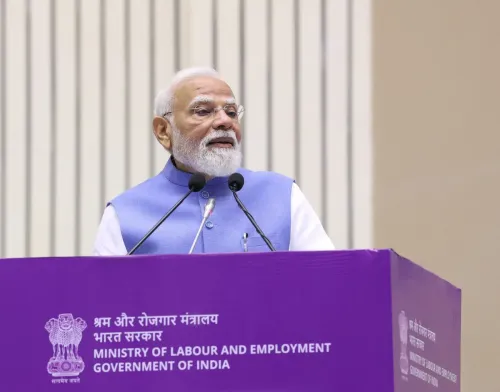
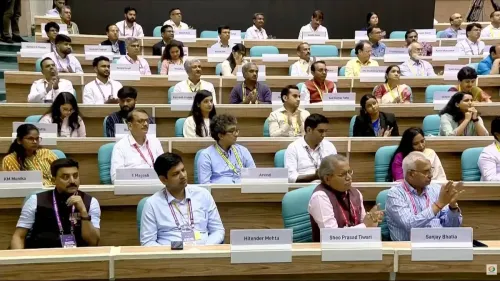
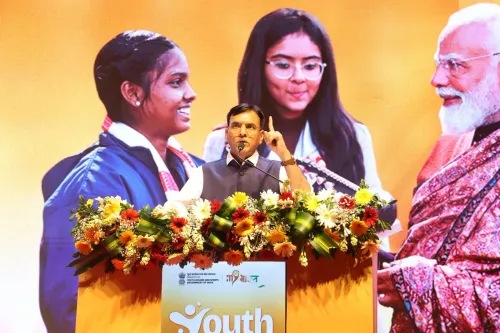
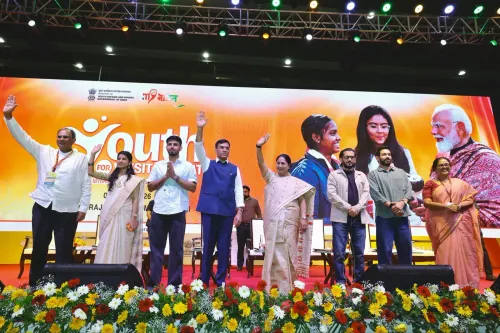
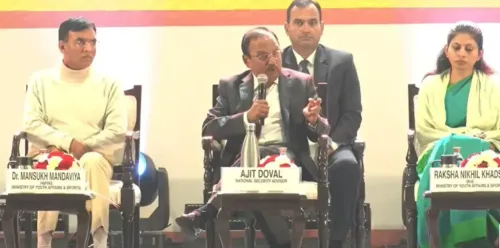
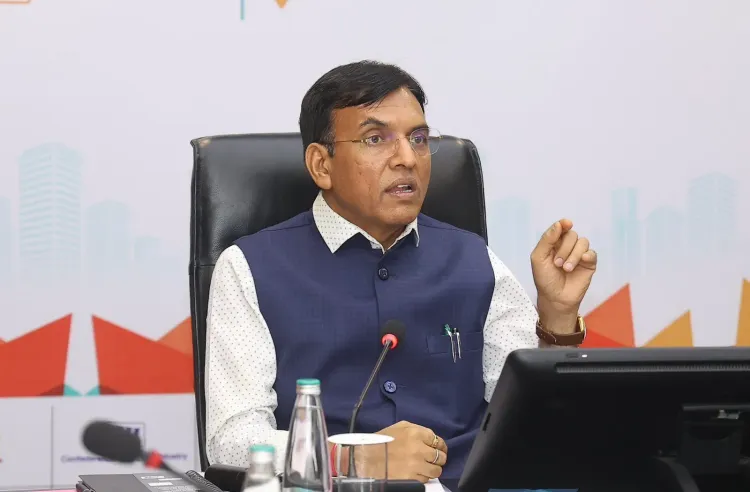
Union Labour and Sports Minister Mansukh Mandaviya on Friday, 3 July 2026, addressed the inaugural MY Bharat Industry Association Conclave, bringing together more than 20 top industry bodies in a government-industry partnership aimed at building Employment Linkage Programmes (ELPs), mentoring frameworks, and joint CSR projects for India's youth.
Context
Speaking at the conclave, Mandaviya said the event marked a milestone in operationalising the MY Bharat platform — the government's flagship youth-engagement initiative — through direct collaboration with the private sector. He described the synergy as rooted in Prime Minister Narendra Modi's vision of empowering young Indians to drive national development. The minister stated that the partnership would focus on three pillars: robust Employment Linkage Programmes (ELPs), structured mentoring, and jointly funded CSR projects targeted at the youth workforce.
In his address, Mandaviya said the initiative was 'driven by PM Shri Narendra Modi Ji's vision' and that 'this government-industry synergy will empower India's young workforce to lead the nation toward becoming a Viksit Bharat.' The conclave is the first of its kind under the MY Bharat umbrella, signalling an intent to institutionalise such public-private convenings.
Policy Backdrop
The conclave sits within a layered policy architecture built over more than a decade. The Skill India Mission, launched in 2015, established the template for vocational training and industry linkages. The Companies Act 2013 codified mandatory CSR spending, creating a statutory channel through which corporates can fund skilling and mentoring at scale.
The National Education Policy 2020 further deepened this architecture by integrating vocational education from early schooling stages and mandating industry partnerships in curriculum design. The MY Bharat platform, launched subsequently, was designed to serve as a single convergence point connecting young citizens with government schemes, skilling opportunities, and civic engagement. The industry conclave represents an attempt to pull private-sector resources directly into that ecosystem.
Stakeholders and Impact
The primary beneficiaries are India's youth, a demographic that constitutes a substantial share of the country's working-age population and whose productive absorption into the formal economy is central to the Viksit Bharat 2047 goal. Industry associations participating in the conclave stand to shape the design of ELPs and CSR mandates, giving them a direct role in workforce pipeline planning.
For the Ministry of Labour and Employment, the conclave provides a mechanism to leverage corporate CSR budgets — governed under existing law — for targeted youth outcomes without additional budgetary outlay. Mentoring programmes, in particular, address a gap that formal skilling schemes have historically struggled to fill: sustained, sector-specific guidance for first-generation job seekers.
What's Next
The immediate test will be the operationalisation of the ELPs and the conversion of conclave commitments into measurable CSR allocations within the current fiscal cycle. Observers will watch for references to these partnerships in the next Union Budget or at the National Youth Summit, either of which could provide a formal policy anchor for the announced programmes.
If the model proves scalable, the government-industry conclave format under MY Bharat could become a recurring mechanism, potentially expanding to state-level industry bodies and sector-specific chambers. The success of the initiative will ultimately be measured by placement numbers, mentoring enrolments, and CSR funds actually disbursed — metrics that will take at least one full fiscal year to crystallise.
Point of View
Private-sector-backed delivery mechanisms for youth employment. By invoking the Viksit Bharat 2047 framework, Mandaviya is tethering a ministry-level initiative to the government's overarching national narrative, lending it political salience beyond routine skilling policy. The emphasis on CSR as a funding lever is pragmatically significant: it allows the government to scale youth programmes without proportionate budgetary burden, using a statutory corporate obligation as a resource pool. Whether this translates into durable outcomes will depend on the specificity of commitments extracted from the 20-plus industry bodies and the monitoring architecture put in place.
NationPress
3 Jul 2026
Frequently Asked Questions
What is the MY Bharat Industry Association Conclave?
The MY Bharat Industry Association Conclave is the first government-industry convening under the MY Bharat youth platform, held on 3 July 2026, where Union Minister Mansukh Mandaviya partnered with more than 20 industry bodies to build Employment Linkage Programmes, mentoring frameworks, and joint CSR projects for Indian youth.
What is MY Bharat and how does it help youth?
MY Bharat is a government youth-engagement platform designed to connect young citizens with skilling opportunities, government schemes, and civic participation. The industry conclave extends its reach by bringing private-sector resources into the ecosystem through ELPs and CSR-funded mentoring.
What are Employment Linkage Programmes (ELPs) in India?
Employment Linkage Programmes are structured partnerships between government bodies and industry associations intended to create direct pathways from skilling and training into formal employment, reducing the gap between trained youth and available jobs.
How does CSR funding support youth skilling in India?
Under the Companies Act 2013, qualifying companies are required to spend a portion of their profits on CSR activities, which can include skilling, mentoring, and education. The MY Bharat conclave channels these mandatory funds toward targeted youth employment outcomes.
What is the Viksit Bharat 2047 goal?
Viksit Bharat, or 'Developed India', is the national vision articulated by Prime Minister Narendra Modi to transform India into a fully developed economy by 2047, the centenary of independence, with youth workforce development identified as a central pillar of that transformation.