Meghalaya intensifies Tobacco-Free campaign: 7.3 lakh students, 10,000 schools covered
Synopsis
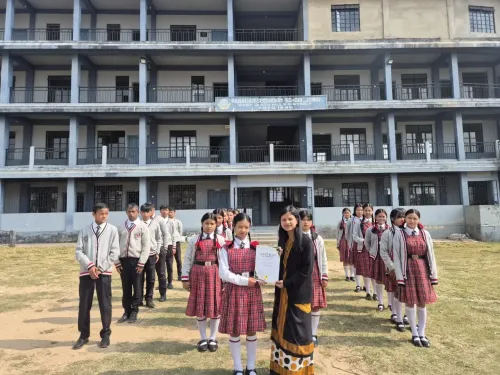
Meghalaya's Tobacco-Free Educational Institution drive has quietly become one of India's most extensive school-level tobacco control efforts — covering 85% of schools across all 11 districts, 7.3 lakh students, 28,000 teachers, and 1,050 Village Health Councils. With over 60% of the state's population under 25, officials are now pushing to take the model deeper into rural and district-level communities.
Key Takeaways
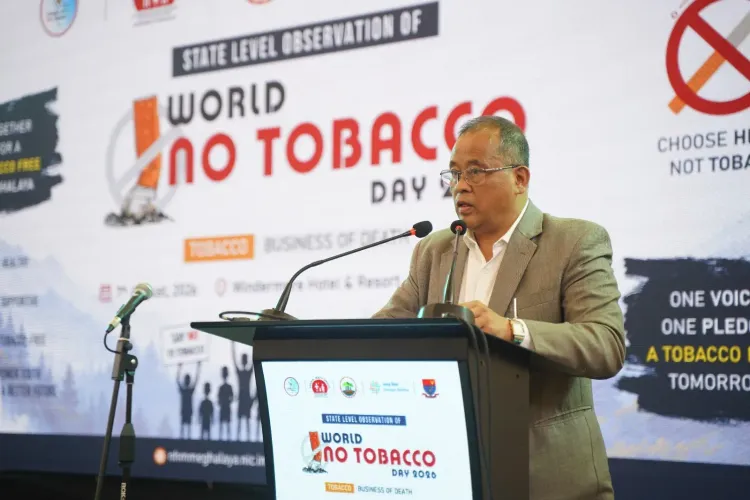
The Meghalaya government held a state-level tobacco sensitisation programme in Shillong on 7 August , themed 'Tobacco: Business of Death' .
The ToFEI initiative has covered nearly 6 lakh students in more than 10,000 schools and achieved 85% school coverage across all 11 districts over five years.
More than 28,000 teachers and 7.3 lakh students have been engaged; 83% of colleges are now tobacco-free.
Over 1,050 Village Health Councils are actively implementing tobacco-control measures at the grassroots level.
Officials noted that more than 60% of Meghalaya's population is below 25 years of age , underscoring the urgency of youth-focused outreach.
Awards were presented to outstanding schools, Village Health Councils, students, police units and district administrations.
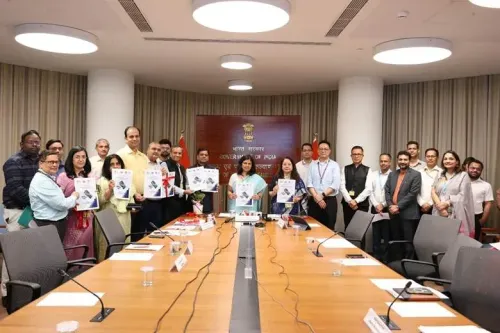
The Meghalaya government on Friday, 7 August stepped up its push for a Tobacco-Free Meghalaya, convening a state-level sensitisation programme in Shillong that brought together senior officials, educators, law enforcement and students to accelerate tobacco control across schools, colleges and village councils.
Key Developments
The programme, themed 'Tobacco: Business of Death', was organised by the National Tobacco Control Program (NTCP) under the National Health Mission (NHM). Officials outlined the scale of progress already achieved and called for broader inter-departmental coordination to sustain momentum.
What Officials Said
Health and Family Welfare Secretary and NHM Mission Director Ramkumar S. described tobacco as a gateway substance linked to serious long-term health risks. He noted that more than 60 per cent of Meghalaya's population is below 25 years of age, making youth engagement central to the campaign's success. He urged expansion of awareness drives to all district headquarters through coordinated multi-departmental efforts.
East Khasi Hills Deputy Commissioner Abhilash Baranwal appealed to young people to resist peer pressure and refuse tobacco experimentation, framing the choice as an act of courage rather than social conformity.
Director of School Education and Literacy Richa Kulkarni said the Tobacco-Free Educational Institution (ToFEI) initiative has reached nearly 6 lakh students across more than 10,000 schools statewide, with students emerging as health ambassadors within their communities.
Additional Superintendent of Police Ivan Diengdoh reminded participants of legal prohibitions under the Cigarettes and Other Tobacco Products Act (COTPA), including bans on smoking in public places, tobacco advertising, and the sale of tobacco products to or by minors.
Scale of the ToFEI Programme
NTCP Senior Dental Surgeon Nabaneeta D. Mawrie provided the most comprehensive data: the ToFEI initiative has achieved approximately 85 per cent school coverage across all 11 districts over the past five years, engaging more than 28,000 teachers and 7.3 lakh students. Additionally, 83 per cent of colleges in the state have attained tobacco-free status, and over 1,050 Village Health Councils are actively implementing tobacco-control measures at the grassroots level.
Recognition and the Road Ahead
The programme concluded with awards presented to outstanding schools, Village Health Councils, students, police units and district administrations. Participants took a collective pledge to work towards a tobacco-free Meghalaya. This comes amid growing national concern over youth tobacco use, with India accounting for a significant share of global smokeless tobacco consumption. Meghalaya's multi-institutional model — spanning schools, colleges and village bodies — is being cited as a replicable framework for other states. The next phase is expected to deepen outreach at the district level, with greater emphasis on rural and tribal communities.
Point of View
83% tobacco-free colleges, and over 1,000 village councils enrolled is not a pilot, it is a system. What the programme has not yet addressed publicly is outcome data: whether tobacco initiation rates among youth have actually declined, and by how much. Coverage metrics are inputs; behaviour change is the output. As the campaign moves toward district-level expansion, the credibility of this model will depend on whether it publishes verifiable prevalence data, not just participation figures.
NationPress
7 Aug 2026
Frequently Asked Questions
What is the Tobacco-Free Meghalaya campaign?
It is a state-wide initiative led by the Meghalaya government under the National Tobacco Control Program (NTCP) and National Health Mission (NHM) to eliminate tobacco use through schools, colleges and village institutions. The campaign's flagship programme, the Tobacco-Free Educational Institution (ToFEI) initiative, has reached over 7.3 lakh students across all 11 districts of the state.
How many schools and students has the ToFEI initiative covered?
The ToFEI initiative has achieved approximately 85% school coverage across all 11 districts of Meghalaya over five years, engaging more than 28,000 teachers and 7.3 lakh students. Nearly 6 lakh students across more than 10,000 schools have been reached under the programme.
What role do Village Health Councils play in tobacco control?
Over 1,050 Village Health Councils across Meghalaya are actively implementing tobacco-control measures at the grassroots level as part of the broader Tobacco-Free Meghalaya campaign. Their involvement extends the programme's reach beyond schools and colleges into rural and tribal communities.
What does COTPA prohibit, and how is it being enforced?
The Cigarettes and Other Tobacco Products Act (COTPA) prohibits smoking in public places, tobacco advertising, and the sale of tobacco products to or by minors. Additional Superintendent of Police Ivan Diengdoh highlighted these provisions at the Shillong event, signalling law enforcement's active role in the campaign.
Why is youth engagement central to Meghalaya's tobacco control strategy?
Officials noted that more than 60% of Meghalaya's population is below 25 years of age, making young people both the most vulnerable demographic and the most effective agents of change. Health Secretary Ramkumar S. emphasised that early school-level intervention enables students to become health ambassadors within their families and communities.