Did Bangladesh Leader's Killers Really Enter Meghalaya?
Synopsis
Meghalaya Police and the BSF have denied allegations that murder suspects from Bangladesh entered India. Amid rising tensions following the death of political figure Sharif Osman Hadi, the integrity of the investigation and regional stability are under scrutiny.
Key Takeaways
Meghalaya Police and BSF deny reports of murder suspects entering India.
Sharif Osman Hadi was a prominent political figure.
Rising unrest in Bangladesh following Hadi's murder.
The investigation into Hadi's murder is nearing completion.
Concerns over regional stability and safety are growing.
Shillong, Dec 28 (NationPress) The Meghalaya Police along with the Border Security Force (BSF) on Sunday firmly rejected allegations stating that two suspects involved in the murder of Sharif Osman Hadi (32), a representative of the Inqilab Mancha group, had escaped from Bangladesh into India and were captured in the northeastern state.
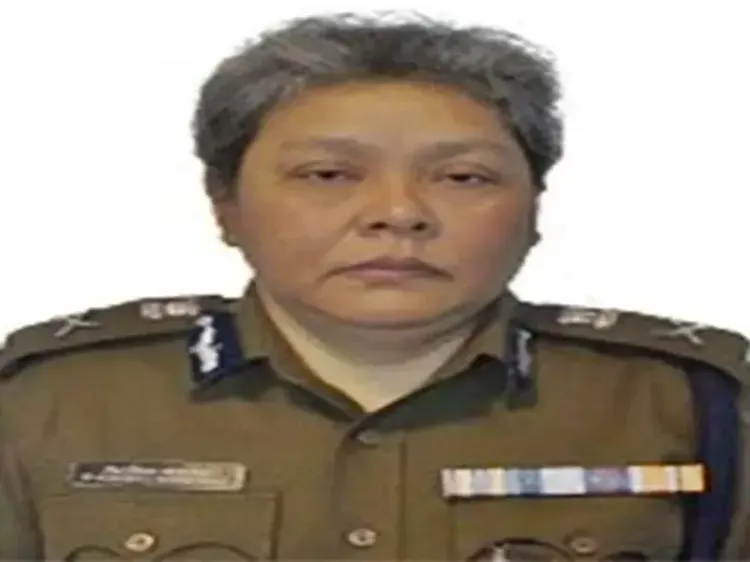
The Director General of Police (DGP) of Meghalaya, Idashisha Nongrang, informed IANS that no suspects have been detained by the state police regarding the murder of Osman Hadi.
Another senior police official from Meghalaya remarked: “This narrative is a fabrication originating from a segment of the Bangladesh media. It is generating confusion among the public and seeks to disrupt the peace and harmony in Meghalaya, a region that shares a sensitive international border and routinely confronts trans-border crimes.”
BSF Meghalaya Frontier Inspector General O.P. Upadhyay stated that it is untrue to claim that any murder suspects have been arrested at the state’s border in recent times.
“This is a malicious and fabricated narrative,” the IG declared to the media.
Previously on Sunday, media from Bangladesh cited Additional Commissioner of Dhaka Metropolitan Police (DMP) S.N. Nazrul Islam mentioning that the main suspect in the murder of Sharif Osman Hadi and his accomplice had fled to India.
“Two Indian nationals aided them in their escape, and the Meghalaya Police have apprehended those two Indian citizens,” the reports reportedly stated.
The Additional Commissioner also mentioned that a total of 11 individuals have been arrested in connection with the Hadi murder. Among them, six have provided confessional statements in court under Section 164, while four witnesses have also recorded confessions.
The DMP official informed the media in Dhaka that the investigation into the Hadi murder case is nearing completion, with the charge sheet expected to be submitted within the next seven to ten days.
He also noted that many individuals involved in the murder have been identified, though not all names can be revealed due to the ongoing investigation. Initial findings suggest that the murder may have been politically motivated.
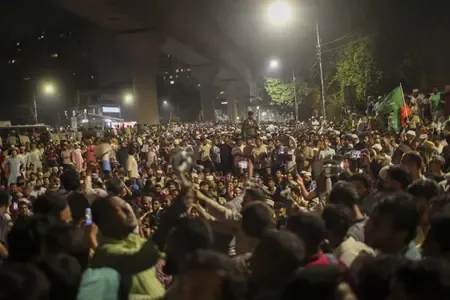
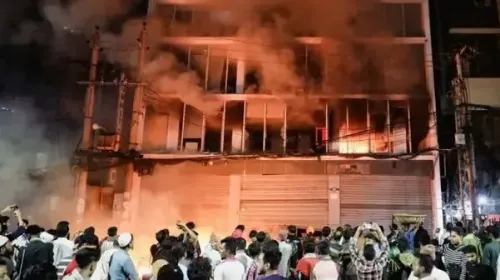
Meanwhile, unrest has reportedly surged in various regions of Bangladesh, including Dhaka, following Hadi’s death.
Hadi, a significant figure in last year’s protest against the former Prime Minister Sheikh Hasina-led Awami League government, was shot by masked gunmen while exiting a mosque in Dhaka on December 12.
Initially hospitalized in Bangladesh, he was later transported to Singapore for treatment, where he ultimately succumbed to his injuries on December 18.
This situation has raised alarms regarding safety, communal harmony, and regional stability. Bangladesh has also seen a rise in violence against minorities, including Hindus, under the interim government led by Chief Adviser Muhammad Yunus, sparking outrage among citizens and various global human rights organizations.
Under the administration of Muhammad Yunus, Bangladesh has witnessed a notable increase in violence and a deterioration of law and order.
Point of View
It is crucial to approach the situation with a balanced perspective. The denial from Meghalaya Police and BSF highlights the complexities of cross-border narratives and the impact of media on public perception. It is vital to uphold the integrity of the investigative process while ensuring peace and harmony in the region.
NationPress
26 Sept 2026
Frequently Asked Questions
What led to the confusion regarding the murder suspects?
The confusion arose from reports in the Bangladesh media claiming that murder suspects had fled to India, which was firmly denied by Meghalaya Police and the BSF.
Who is Sharif Osman Hadi?
Sharif Osman Hadi was a spokesperson for the Inqilab Mancha group and a key figure in protests against the former Prime Minister Sheikh Hasina-led government.
What has been the reaction in Bangladesh to Hadi's death?
Following Hadi's death, unrest has erupted in various parts of Bangladesh, raising concerns about safety and communal harmony.
What are the implications of this incident for regional stability?
The incident raises alarms about safety, communal harmony, and the potential for escalating violence in the region.
How many people have been arrested in connection with Hadi's murder?
So far, 11 individuals have been arrested in connection with the murder, with some providing confessional statements.