KHADC blocks Blinkit expansion in Meghalaya, cites threat to 4,000 local shops

Synopsis
Meghalaya's Khasi Hills Autonomous District Council has blocked Blinkit's expansion by refusing a trading licence, citing risk to over 4,000 local grocery shops in Shillong. It previously denied Instamart on the same grounds — making this a clear, consistent policy stance that could set a precedent for quick-commerce regulation across Northeast India's tribal jurisdictions.
Key Takeaways
The Khasi Hills Autonomous District Council (KHADC) refused to grant Blinkit a mandatory trading licence in Meghalaya on 26 June .
The council cited risk to more than 4,000 grocery shops in Shillong and surrounding areas.
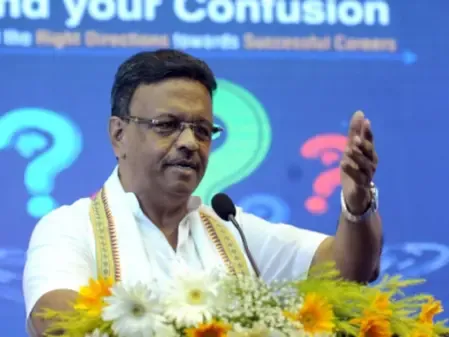
KHADC Chief Executive Member Winston Tony Lyngdoh said protecting indigenous businesses is a primary council responsibility.
Blinkit had secured an NOC from traditional bodies in Nongrim Hills but suspended operations after failing to obtain statutory clearance.
KHADC had previously denied a similar licence to Instamart on comparable grounds.
Autonomous district councils derive their trade regulatory powers from the Sixth Schedule of the Indian Constitution.
The Khasi Hills Autonomous District Council (KHADC) has declined to issue a mandatory trading licence to quick-commerce platform Blinkit, effectively halting the company's planned expansion in Meghalaya, officials said on Thursday, 26 June. The council cited concerns that app-based delivery models offering deep discounts and rapid doorstep delivery could threaten the livelihoods of indigenous retailers, particularly the more than 4,000 grocery shops operating in and around Shillong.
Why KHADC Refused the Licence
KHADC Chief Executive Member Winston Tony Lyngdoh defended the decision, saying the autonomous district council has consistently prioritised the economic interests of local traders over external commercial operators. 'We cannot allow business models that jeopardise the livelihood of our local traders. Protecting indigenous businesses remains one of the council's primary responsibilities,' Lyngdoh said.
Council officials noted that Blinkit's application for a trading licence had not yet formally reached the office of the Chief Executive Member for final consideration at the time of the decision. The company had, however, secured a No Objection Certificate (NOC) from local traditional bodies in Nongrim Hills as part of its pre-expansion groundwork.
Blinkit's Preliminary Operations and Suspension
According to sources, Blinkit had already initiated preliminary operations in Meghalaya and had reportedly engaged hundreds of delivery partners in anticipation of a full launch. The company subsequently suspended its plans after failing to obtain the necessary statutory clearances from the autonomous district council.
This is not the first time KHADC has moved to protect local commerce from quick-commerce disruption. The council had previously denied a similar trading licence to Instamart, citing comparable concerns about app-based platforms undercutting neighbourhood stores through aggressive discounting.
The Regulatory Framework in Tribal Areas
Autonomous district councils in the Northeast India exercise significant regulatory authority over trade and commerce within tribal jurisdictions under the Sixth Schedule of the Indian Constitution. This gives bodies like KHADC the legal standing to restrict or deny licences to businesses they deem incompatible with local economic interests — a power that distinguishes the region's regulatory landscape from the rest of India.
Notably, quick-commerce platforms have expanded rapidly across Indian metros and Tier-2 cities over the past two years, but their penetration into tribal and protected areas has repeatedly run into this constitutional safeguard.
Impact on Local Traders and Broader Policy Debate
Officials warned that if platforms like Blinkit were permitted to operate without adequate safeguards, more than 4,000 small grocery shop owners in Shillong and surrounding areas could face severe competitive pressure. Critics of quick-commerce expansion argue that the deep-discount, high-frequency delivery model structurally disadvantages traditional kirana and neighbourhood stores that lack the capital to compete on price or speed.
The episode highlights a widening policy fault line between India's fast-growing quick-commerce sector and the regulatory autonomy of tribal councils — a tension likely to intensify as platforms seek to expand beyond saturated urban markets into smaller cities and protected regions.
Point of View
The council is building a consistent regulatory wall against quick-commerce in tribal Meghalaya. What mainstream coverage misses is that this is less about anti-tech sentiment and more about constitutional design: the Sixth Schedule was explicitly framed to let tribal councils control economic activity in their jurisdictions, and that includes saying no to VC-funded disruption. The real question is whether quick-commerce platforms will lobby for a Centre-level override, or adapt their models to co-exist with local traders — something none have credibly attempted yet.
NationPress
26 Jun 2026
Frequently Asked Questions
Why did KHADC block Blinkit's expansion in Meghalaya?
The Khasi Hills Autonomous District Council refused to grant Blinkit a mandatory trading licence, citing concerns that its rapid-delivery, deep-discount model could threaten the livelihoods of more than 4,000 indigenous grocery shop owners in Shillong and nearby areas. The council said protecting local traders is a primary responsibility under its mandate.
Has KHADC blocked other quick-commerce platforms before?
Yes. KHADC had previously denied a similar trading licence to Instamart on comparable grounds, establishing a consistent policy of restricting app-based delivery platforms from operating in its jurisdiction.
What is KHADC and what authority does it have over businesses?
The Khasi Hills Autonomous District Council is a constitutional body established under the Sixth Schedule of the Indian Constitution, which grants autonomous district councils in Northeast India regulatory powers over trade and commerce in tribal areas. This allows KHADC to approve or deny trading licences to companies seeking to operate within its jurisdiction.
What stage had Blinkit reached before the decision?
Blinkit had secured a No Objection Certificate from traditional bodies in Nongrim Hills and had reportedly engaged hundreds of delivery partners in anticipation of a launch. However, its formal trading licence application had not yet reached the Chief Executive Member's office, and the company suspended operations after failing to obtain statutory clearance.
What does this mean for quick-commerce expansion in Northeast India?
The KHADC decision signals that quick-commerce platforms face a distinct regulatory environment in tribal areas of Northeast India, where constitutional protections for indigenous trade can override standard commercial licensing norms. It is likely to prompt other autonomous district councils in the region to adopt similar stances as platforms seek to expand beyond metro markets.