Meghalaya's Self-Help Groups Surge: A 7-Year Transformation
Synopsis
In a significant announcement, Meghalaya CM Conrad K. Sangma revealed the extraordinary growth of the state's Self-Help Group movement, which has rapidly expanded to cover nearly 90% of households, showcasing its vital role in empowering women and enhancing livelihoods.
Key Takeaways
53,000 Self-Help Groups now active in Meghalaya.
SHGs have mobilized close to Rs 1,100 crore in credit.
95% loan repayment rate highlights financial responsibility.
Over 58,000 women’s groups benefiting from this initiative.
Efforts ongoing to boost SHG presence in urban areas.
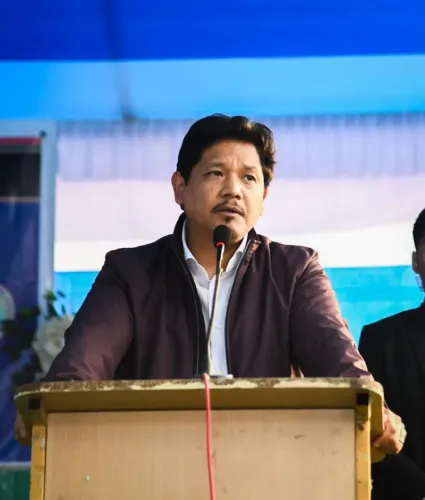
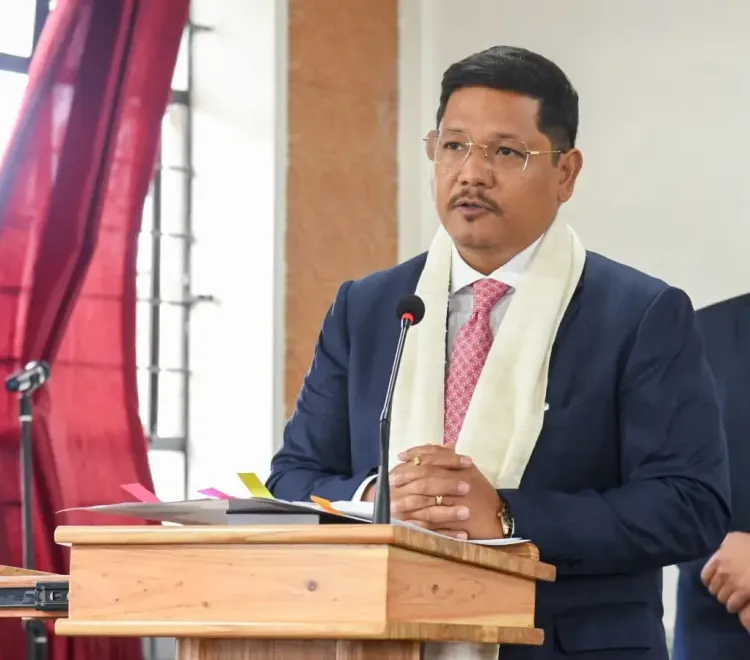
Shillong, Feb 25 (NationPress) The Chief Minister of Meghalaya, Conrad K. Sangma, announced in the Assembly that the state's Self-Help Group (SHG) movement has witnessed remarkable growth over the past seven years under the current government, becoming one of the largest grassroots livelihood programs in the region and reaching nearly 90% of households.
In response to a question in the assembly, the Chief Minister highlighted that the count of SHGs in Meghalaya has surged from approximately 4,000–5,000 groups in 2018–19 to an impressive 53,000 groups currently.
He noted that this network has successfully mobilized close to Rs 1,100 crore in credit, significantly enhancing women-led livelihoods in rural and semi-urban areas.
According to Sangma, SHGs are established voluntarily, requiring a minimum of 10 to 15 women to form a group, and do not necessitate formal registration.
He emphasized the pivotal role of the Meghalaya State Rural Livelihoods Society (MSRLS) in facilitating connections with banks.
“When these groups unite, they are not required to provide collateral. They can open bank accounts and obtain loans at an interest rate of seven percent,” he explained.
Furthermore, the Chief Minister praised the financial discipline of the SHGs, revealing that nearly 95% of loans are repaid punctually.
He added that banks have disbursed Rs 755 crore to SHGs, with over 40,800 groups consistently managing their repayments.
“This showcases the responsibility and sustainability inherent in the SHG model,” he stated.
Sangma mentioned that nearly Rs 1,100 crore is currently accessible to SHGs, positively impacting over 58,000 women’s groups, with around 70% of the funding sourced from bank credit.
He credited the MSRLS team for their relentless efforts in bolstering grassroots livelihoods.
The Chief Minister pointed out that SHG membership has increased from about 40,000 women eight years ago to nearly 5.8 lakh today, and the flow of credit has escalated from less than Rs 100 crore to its current value.
In response to a follow-up question by Voice of the People Party MLA, Brightstarwell Chyne, regarding the lower participation rates in urban areas like Mawlai, Sangma explained that SHG formation is contingent on individual willingness.
He acknowledged that urban regions such as Mawlai and Mawpat have displayed a weaker response compared to rural blocks but reassured that efforts are being made to ensure comprehensive coverage.
Regarding income generation, Sangma revealed that 41,323 SHG members have already attained “lakhpati” status, with the government now focused on supporting them to reach even higher income tiers.
Point of View
Making it a model for other regions.
NationPress
6 Oct 2026
Frequently Asked Questions
What is the purpose of Self-Help Groups in Meghalaya?
Self-Help Groups aim to empower women by providing them access to credit, resources, and the ability to generate sustainable livelihoods.
How many Self-Help Groups are currently active in Meghalaya?
As of now, there are approximately 53,000 Self-Help Groups operating in Meghalaya.
What kind of financial support do SHGs receive?
SHGs have mobilized around Rs 1,100 crore in credit, with banks providing significant loans to support their initiatives.
What role does the Meghalaya State Rural Livelihoods Society play?
The Meghalaya State Rural Livelihoods Society (MSRLS) facilitates bank linkages and provides support to strengthen livelihoods through SHGs.
How has SHG membership changed in recent years?
SHG membership has grown from about 40,000 women eight years ago to nearly 5.8 lakh today.