J&K can be gateway between Central and South Asia: Mehbooba Mufti
Synopsis
Mehbooba Mufti has drawn a striking parallel between Iran's stranglehold on the Strait of Hormuz and Jammu and Kashmir's untapped geographic leverage — arguing that J&K could become the defining transit corridor between Central and South Asia, but only if India mends ties with both Pakistan and China. The framing repackages a decades-old PDP peace argument in a sharply contemporary geopolitical language.
Key Takeaways
Mehbooba Mufti on 1 July said Jammu and Kashmir can serve as a gateway between Central Asia and South Asia .
She drew a parallel between Iran's strategic use of the Strait of Hormuz and J&K's geographical position.
Her remarks were prompted by a letter signed by more than 100 prominent Indians and Pakistanis addressed to PM Modi and PM Shehbaz Sharif .
Mehbooba said improved ties with China and Pakistan are essential to unlock J&K's potential.
The PDP , founded by her late father Mufti Mohammad Sayeed , has long advocated dialogue over confrontation as the path to peace in J&K.
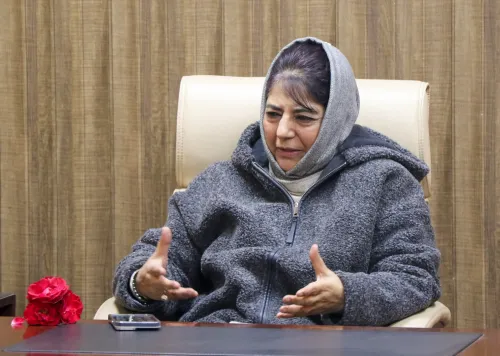
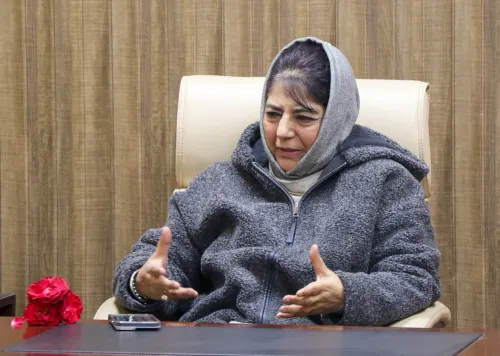
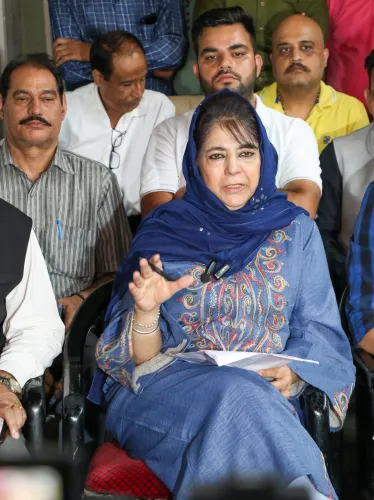
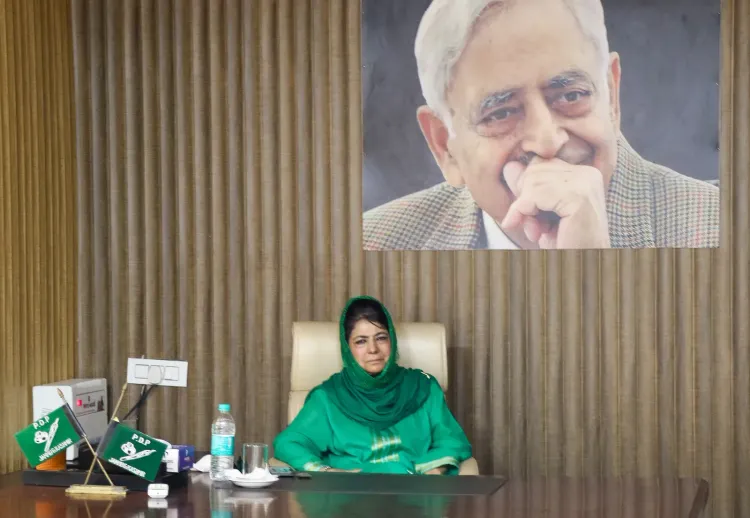
Peoples Democratic Party (PDP) chief and former Jammu and Kashmir Chief Minister Mehbooba Mufti on Wednesday, 1 July said that Jammu and Kashmir holds the potential to serve as a strategic gateway between Central Asia and South Asia, drawing a pointed parallel with Iran's leverage over the Strait of Hormuz. Her remarks came in response to a joint letter signed by more than 100 prominent individuals from India and Pakistan, addressed to Prime Minister Narendra Modi and Pakistani Prime Minister Shehbaz Sharif, calling for dialogue between the two neighbours.
The Hormuz Parallel
Mehbooba argued that just as a relatively small nation like Iran has been able to exert significant pressure on a far more powerful country like the United States by controlling the Strait of Hormuz, India possesses an equivalent strategic asset in Jammu and Kashmir. She stated that the region's geographical position is a resource that remains largely untapped. 'Just as Iran has the Strait of Hormuz, India has Jammu and Kashmir,' she said, underscoring the region's potential as a transit and trade corridor.
What Needs to Change
Mehbooba stressed that realising this potential would require a fundamental shift in India's diplomatic posture. She said it is essential that relations with China improve and that ties with Pakistan are normalised. Opening the relevant trade and transit routes, she argued, would bring about economic, political, and emotional transformation in the region. This comes amid a broader international conversation about South Asian connectivity, with regional trade corridors gaining renewed attention.
PDP's Long-Standing Position
Mehbooba's remarks are consistent with the political philosophy long championed by the PDP. The party was founded by her late father, Mufti Mohammad Sayeed, on the principle that lasting peace in J&K can only be achieved through dialogue rather than force — a conviction captured in the party's iconic campaign slogan, 'Goli Se Nahin, Boli Se' (Not through guns, but through words). Mehbooba succeeded Mufti Sayeed as both party president and Chief Minister of Jammu and Kashmir following his death in January 2016.
Context: The 100-Signatory Letter
The letter that prompted Mehbooba's comments was signed by more than 100 prominent voices from both India and Pakistan and was addressed jointly to the two prime ministers. While the full contents of the letter were not disclosed in detail, its signatories reportedly urged the two governments to resume dialogue and reduce tensions. Notably, such cross-border civil society appeals have surfaced periodically over the past two decades, though they have rarely translated into formal diplomatic movement. This is among the more prominent such efforts in recent years, given the scale of its signatories.
What This Means for J&K
If India-Pakistan relations were to stabilise and overland routes through J&K were activated, the region could become a critical node in trade connecting South Asia to Central Asia and beyond — a vision that has been discussed in policy circles but never operationalised. Analysts note that geography alone is insufficient without political will on multiple sides. The next steps, if any, will depend on whether the joint letter generates a formal response from either government.
Point of View
But it papers over a fundamental asymmetry: Iran controls the strait unilaterally, while J&K's corridor potential depends on the political consent of at least three sovereign states — India, Pakistan, and China. The 100-signatory letter is a civil society gesture, not a policy shift, and framing it as a turning point risks overstating its diplomatic weight. What is notable, however, is that Mehbooba is now making a connectivity and economic argument rather than a purely humanitarian one — a strategic pivot that may be calculated to find more traction in New Delhi than traditional peace appeals have.
NationPress
30 Sept 2026
Frequently Asked Questions
What did Mehbooba Mufti say about Jammu and Kashmir's strategic position?
Mehbooba Mufti said Jammu and Kashmir can serve as a gateway between Central Asia and South Asia, comparing the region's geographic leverage to Iran's control of the Strait of Hormuz. She argued that opening transit routes through J&K could bring economic, political, and emotional transformation to the region.
What is the letter signed by 100 prominent Indians and Pakistanis about?
More than 100 prominent signatories from India and Pakistan jointly wrote to Prime Minister Narendra Modi and Pakistani Prime Minister Shehbaz Sharif, reportedly urging renewed dialogue between the two countries. Mehbooba Mufti cited this letter as evidence that public sentiment on both sides favours de-escalation.
Why does Mehbooba Mufti say India-Pakistan and India-China ties must improve?
Mehbooba argues that J&K's potential as a transit and trade corridor connecting South Asia to Central Asia can only be realised if overland routes through the region are opened — which requires normalised relations with both Pakistan and China. Without that diplomatic groundwork, the geographic advantage remains theoretical.
What is the PDP's historical stance on India-Pakistan relations?
The Peoples Democratic Party, founded by Mufti Mohammad Sayeed, has consistently advocated dialogue over confrontation as the path to peace in Jammu and Kashmir. This position was encapsulated in the party's campaign slogan 'Goli Se Nahin, Boli Se' — meaning peace comes through words, not guns. Mehbooba Mufti has continued this approach since succeeding her father as party chief and Chief Minister after his death in January 2016.
Has J&K's role as a regional trade corridor been discussed before?
Yes, the idea of using Jammu and Kashmir as a transit corridor linking South Asia to Central Asia has been discussed in policy and academic circles for decades. However, it has never been operationalised, primarily due to unresolved political tensions between India and Pakistan and strained India-China relations.