Mekedatu row: Palaniswami slams Shivakumar, questions Vijay's silence on Cauvery
Synopsis
The Mekedatu reservoir dispute has spilled into Tamil Nadu's domestic politics, with AIADMK chief Palaniswami not only rejecting Karnataka CM Shivakumar's claim that no permission is needed from Tamil Nadu, but also turning the fire on his own state's Chief Minister Vijay for an allegedly tepid response — even as Vijay had already written to PM Modi opposing the project.
Key Takeaways
AIADMK general secretary Edappadi K.
Palaniswami accused Karnataka CM D.K.
Shivakumar of misleading the public on the legal status of the Mekedatu reservoir .
Palaniswami maintained the Supreme Court had not granted unrestricted clearance for the project.
He alleged Tamil Nadu CM C.
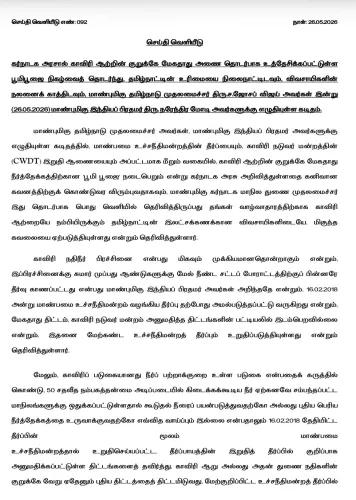
Joseph Vijay was a 'passive spectator' despite Vijay having written to PM Modi opposing the project.
Shivakumar, speaking in Hassan on Sunday , said Karnataka needed Tamil Nadu's cooperation, not permission, and that the reservoir would benefit both states.
The proposed Mekedatu balancing reservoir would store 67.16 tmc ft of water and generate 400 MW of electricity, primarily for Bengaluru 's drinking water needs.
Tamil Nadu opposes the project, warning it could restrict Cauvery flows into the state and hurt Cauvery delta farmers.
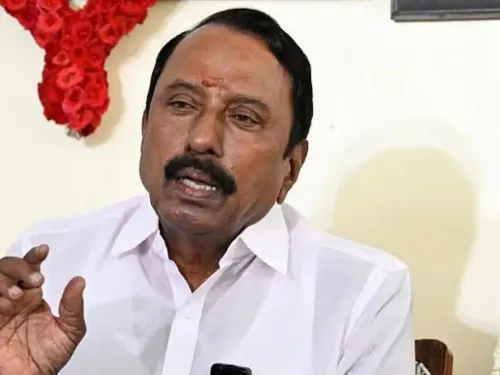
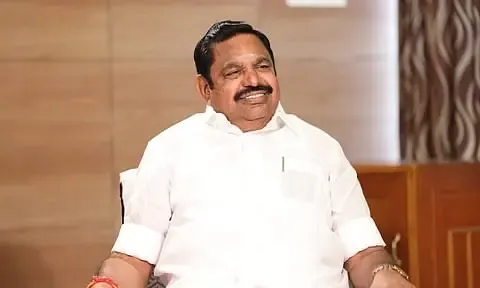
AIADMK general secretary Edappadi K. Palaniswami on Tuesday, 11 November 2026 sharply criticised Karnataka Chief Minister D.K. Shivakumar's claim that Tamil Nadu's permission was not required for the proposed Mekedatu reservoir on the Cauvery, and simultaneously questioned why Tamil Nadu Chief Minister C. Joseph Vijay was not mounting a stronger defence of the state's water rights. The broadside from the opposition leader intensifies political pressure on the Vijay government over one of the most contested inter-state water disputes in South India.
Palaniswami's Charges Against Shivakumar
In a formal statement, Palaniswami alleged that the Karnataka government was misleading the public about the project's legal standing. He maintained that the Supreme Court had not granted unrestricted clearance for construction of the reservoir — a direct rebuttal to the framing offered by Shivakumar in Hassan on Sunday. Palaniswami recalled that during his tenure as Chief Minister from 2017 to 2018, he had repeatedly raised the matter with Prime Minister Narendra Modi, pressing the Centre to withhold statutory and administrative approvals for Karnataka's proposed project. He argued that Tamil Nadu's agricultural belt, particularly the Cauvery delta, faced serious consequences if upstream storage were allowed without adequate safeguards.
The Silence Question: Vijay Under Fire
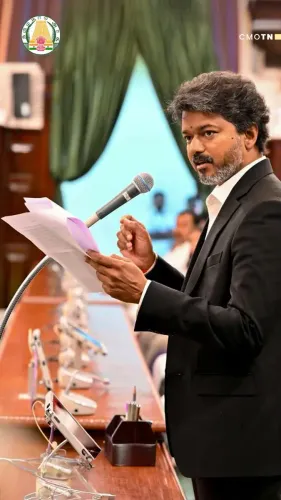
Palaniswami accused the Vijay government of acting as a 'passive spectator' while Karnataka advanced its plans for the balancing reservoir. The criticism, notably, came after Vijay had written to Prime Minister Modi opposing the project — a step Palaniswami appeared to regard as insufficient. His allegation of silence therefore concerns not whether the Tamil Nadu government has acted, but whether its response has been proportionate to the scale of the threat to the state's water entitlements. The AIADMK leader called for stronger and more direct intervention to protect Tamil Nadu's share of Cauvery waters and the livelihoods dependent on them.
What Shivakumar Said
The row was triggered by remarks Shivakumar made in Hassan on Sunday, in which he stated that Karnataka needed Tamil Nadu's cooperation, not its permission, to implement the Mekedatu project. He argued that the reservoir would ultimately benefit Tamil Nadu as well, and invited Tamil Nadu's representatives to visit the proposed site and engage in discussions. Shivakumar maintained that the scheme would primarily address Bengaluru's drinking water needs and that Karnataka would honour its Cauvery water release obligations. He also cited Supreme Court proceedings in support of Karnataka's position, while acknowledging that environmental and forest-related clearances remained pending.
What the Mekedatu Project Involves
The proposed Mekedatu balancing reservoir envisages storing 67.16 thousand million cubic feet (tmc ft) of water. Karnataka presents it as a dual-purpose project: supplying drinking water to Bengaluru and surrounding areas, and generating 400 MW of electricity. Tamil Nadu has consistently opposed the reservoir, arguing that additional upstream storage could restrict the volume of water flowing downstream and adversely affect irrigation in the Cauvery delta, where farmers depend on timely releases for cultivation.
The Broader Cauvery Dispute
The Mekedatu standoff is the latest flashpoint in a decades-old inter-state river water conflict. The core dispute turns on whether Karnataka's proposed storage would compromise downstream water availability for Tamil Nadu — a concern that has previously drawn Supreme Court intervention and led to the formation of the Cauvery Water Management Authority. With Karnataka pressing ahead and Tamil Nadu's political parties competing to demonstrate vigilance, the issue is likely to intensify ahead of any fresh clearance applications. All eyes are now on how the Vijay government responds to Palaniswami's challenge and whether the Centre takes a formal position on the project's pending approvals.
Point of View
The AIADMK is raising the bar on what constitutes an adequate response — a classic opposition move designed to keep the ruling party perpetually on the defensive over an emotive issue. The deeper irony is that the Mekedatu project's pending environmental and forest clearances mean Karnataka cannot proceed regardless of the inter-state political noise. What mainstream coverage misses is that the real battleground may be the Centre's decision on those clearances — and neither Tamil Nadu nor Karnataka appears to have a decisive lobbying advantage in New Delhi right now.
NationPress
11 Nov 2026
Frequently Asked Questions
What is the Mekedatu reservoir project and why is it controversial?
The Mekedatu balancing reservoir is a Karnataka government proposal to store 67.16 thousand million cubic feet of Cauvery water, primarily to meet Bengaluru's drinking water needs and generate 400 MW of electricity. Tamil Nadu opposes it, arguing that the upstream storage would reduce water flows into the state and harm Cauvery delta farmers who depend on timely releases for irrigation.
What did Palaniswami say about the Mekedatu dispute?
AIADMK general secretary Edappadi K. Palaniswami said on 11 November 2026 that the Supreme Court had not granted unrestricted clearance for the reservoir and that Karnataka was misleading the public about the project's legal standing. He also accused Tamil Nadu CM C. Joseph Vijay of being a passive spectator rather than mounting a strong defence of the state's water rights.
What did Karnataka CM Shivakumar say about the project?
Speaking in Hassan on Sunday, Shivakumar said Karnataka needed Tamil Nadu's cooperation, not its permission, to build the reservoir. He argued the project would benefit Tamil Nadu, cited Supreme Court proceedings in Karnataka's favour, and confirmed that environmental and forest-related clearances are still pending.
Has Tamil Nadu CM Vijay taken any action on Mekedatu?
Yes, Chief Minister C. Joseph Vijay wrote to Prime Minister Narendra Modi opposing the Mekedatu project before the latest round of political exchanges. Palaniswami has argued this response is inadequate given the scale of Karnataka's push.
What is the history of Tamil Nadu's opposition to Mekedatu?
Tamil Nadu has opposed the Mekedatu reservoir for years. Former Chief Minister Edappadi K. Palaniswami said he raised the issue repeatedly with PM Modi during 2017–18 and pushed the Centre to withhold statutory and administrative approvals for the project. The dispute is part of the broader, decades-long Cauvery water-sharing conflict between the two states.