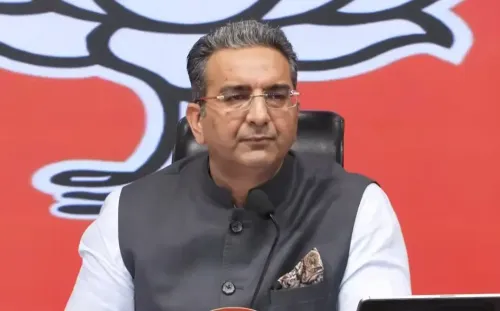
Rahul Gandhi 'defaming' India abroad, say Ministers Paswan, Chouhan, Athawale
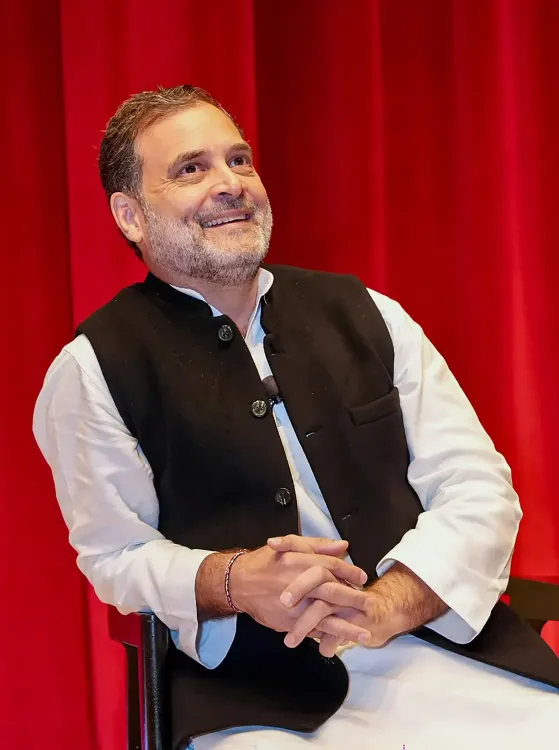
Synopsis
Three Union Ministers — Paswan, Chouhan, and Athawale — turned on Rahul Gandhi in unison on Friday after he reportedly called India an 'economic disaster' at Columbia University. The coordinated attack signals the NDA's intent to make Gandhi's overseas remarks a sustained political liability, with the Congress yet to respond and parliament's winter session on the horizon.
Key Takeaways
Union Ministers Chirag Paswan, Shivraj Singh Chouhan and Ramdas Athawale attacked Rahul Gandhi on 20 November 2026 over his overseas remarks.
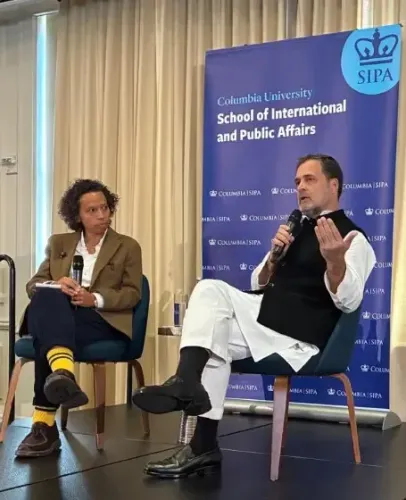
Gandhi reportedly described India as an 'economic disaster' in a speech at Columbia University in the United States.
Paswan alleged Gandhi made statements 'without verifying things or providing any supporting documents' and questioned whether 'foreign forces' were backing the Opposition.
Chouhan said going abroad to 'defame' India was the 'height of cheapness' and invoked World Bank poverty data to rebut Gandhi.
Athawale called Gandhi the country's 'problem' and noted India's economy had risen to the fourth position globally.
The Indian National Congress had not issued a formal public response as of Friday.
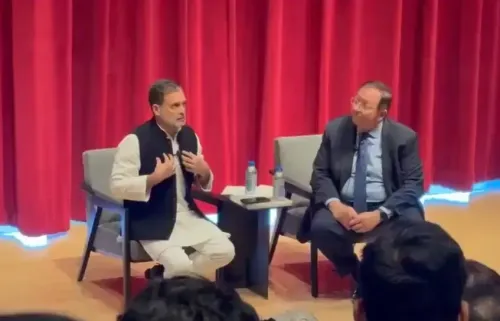
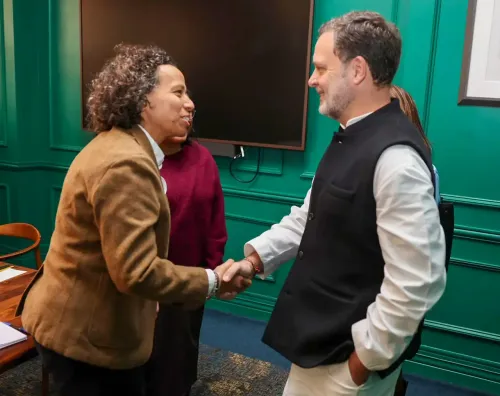
Three Union Ministers launched a coordinated attack on Leader of Opposition in the Lok Sabha Rahul Gandhi on Friday, 20 November 2026, accusing him of 'defaming' India during overseas visits. The criticism follows Gandhi's remarks at Columbia University in the United States, where he reportedly described India as sitting on an 'economic disaster'.
What the Ministers Said
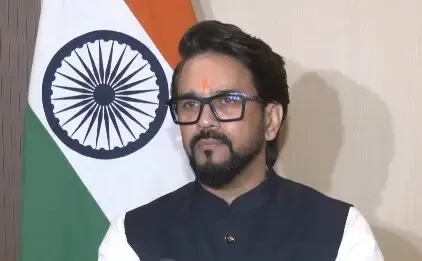
Union Minister and Lok Jan Shakti Party (Ram Vilas) chief Chirag Paswan alleged that Gandhi made 'misleading statements' about India's economy on foreign soil 'without verifying things or providing any supporting documents.' Paswan told reporters: 'This is yet another false narrative that the opposition repeatedly tries to establish to belittle our own country in front of other nations. Today, when global leaders are recognising India, Indians, and Indian leadership, our own Leader of the Opposition uses foreign soil to defame India, its economy, and its system.'
Paswan went further, raising the spectre of external interference: 'This raises serious questions about whether foreign forces are backing them to make such statements.' He also took exception to a European leader's remarks at the Congress-led Bharat Summit 2026, questioning how foreign guests were invited to comment on India's governance and raise slogans like 'Vote chor, gaddi chhod.'
Chouhan and Athawale Pile On
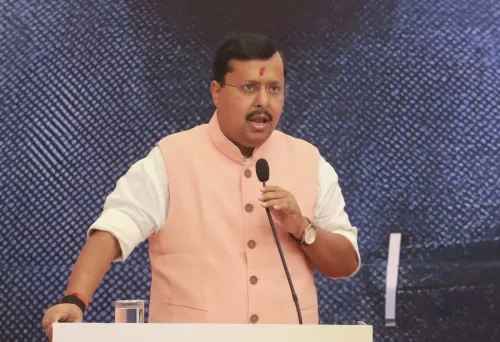
Union Minister Shivraj Singh Chouhan was sharper in his language, saying: 'Going outside India and defaming your own country is the height of cheapness; how low will you stoop, brother?' Chouhan claimed that Gandhi was resorting to overseas criticism because 'people within the nation have stopped listening to him.' Invoking the World Bank's poverty findings in India, he argued that the world was 'looking at our growth rate with wonder' and that Gandhi had become 'blind in opposition to PM Modi.'
Union Minister of State Ramdas Athawale called Gandhi the country's 'problem,' adding that Gandhi's allegations were 'false' and that 'defaming the country abroad is not right.' Athawale also pointed to India's economy having risen to the fourth position globally as evidence against Gandhi's characterisation.
Gandhi's Columbia University Remarks
The trigger for Friday's broadside was Gandhi's address at Columbia University, during which he reportedly described India's economic condition as an 'economic disaster.' The Opposition leader has used multiple international platforms in recent months to critique the state of India's economy, employment, and democratic institutions — a pattern the ruling National Democratic Alliance (NDA) has repeatedly condemned as anti-national. Gandhi and the Indian National Congress (INC) have not yet responded publicly to Friday's ministerial remarks.
The Broader Political Context
This is not the first time Gandhi's overseas addresses have triggered a government response. The NDA has consistently framed such interventions as an attempt to embarrass India before foreign audiences and has alleged, without presenting public evidence, that 'foreign forces' are encouraging Opposition figures to do so. Critics of the government argue, however, that questioning economic policy abroad is within the bounds of democratic dissent. This comes amid an increasingly polarised political climate ahead of several state elections and with both sides sharpening their narratives on India's economic trajectory.
With the Congress yet to issue a formal rebuttal, the exchange is likely to escalate in the coming days as parliament's winter session approaches.
Point of View
With Gandhi's Columbia University appearance serving as a convenient hook. The 'foreign forces' allegation, repeated by Paswan without evidence, is a recurring NDA framing device that conflates foreign-policy critique with sedition-adjacent language. What mainstream coverage tends to underplay is that Gandhi's overseas speeches have consistently driven this cycle: the Opposition gets an international platform, the government gets a nationalism narrative. Neither side is breaking new ground. The more substantive question — whether India's growth data masks structural unemployment or rural distress — goes largely unexamined in the crossfire.
NationPress
20 Nov 2026
Frequently Asked Questions
What did Rahul Gandhi say at Columbia University?
Rahul Gandhi reportedly described India as sitting on an 'economic disaster' during a speech at Columbia University in the United States. The remarks drew sharp criticism from ruling NDA ministers, though Gandhi's office had not issued a formal clarification as of 20 November 2026.
Why did Union Ministers attack Rahul Gandhi on 20 November?
Union Ministers Chirag Paswan, Shivraj Singh Chouhan, and Ramdas Athawale accused Gandhi of 'defaming' India by criticising the country's economy on foreign soil. They argued the remarks undermined India's global image at a time when world leaders are, in their characterisation, recognising India's growth.
What is Chirag Paswan's allegation about 'foreign forces'?
Paswan alleged that Gandhi's overseas remarks raise 'serious questions about whether foreign forces are backing them,' though he did not provide public evidence. The NDA has previously used similar framing to suggest external interference in Indian politics.
How has India's economy been described by government ministers?
Paswan highlighted that India has maintained a growth rate above 7 per cent despite global challenges. Athawale stated India's economy has risen to the fourth position globally, citing these figures as proof that Gandhi's 'economic disaster' characterisation is false.
Has the Congress responded to the ministers' criticism?
As of Friday, 20 November 2026, the Indian National Congress had not issued a formal public response to the ministers' remarks. The exchange is expected to continue as parliament's winter session approaches.