BJP's Mission 360: Women's Reservation Bill push ahead of Monsoon Session
Synopsis
The BJP needs 360 votes for a constitutional amendment — it currently has around 293. With the Monsoon Session days away, the party is running a precise, MP-by-MP count across the DMK, Samajwadi Party, Shiv Sena factions, and even Trinamool Congress to push the Women's Reservation Bill across the line it missed in April.
Key Takeaways
The BJP is intensifying outreach to reintroduce the Constitution (131st Amendment) Bill on women's reservation ahead of the Monsoon Session starting 20 July .
A constitutional amendment requires at least 360 votes in the Lok Sabha (effective strength: 540 ); the NDA currently commands around 293 MPs .
Potential support from NCPI (20 MPs) , DMK (22 MPs) , YSRCP (4 MPs) , and independents could push the tally to around 340 .
Maharashtra political shifts and Sharad Pawar's 8 MPs could take the count to approximately 354 — still six short of the threshold.
Akhilesh Yadav and Sanjay Raut have signalled conditional support; the BJP is also exploring backing from Trinamool Congress MPs.
An all-party meeting is scheduled for 19 July ; the NDA Parliamentary Party meeting follows on 21 July .
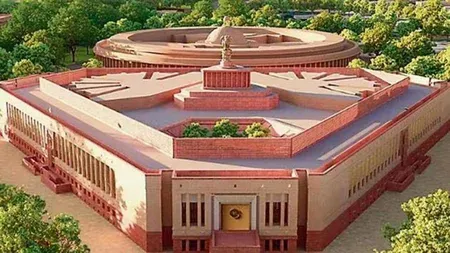
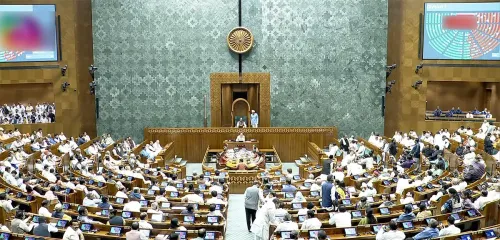
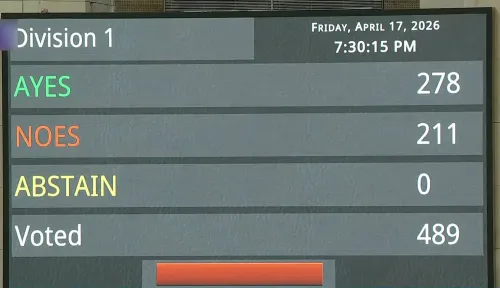
The Bharatiya Janata Party (BJP) has launched an intensive political outreach drive ahead of Parliament's Monsoon Session beginning 20 July, as the government led by Prime Minister Narendra Modi prepares to reintroduce the Constitution (131st Amendment) Bill — which seeks to implement women's reservation in the Lok Sabha while linking it to the proposed delimitation of Parliamentary constituencies. The legislation failed to secure the required two-thirds majority during a special session in April, and a fresh attempt now hinges on the ruling alliance stitching together a wider coalition of support.
Why 360 Is the Magic Number
The Lok Sabha currently has an effective strength of 540 members, meaning any constitutional amendment requires the backing of at least 360 MPs. Political estimates suggest the National Democratic Alliance (NDA) presently commands the support of around 293 MPs — a significant gap from the threshold.
According to sources, the BJP believes the current political environment is more favourable than it was a few months ago, and the party has been mapping potential support from non-NDA benches with considerable precision.
The Numbers Game: How the NDA Is Building Its Tally
Party sources outline a layered strategy to close the deficit. Support from the 20 MPs of the NCPI (who broke away from the All India Trinamool Congress), 22 MPs of the Dravida Munnetra Kazhagam (DMK), four YSRCP MPs, and one Independent could potentially push the tally to around 340.
Recent political developments in Maharashtra add another variable: six MPs are believed to have shifted from the Shiv Sena (UBT) faction to the Eknath Shinde-led faction, reportedly taking the NDA's effective strength to around 346. If Sharad Pawar's party — with eight MPs — backs the legislation, the tally could reach approximately 354, still leaving the alliance six MPs short of the required majority, according to sources.
Conditional Signals from Key Opposition Figures
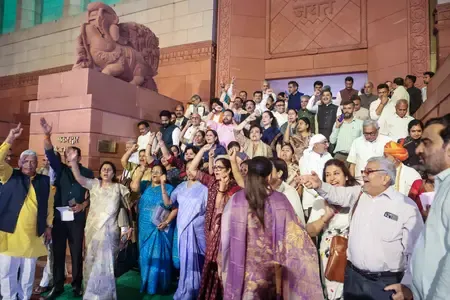
The BJP's outreach has drawn cautious responses from several quarters. Samajwadi Party president Akhilesh Yadav has reportedly signalled that his party could support the Women's Reservation and Delimitation Bills, but 'only if certain conditions are met,' according to sources. Meanwhile, Shiv Sena (UBT) MP Sanjay Raut has indicated that his party may extend issue-based support if its concerns are addressed — though the Uddhav Thackeray-led outfit holds only three Lok Sabha seats, and even their full backing would leave the NDA three MPs short.
Party insiders say the BJP is also exploring the possibility of securing support from a few MPs currently aligned with Trinamool Congress supremo Mamata Banerjee to close the remaining gap. The DMK's stance is being watched particularly closely, given its 22 MPs and its earlier opposition to delimitation.
High-Level Meetings and Parliamentary Strategy
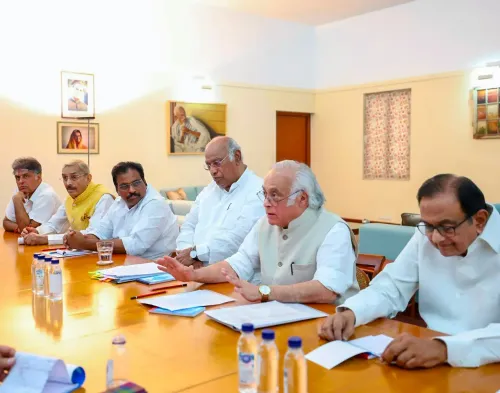
Over the past week, the BJP has held a series of high-level meetings, including one at Prime Minister Modi's residence attended by BJP President Nitin Nabin, Union Home Minister Amit Shah, and BJP General Secretary (Organisation) B.L. Santhosh. The discussions reportedly covered the government's broader Parliamentary strategy for the session.
Home Minister Shah is also believed to have held multiple political meetings with key NDA leaders in recent days. The Centre has convened an all-party meeting on 19 July to discuss the legislative agenda ahead of the session's formal opening.
What Happens Next
Parliament's Monsoon Session opens on 20 July, followed by the NDA Parliamentary Party meeting on 21 July, where Prime Minister Modi is expected to address alliance MPs directly. The coming days will be critical in determining whether the government can assemble the numbers it needs for a constitutional amendment that has been in the making for decades — and whether the women's reservation promise finally clears its most formidable legislative hurdle.
Point of View
Particularly the DMK, have long resisted delimitation fearing a reduction in their Parliamentary footprint. Winning their 22 votes while keeping that clause intact is a near-impossible ask. The conditional signals from Akhilesh Yadav and Sanjay Raut suggest the government may have to offer substantive concessions — which could, in turn, dilute the bill or fracture NDA discipline. The real story of this Monsoon Session may not be whether the bill passes, but what the government gives away to get it there.
NationPress
16 Jul 2026
Frequently Asked Questions
What is the Constitution (131st Amendment) Bill on women's reservation?
It is a constitutional amendment bill that seeks to implement reservation for women in the Lok Sabha, linked to the proposed delimitation of Parliamentary constituencies. The bill failed to secure the required two-thirds majority during Parliament's special session in April and is now set to be reintroduced in the Monsoon Session beginning 20 July.
How many MPs does the BJP need to pass the bill?
With the Lok Sabha's effective strength at 540 members, a constitutional amendment requires the support of at least 360 MPs — a two-thirds majority. The NDA currently commands around 293 MPs, leaving it roughly 67 votes short.
Which parties could be crucial to the bill's passage?
The DMK (22 MPs), the Samajwadi Party, Sharad Pawar's party (8 MPs), Shiv Sena (UBT) (3 MPs), and a group of NCPI MPs (20) who broke from the Trinamool Congress are among the parties being courted. Their combined support, alongside NDA's current tally, could take the count to approximately 354 — still six short of the 360 threshold.
Why did the bill fail in April?
The Constitution (131st Amendment) Bill could not secure the required two-thirds majority during Parliament's special session in April. The exact vote count has not been officially disclosed, but the government fell short of the 360-MP threshold needed for a constitutional amendment.
What is the timeline for the Monsoon Session and related meetings?
An all-party meeting is scheduled for 19 July to discuss the legislative agenda. Parliament's Monsoon Session opens on 20 July, and the NDA Parliamentary Party meeting follows on 21 July, where Prime Minister Modi is expected to address alliance MPs.