NDA's Lok Sabha, Rajya Sabha consolidation reshapes Monsoon Session arithmetic
Synopsis
The BJP-led NDA has quietly engineered one of its strongest-ever parliamentary positions ahead of the Monsoon Session — with rebel TMC support in the Lok Sabha, West Bengal bypolls set to push BJP's Rajya Sabha tally to a historic 117, and potential backing from YSRCP, BJD, and a wavering DMK. The two-thirds threshold for constitutional amendments is no longer a distant ceiling; it is a live political variable.
Key Takeaways
The NDA holds an effective strength of approximately 318 MPs in the 543-member Lok Sabha , with BJP contributing 240 seats .
20 rebel TMC MPs have extended support to the NDA in the Lok Sabha, subject to Speaker Om Birla's approval.
The BJP's Rajya Sabha tally is set to reach 117 — its highest ever — after the 24 July West Bengal bypolls , leaving it six seats short of a simple majority.
NDA's overall Rajya Sabha strength is projected at approximately 152 ; the two-thirds threshold stands at 164 votes .
YSRCP (4 MPs), BJD (5 MPs), and possibly DMK (8 MPs) could provide issue-based support or abstain, effectively lowering the majority required.
The Opposition must maintain strict attendance and unity to block constitutional amendments in either House.
The Bharatiya Janata Party (BJP) and its National Democratic Alliance (NDA) partners have steadily strengthened their numbers in both Houses of Parliament since the Winter Session, a shift that carries significant consequences for the Monsoon Session beginning later this month. The evolving parliamentary arithmetic is pushing the ruling coalition closer to the supermajority thresholds required for constitutional amendments — a milestone that would fundamentally alter the balance of legislative power in India.
The Numbers in the Lok Sabha
In the 543-member Lok Sabha, the NDA commands an effective strength of approximately 318 MPs. The BJP itself holds 240 seats, with key allies contributing the remainder — the Telugu Desam Party (TDP) with 16 seats, Janata Dal (United) with 12, the Shiv Sena (Shinde faction) with 7, and Lok Janshakti Party (Ram Vilas) with 5, alongside other regional partners.
Notably, 20 rebel Trinamool Congress (TMC) MPs have extended support to the NDA, subject to Speaker Om Birla's approval, substantially bolstering the alliance's effective count. Additionally, six MPs from the Uddhav Thackeray-led Shiv Sena are reportedly expected to join the Shinde faction, potentially adding further to the NDA tally. Even so, the alliance falls short of the 362-vote two-thirds threshold required for constitutional amendments in the Lower House.
Rajya Sabha: The Real Battleground
The Rajya Sabha has historically been the stumbling block for ruling coalitions, given its staggered elections and state-based composition. The BJP currently holds 114 seats in the Upper House, and the 24 July bypolls for three seats from West Bengal — vacated after rebel TMC MPs resigned and are contesting as BJP candidates — are expected to go the ruling party's way. With that, the BJP's tally would rise to 117, its highest-ever Rajya Sabha strength, leaving it just six seats short of the 123 needed for a simple majority in the House's current effective strength.
The NDA's overall Rajya Sabha count is projected to reach approximately 152, with principal allies including the TDP, the Nationalist Congress Party (NCP), Janata Dal (United), and the All India Anna Dravida Munnetra Kazhagam (AIADMK), each holding four seats. The two-thirds mark in the 245-member Rajya Sabha stands at 164 votes.
Potential Issue-Based Support from Outside the Coalition
The government's path to a working supermajority in the Upper House may run through several parties outside the formal coalition. The YSR Congress Party (YSRCP), with four MPs, is reportedly expected to back the government on key legislation including the Delimitation Bill, if re-introduced. Odisha's Biju Janata Dal (BJD), with five MPs, is also expected to support the bill, with women's reservation being a long-standing party demand. Independent MP Parimal Nathwani may back the NDA as well.
Significantly, Tamil Nadu's Dravida Munnetra Kazhagam (DMK), which holds eight Rajya Sabha seats and has recently sought to shift its seating away from the Congress-led Opposition bloc, may choose to abstain rather than oppose certain legislation. Strategic abstentions by even a handful of members reduce the effective majority required during a vote, meaningfully improving the government's prospects on constitutional measures.
What This Means for the Monsoon Session
Bills relating to electoral reforms, judicial restructuring, the Uniform Civil Code, or delimitation require two-thirds support in both Houses. While the NDA cannot clear that bar on its own, the combination of formal alliance strength, issue-based support, and potential Opposition absenteeism narrows the gap considerably. In practical terms, the absence or abstention of even a small number of Opposition MPs during a critical vote could tilt the outcome decisively in the government's favour.
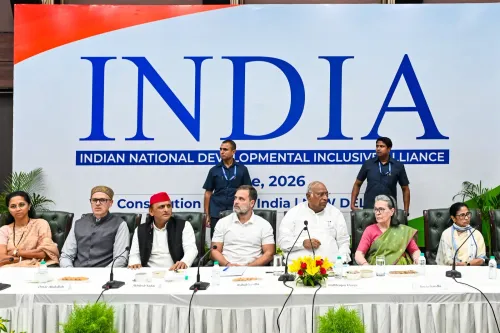
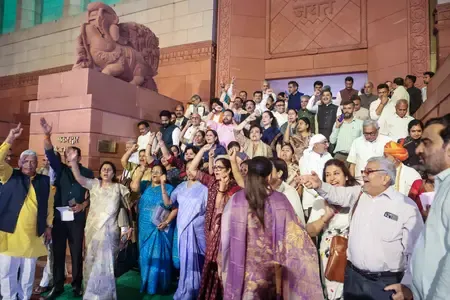
The Opposition, led by the Indian National Congress (Congress) within the INDIA bloc, faces the challenge of maintaining strict attendance discipline and coalition cohesion across both Houses simultaneously — a task that has historically proven difficult. As the Monsoon Session approaches, India's Parliament is no longer operating on simple-majority logic; it is navigating a landscape where the BJP's march toward supermajority dominance is actively reshaping the terms of legislative contestation.
Point of View
Convert Assembly wins into Rajya Sabha seats, and keep regional partners close enough to deliver on critical votes. The two-thirds threshold — long treated as a theoretical ceiling — is now a live political variable, and the Opposition's only real leverage is attendance discipline, which has historically been its weakest point. What mainstream coverage underplays is the DMK's seating shift: a party with eight Rajya Sabha seats quietly distancing itself from the Congress bloc is not a procedural footnote — it is a signal that the INDIA alliance's Upper House cohesion is under real strain. If the government re-introduces the Delimitation Bill or moves on the Uniform Civil Code, the true test will not be the vote count on paper but whether the Opposition can hold its numbers when it matters most.
NationPress
12 Oct 2026
Frequently Asked Questions
What is the NDA's current strength in the Lok Sabha?
The NDA holds an effective strength of approximately 318 MPs in the 543-member Lok Sabha. The BJP contributes 240 seats, with allies including TDP (16), Janata Dal (United) (12), Shiv Sena Shinde faction (7), and Lok Janshakti Party Ram Vilas (5), plus 20 rebel TMC MPs who have extended support to the alliance.
How close is the BJP to a majority in the Rajya Sabha?
The BJP currently holds 114 Rajya Sabha seats and is expected to win three more in the 24 July West Bengal bypolls, taking its tally to 117 — its highest ever. That would leave the party just six seats short of the 123 needed for a simple majority in the House's current effective strength of 245.
What threshold is needed for constitutional amendments in Parliament?
A two-thirds majority in both Houses is required for constitutional amendments. In the Lok Sabha, that means 362 votes out of 543; in the Rajya Sabha, it means 164 votes out of 245. The NDA currently falls short of this bar in both Houses on its own.
Which parties outside the NDA could support the government on key bills?
The YSRCP (4 Rajya Sabha MPs) and the BJD (5 MPs) are reportedly expected to back key legislation such as the Delimitation Bill. The DMK (8 MPs), which has recently sought to shift its seating away from the Congress-led Opposition bloc, may abstain rather than oppose certain measures. Independent MP Parimal Nathwani is also expected to support the NDA.
Why does the Opposition's attendance matter so much in this Monsoon Session?
Because strategic abstentions or absences reduce the effective majority required during a vote, even a small number of Opposition MPs missing a division could tip the outcome in the NDA's favour. For constitutional amendments, the government needs to bridge a gap of several dozen votes — a gap that shrinks significantly if Opposition attendance is imperfect.