How Do PM Modi and German Chancellor Merz Reaffirm Their Commitment to a Free and Open Indo-Pacific?
Synopsis
In a significant diplomatic engagement, PM Modi and Chancellor Merz underscore their commitment to a free Indo-Pacific, emphasizing international law and collaborative initiatives. Their discussions pave the way for enhanced bilateral relations, climate action, and transformative economic corridors, marking a pivotal step in global diplomacy.
Key Takeaways
Commitment to a free and open Indo-Pacific New bilateral Indo-Pacific consultation mechanism Support for India-Middle East-Europe Economic Corridor Reforms for the UN Security Council Focus on climate action and renewable energy investments
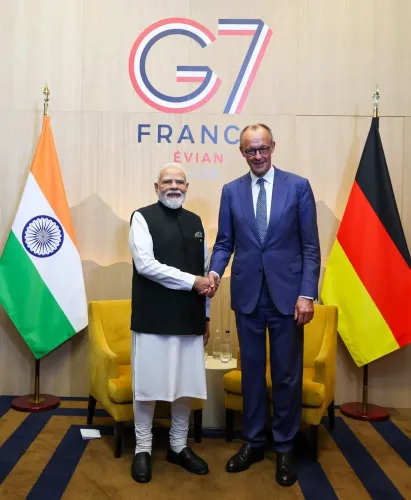
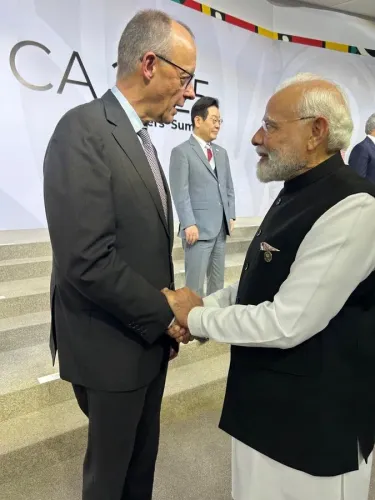
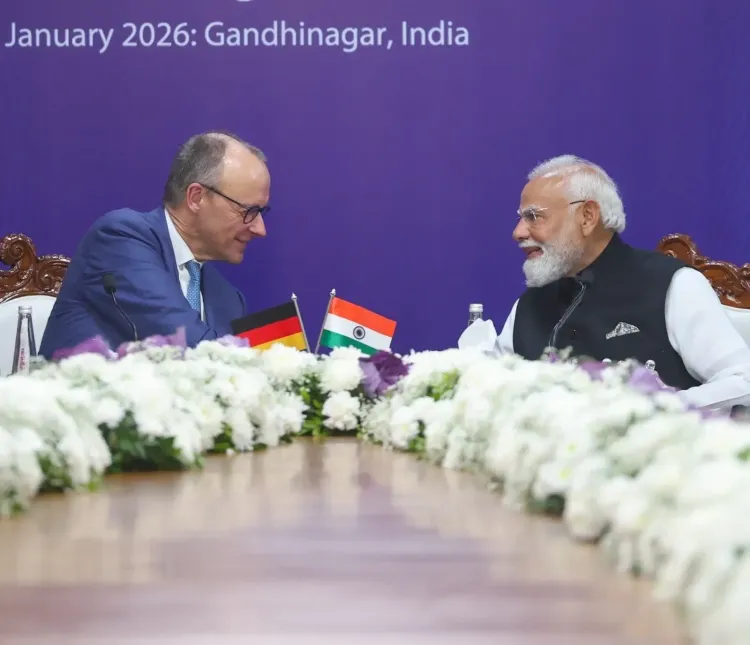
Gandhinagar, Jan 12 (NationPress) Prime Minister Narendra Modi and German Chancellor Friedrich Merz on Monday reiterated their dedication to a free and open Indo-Pacific region, emphasizing the importance of adhering to international law, particularly the United Nations Convention on the Law of the Sea (UNCLOS).
The two leaders introduced a new bilateral consultation mechanism focused on the Indo-Pacific. India expressed appreciation for Germany’s increasing involvement in the region, notably through initiatives under the Capacity Building and Resource Sharing framework of the Indo-Pacific Oceans Initiative (IPOI), co-led by both nations, as stated in their joint declaration after the discussions.
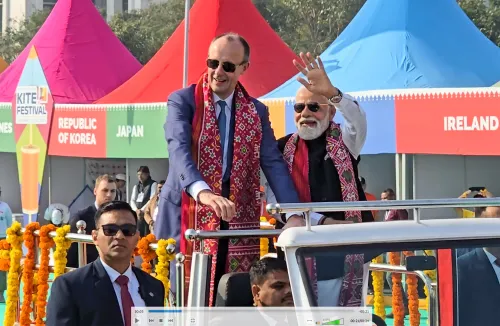
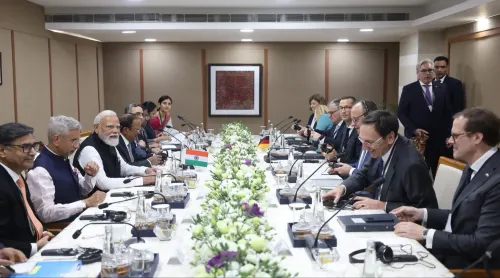
During both restricted and delegation-level meetings in Ahmedabad, PM Modi and Chancellor Merz reaffirmed their shared democratic values and commitment to a rules-based international order, along with mutual respect that strengthens their Strategic Partnership. The leaders reviewed their bilateral relations and deliberated on various regional and global issues.
They reiterated their robust support for the India–Middle East–Europe Economic Corridor (IMEC) and highlighted its potential to transform and enhance global commerce, connectivity, and prosperity. Both leaders are eager for the first IMEC ministerial meeting to set concrete steps for progressing this initiative.
The joint statement noted that India and Germany stressed the critical need for comprehensive reforms of the UN Security Council, advocating for the enlargement of both permanent and non-permanent membership categories to reflect current global realities. They called for advancing text-based negotiations at the IGN.
Both leaders expressed concerns regarding the ongoing conflict in Ukraine, advocating for a comprehensive, just, and lasting peace in accordance with international law and the principles of the UN Charter.
PM Modi and Merz welcomed the Gaza Peace Plan and described the adoption of UN Security Council Resolution 2803 on November 17 as a significant step towards resolving the conflict in Gaza, urging all parties to fully implement the resolution.
The leaders emphasized the necessity for prompt global action on climate change and acknowledged the UNFCCC process. They reiterated the importance of the Paris Agreement, COP 30 in Belem, and recent decisions aimed at establishing a Just Transition Mechanism and Technology Implementation Programme, looking forward to the Global Stocktake.
Furthermore, they urged for significantly enhanced climate action, particularly in climate finance and technology transfer, to aid developing nations in transitioning to green and sustainable energy systems and adapting to the growing impacts of climate change. They highlighted the economic development and poverty reduction potential of well-structured climate actions and the necessity for all actors to scale up climate finance to facilitate the transition across national and cross-border value chains.
PM Modi and Chancellor Merz acknowledged the critical role of mobilizing financing and investments for renewable energy and welcomed their collaborative efforts through the India-Germany Platform for Investments in Renewable Energy Worldwide, including the establishment of working groups focused on solar energy manufacturing, wind energy, and the newly formed Joint Working Group on Battery Energy Storage Solutions.
They expressed satisfaction with their ongoing cooperation on Green Hydrogen, including initiatives within the Indo-German Energy Forum, and stressed the importance of aligning India’s National Green Hydrogen Mission with Germany’s National Hydrogen Strategy through deeper technological, commercial, and regulatory collaboration along with strengthened business-to-business connections.
Point of View
It's imperative to recognize the strategic implications of the recent commitments made by Prime Minister Modi and Chancellor Merz. Their dedication to a free and open Indo-Pacific reflects a broader vision for stability and cooperation in the region. This partnership is not just about bilateral relations but also speaks to a global commitment to uphold international norms and address pressing challenges like climate change and geopolitical conflicts. Our nation stands to benefit significantly from such alliances.
NationPress
22 Sept 2026
Frequently Asked Questions
What is the Indo-Pacific Oceans Initiative?
The Indo-Pacific Oceans Initiative (IPOI) is a collaborative framework co-led by India and Germany aimed at enhancing maritime security, promoting sustainable development, and fostering international cooperation in the Indo-Pacific region.
What is the significance of the India-Middle East-Europe Economic Corridor?
The India-Middle East-Europe Economic Corridor (IMEC) is a transformative project designed to improve connectivity and trade, potentially reshaping global commerce and enhancing economic cooperation among the three regions.
Why is the UN Security Council reform important?
Reforming the UN Security Council is crucial to ensure that it reflects contemporary global dynamics and effectively addresses present and future challenges, promoting a more just and equitable international order.
What is the Green Hydrogen initiative?
The Green Hydrogen initiative aims to promote the production and utilization of green hydrogen as a clean energy source, facilitating a transition to sustainable energy systems and reducing reliance on fossil fuels.
How does climate action relate to economic development?
Effective climate action can drive economic development by creating jobs, fostering innovation in renewable energy technologies, and ensuring the resilience of economies against climate impacts, ultimately contributing to poverty reduction.