CM Sai Shares PM Modi's Diwali in Bastar, Declares Naxal War Won
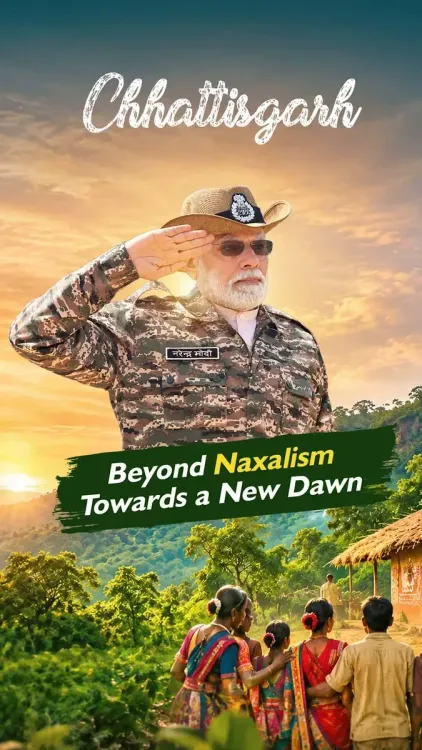
Synopsis
Chhattisgarh CM Vishnu Deo Sai quoted PM Modi declaring this Diwali marks India winning its decades-long war against Naxal-Maoist terror, after Modi celebrated the festival with security forces at the heart of Bastar — once the most feared Maoist stronghold in the country.
Key Takeaways
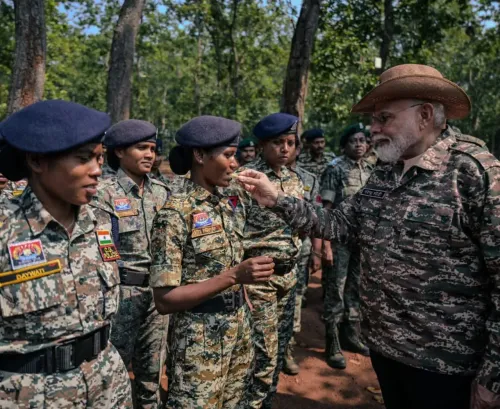
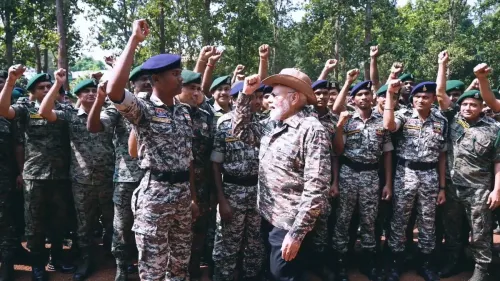
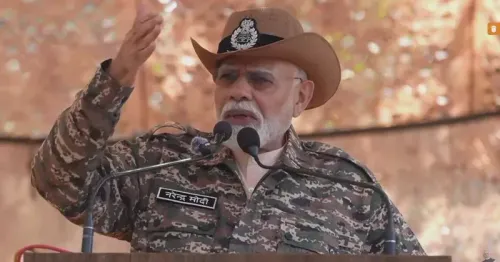
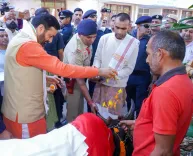
PM Narendra Modi celebrated Diwali 2026 with security forces in Bastar , the historic core zone of Maoist insurgency in Chhattisgarh .
CM Vishnu Deo Sai shared Modi 's statement calling this 'the first Diwali when the country has won the decades-long battle against Naxal-Maoist terror.' Bastar division was classified as one of India's most violence-intensive Left Wing Extremism zones; the Union Home Ministry had listed 126 LWE-affected districts across ten states in 2010 .
Operation Green Hunt , launched around 2009–2010 , was a coordinated central-state offensive that began the long push to shrink Maoist territorial control.
CM Sai , in office since December 2023 , has overseen intensified anti-Naxal operations and is positioning the development as a defining achievement of the current state and central government.
Infrastructure delivery — roads, telecom, banking — in former Maoist strongholds will be the next test of whether security gains translate into lasting stability for Bastar's tribal communities.
For decades, Bastar was a name that made people flinch — a dense, forested heartland in southern Chhattisgarh synonymous with landmines, ambushes, and the writ of Maoist gunmen. This Diwali 2026, Prime Minister Narendra Modi lit lamps there, in the very epicentre of that old red zone, surrounded by security forces — and Chhattisgarh Chief Minister Vishnu Deo Sai posted his words to mark what both leaders are calling a historic turning point.
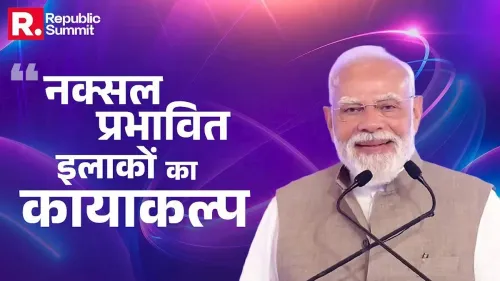
Quoting the Prime Minister on X, CM Sai shared Modi's statement: 'Chhattisgarh mein Bastar jaisa ilaqa, jahan ek samay log jaane se darte the' — 'An area like Bastar in Chhattisgarh, where people once feared to go. Not long ago I celebrated Diwali with our security forces at the very heart of that region. This is the first Diwali when the country has won a decades-long battle against Naxal-Maoist terror.'
Bastar's Long Shadow: What Changed
Bastar division, spanning roughly 39,000 square kilometres of tiger reserves and tribal villages, was for years the most violence-intensive terrain in India's internal security map. The Central Armed Police Forces (CRPF) and state police fought a grinding, casualty-heavy campaign across its seven districts. At its worst, attacks on convoys, massacres of politicians, and mass displacement of tribal communities made headline after headline.
The government's approach combined kinetic offensives — including the coordinated multi-state Operation Green Hunt launched around 2009–2010 — with road construction, mobile connectivity drives, and welfare delivery designed to drain the insurgency's social base. The Union Home Ministry in 2010 had classified 126 districts across ten states as Left Wing Extremism affected; subsequent annual reviews progressively pruned that list as incidents declined.
Modi in the Epicentre: The Symbolism of the Visit
A sitting Prime Minister celebrating Diwali with jawans inside what was once a Maoist stronghold is not incidental optics. It is a deliberate signal — the kind of visit that security establishments use to mark a theatre as pacified. Modi framing it as the first Diwali after 'winning' a decades-old fight raises the political and strategic stakes of that declaration considerably.
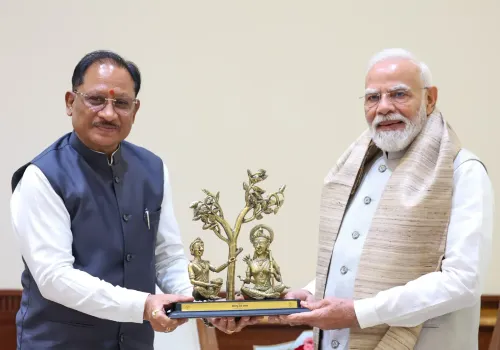
CM Sai, who took office in December 2023, has presided over a period of intensified anti-Naxal operations in Chhattisgarh. His decision to amplify the Prime Minister's words underscores the state government's ownership of this narrative — presenting Bastar's transformation as a joint achievement of central security forces and state leadership.
Tribal Communities and the Road Ahead in Bastar
The story does not end with a declaration of victory. Bastar's tribal communities — who lived under the crossfire of both insurgent coercion and counter-insurgency pressure for two generations — now face a different question: what peace actually delivers. Road connectivity, mobile towers, banking access, and forest-rights implementation are the metrics that will define whether the security gains hold.
Analysts watching the region will look for the next annual review of LWE-affected districts and the pace of infrastructure rollout in former core areas as the real scorecard. A Diwali in Bastar is a powerful image. The years that follow will tell the full story.
Point of View
One that successive governments have approached with caution given the insurgency's resilience over six decades. By amplifying Modi's Bastar Diwali moment, CM Sai is consciously tying the BJP's governance record — both at the centre and in Chhattisgarh — to what would be one of independent India's most consequential internal-security milestones. The symbolic power of a Prime Minister standing in the former heartland of the Maoist movement is undeniable; it also raises expectations and shifts the accountability frame entirely to the government if violence resurges. The harder, less photogenic work — forest rights, land titling, economic integration of tribal Bastar — will determine whether this Diwali image becomes a legacy or a liability.
NationPress
17 Nov 2026
Frequently Asked Questions
Has India completely defeated Naxalism in Chhattisgarh?
PM Modi declared this Diwali marks India winning its decades-long battle against Naxal-Maoist terror, citing his visit to Bastar with security forces. The government's position, as shared by CM Sai, is that the conflict has been decisively resolved, though independent verification of the full security picture in all former Maoist areas remains ongoing.
Why is Bastar significant in the context of Naxalism?
Bastar division in southern Chhattisgarh was historically considered the core stronghold of Maoist insurgency in India — a heavily forested, remote region where Maoist groups exercised significant territorial control and carried out numerous attacks on security forces and civilians over decades.
What is Operation Green Hunt?
Operation Green Hunt was a coordinated multi-state security offensive launched by the central and state governments around 2009–2010 to dismantle Maoist infrastructure across central and eastern India. It marked a significant escalation in India's counter-insurgency effort against Left Wing Extremism.
Who is Vishnu Deo Sai and what is his role in Chhattisgarh?
Vishnu Deo Sai is the Chief Minister of Chhattisgarh and a senior BJP leader who assumed office in December 2023. He has overseen intensified anti-Naxal operations in the state and has been vocal about framing Bastar's security transformation as a government achievement.
What happens to Bastar's tribal communities now that Naxal conflict is declared over?
With the declared end of active conflict, the focus shifts to development delivery — road connectivity, telecom infrastructure, banking access, and forest-rights implementation for Bastar's tribal communities, who bore the brunt of decades of violence from both insurgents and counter-insurgency operations.