PM Modi Flags Blue Economy and Port Push for Andhra Pradesh
Synopsis
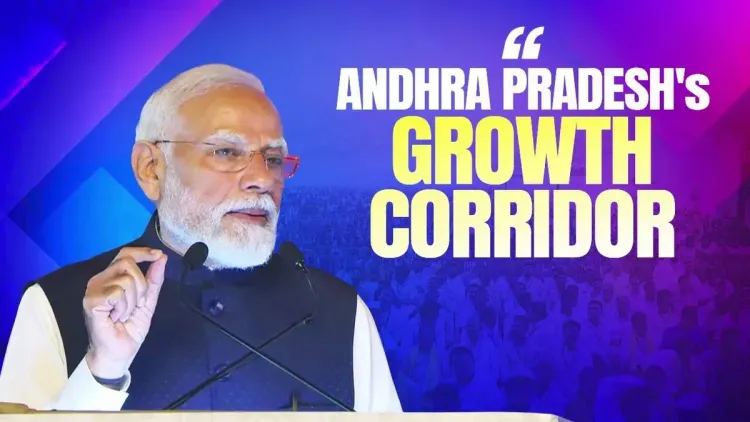
Prime Minister Narendra Modi on August 1, 2026 highlighted the NDA governments at the centre and in Andhra Pradesh working together on Blue Economy, port development, and industrial growth, signalling coordinated infrastructure ambition for the coastal state.
Key Takeaways
PM Modi on August 1, 2026 posted about NDA's coordinated development push for Andhra Pradesh .
Priority areas named: Blue Economy , port development, and industrial growth.
Andhra Pradesh has a coastline of approximately 974 km along the Bay of Bengal, central to any maritime strategy.
The Sagarmala Project (launched 2015 ) provides the central framework for port-led industrial development in coastal states.
The Make in India initiative ( 2014 ) underpins the industrial corridor logic connecting manufacturing zones to port gateways.
The post signals unified central-state political alignment, which historically accelerates infrastructure approvals and funding flows.
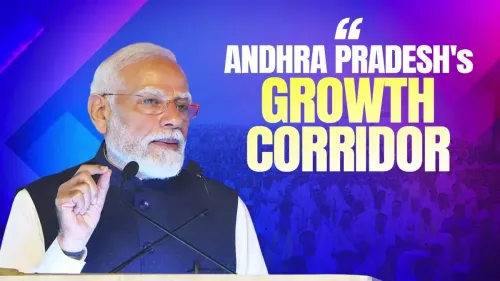
From ports to industrial corridors, Prime Minister Narendra Modi on Saturday, August 1, 2026 signalled that the National Democratic Alliance governments at the centre and in Andhra Pradesh are moving in lockstep on the state's economic transformation — with the Blue Economy squarely at the centre of that ambition.
In his post, Modi wrote: 'The NDA Government at the Centre and in Andhra Pradesh are working with remarkable speed for the state's progress. We are focusing on the Blue Economy, port development, industrial growth and more.' The framing is deliberate — a dual-government alignment message aimed at investors and residents alike.
What the Blue Economy Push Means for Andhra Pradesh
Andhra Pradesh sits on one of India's longest coastlines, stretching nearly 974 kilometres along the Bay of Bengal — making it a natural anchor for any serious maritime growth strategy. The Blue Economy concept encompasses fisheries, aquaculture, offshore energy, shipping, and coastal tourism, all sectors where the state holds significant untapped potential.
The central government's Sagarmala Project, launched in 2015, was designed precisely for moments like this — modernising ports, building road and rail connectivity to hinterlands, and seeding port-led industrial clusters. Andhra Pradesh has multiple major and minor ports that fall within Sagarmala's ambit, positioning the state as a critical node in India's coastal development architecture.
Industrial Growth and the Make in India Thread
Port development rarely stands alone — it pulls industrial investment behind it. The Make in India initiative, announced in 2014, built the policy scaffolding for industrial corridors that connect manufacturing zones to port gateways, cutting logistics costs and boosting export competitiveness. Modi's mention of 'industrial growth' alongside ports signals that this corridor logic is being applied to Andhra Pradesh's development blueprint.
The pattern is consistent across NDA governance: coastal states receive coordinated central-state support through dedicated schemes, with the centre providing scheme funding and the state government providing land, clearances, and last-mile execution. A shared political alignment between the two governments typically accelerates this pipeline.
The Coordination Signal
The explicit mention of both central and state NDA governments working together is itself a political and administrative message. It signals unified command on project approvals and funding flows — the kind of coordination that has historically cut through inter-governmental delays on large infrastructure. For Andhra Pradesh, a state that has navigated significant fiscal and developmental challenges since its bifurcation in 2014, that alignment carries real weight.
The test, as always, will be in the rollout timelines and budget allocations that follow the political signal.
Point of View
Which has pursued special-status recognition and large central investment since bifurcation, being spotlighted in this manner carries both developmental and political currency. The Blue Economy framing also connects to India's broader Indo-Pacific strategy, where coastal infrastructure doubles as economic and strategic depth. The real measure will be whether the political signal translates into accelerated Sagarmala disbursements and industrial corridor notifications in the months ahead.
NationPress
16 Sept 2026
Frequently Asked Questions
What is the Blue Economy and why is it important for Andhra Pradesh?
The Blue Economy refers to sustainable use of ocean resources — fisheries, aquaculture, shipping, offshore energy, and coastal tourism. Andhra Pradesh, with nearly 974 km of Bay of Bengal coastline, holds significant potential across all these sectors, making it a natural beneficiary of any national Blue Economy push.
What is the Sagarmala Project and how does it relate to Andhra Pradesh?
The Sagarmala Project, launched in 2015, is the central government's flagship scheme to modernise India's ports and build port-led industrial clusters. Andhra Pradesh has multiple major and minor ports within Sagarmala's ambit, positioning it as a key node in coastal development.
What did PM Modi say about Andhra Pradesh on August 1, 2026?
PM Modi stated that the NDA governments at the centre and in Andhra Pradesh are working with 'remarkable speed' on the state's progress, with focus areas including the Blue Economy, port development, and industrial growth.
How does Make in India connect to port development in Andhra Pradesh?
Make in India, announced in 2014, built the policy framework for industrial corridors that link manufacturing zones to port gateways, reducing logistics costs and boosting exports. Modi's mention of industrial growth alongside ports reflects this corridor logic being applied to Andhra Pradesh.
Why does central-state NDA alignment matter for Andhra Pradesh's development?
When the central and state governments share political alignment, project approvals, land acquisition, and funding flows tend to move faster. For Andhra Pradesh — a state with large infrastructure needs since its 2014 bifurcation — that coordination can meaningfully accelerate delivery timelines.