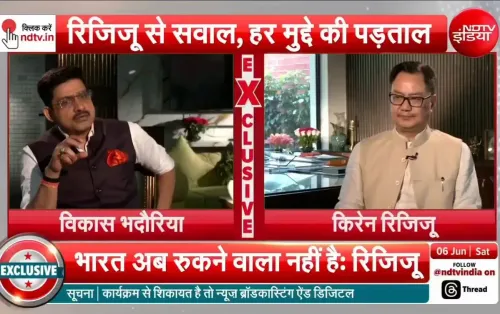
Rijiju shares Modi's case for India as Mother of Democracy
Synopsis
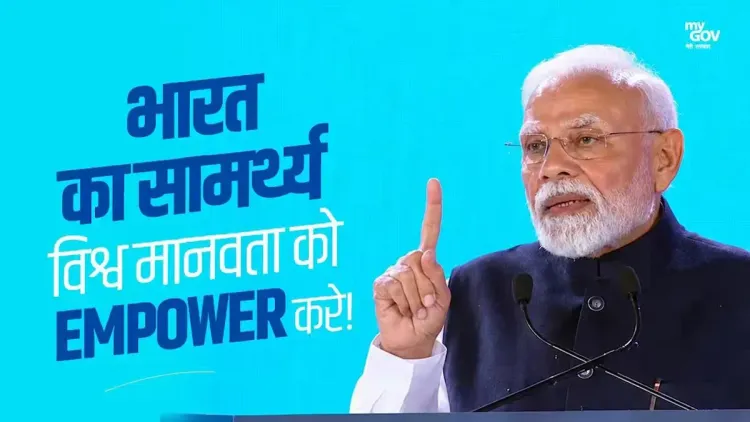
At the Bloomberg New Economy Forum, PM Modi cited India's 100-plus languages, 80,000 publications, 1,000-plus satellite channels, and over 500 million each of YouTube and Instagram users as proof that India is the 'Mother of Democracy.' Minister Rijiju amplified the remarks on October 13, 2026.
Key Takeaways
PM Modi invoked India's status as the 'Mother of Democracy' at the Bloomberg New Economy Forum on October 13, 2026 .
India has more than 100 languages , roughly 80,000 registered newspapers and publications , and over 1,000 satellite TV channels , per the figures cited.
India's digital footprint includes more than 500 million YouTube users and more than 500 million Instagram users .
Modi first used the 'Mother of Democracy' framing at the 2021 UN General Assembly ; it has since become a recurring theme in India's multilateral diplomacy.
The registered-publication data is drawn from the Registrar of Newspapers for India (RNI) , which has tracked print media since the 1950s.
The statistical pitch is part of India's broader soft-power strategy deployed consistently since its G20 presidency .
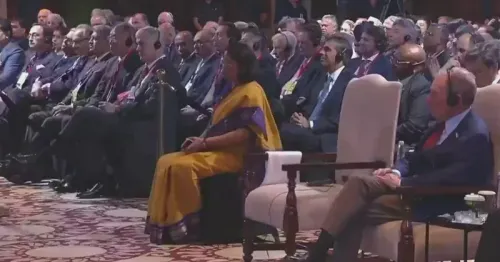
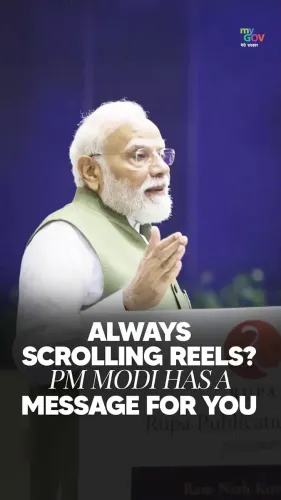
At the Bloomberg New Economy Forum, Prime Minister Narendra Modi marshalled a striking statistical portrait of India's democratic depth — and Union Parliamentary Affairs Minister Kiren Rijiju amplified every number to a global audience on Tuesday, October 13, 2026.
The numbers Modi put on the table
Rijiju quoted the Prime Minister directly: India speaks in more than 100 languages, sustains roughly 80,000 registered newspapers and publications, and runs over 1,000 satellite television channels. The digital layer is even more staggering — more than 500 million YouTube users and more than 500 million Instagram users, both figures cited from within a single country.
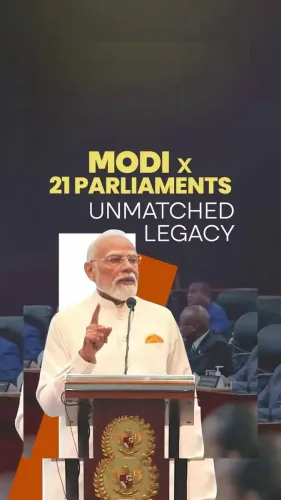
The argument Modi was making is precise: democratic legitimacy is not just procedural — it is lived daily through a cacophony of voices, scripts, and screens. The phrase he has used at international podiums since his 2021 United Nations General Assembly address — 'Bharat Mother of Democracy hai' ('India is the Mother of Democracy') — served as the frame that held all these numbers together.
Why the Bloomberg Forum, why now
The Bloomberg New Economy Forum is an annual gathering where heads of government, central bankers, and technology executives compare notes on the shape of the global economy. Placing India's media and digital statistics inside that room is a deliberate play: framing the world's largest democracy not only as a political achievement but as a thriving information marketplace that rival economies can scarcely match in scale.
Indian ministers have pursued exactly this approach at multilateral forums since India's G20 presidency — weaving linguistic diversity, press plurality, and social media reach into a single argument about democratic resilience. Rijiju, whose portfolio spans parliamentary affairs and minority affairs, is a natural carrier of that message.
The institutional backbone behind the statistics
The registered-publication count draws on decades of data compiled by the Registrar of Newspapers for India (RNI), which has tracked print media growth since the 1950s. That long arc — from a handful of post-independence dailies to tens of thousands of titles in scores of languages — is itself a democratic story. The satellite channel count reflects a broadcast sector that exploded after liberalisation in the 1990s.
Together, the figures make a case that India's information ecosystem did not arrive pre-packaged; it accumulated, language by language, district by district, over generations.
When a government chooses a global economic forum to lead with democracy statistics rather than GDP or infrastructure numbers, it is signalling something about where it believes its soft-power advantage truly lies — and daring the room to disagree.
Point of View
First floated at the UN in 2021, has matured into a consistent diplomatic doctrine that Modi's government deploys wherever it senses an audience receptive to geopolitical narratives. Rijiju's amplification is part of a coordinated echo chamber — senior ministers ensuring every international statement lands domestically as well. The deeper question is whether the scale of India's media ecosystem, impressive on paper, is increasingly being cited to pre-empt international scrutiny on press freedom indices — a tension the government has never directly addressed.
NationPress
13 Oct 2026
Frequently Asked Questions
What did PM Modi say at the Bloomberg New Economy Forum 2026?
PM Modi described India as the 'Mother of Democracy' and cited statistics including more than 100 languages, roughly 80,000 registered newspapers and publications, over 1,000 satellite TV channels, and more than 500 million users each on YouTube and Instagram.
What is the Bloomberg New Economy Forum?
The Bloomberg New Economy Forum is an annual gathering of world leaders, central bankers, and technology executives convened to discuss global economic trends, technology, and policy.
When did Modi first call India the Mother of Democracy?
Prime Minister Modi first prominently used the phrase 'Mother of Democracy' in his address to the United Nations General Assembly in 2021, and has repeated it at multiple international forums since.
How many registered newspapers are there in India?
According to figures cited by PM Modi at the Bloomberg New Economy Forum, India has roughly 80,000 registered newspapers and publications — a count tracked historically by the Registrar of Newspapers for India (RNI).
Why does India emphasise media plurality in international forums?
Indian ministers regularly use statistics on linguistic diversity, print outlets, broadcast channels, and social media penetration to argue that India's democratic credentials are rooted in everyday information pluralism — a message consistently deployed at multilateral events including the G20 and Bloomberg gatherings.