PM Modi meets President Marcos Jr. in Manila, reviews India-Philippines ties
Synopsis
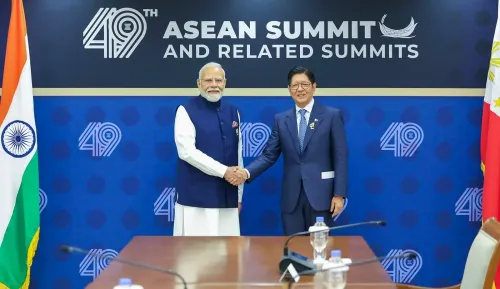
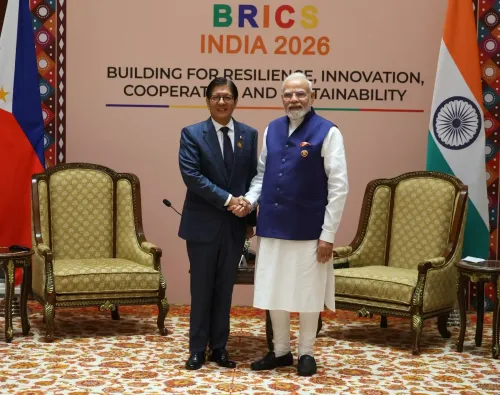
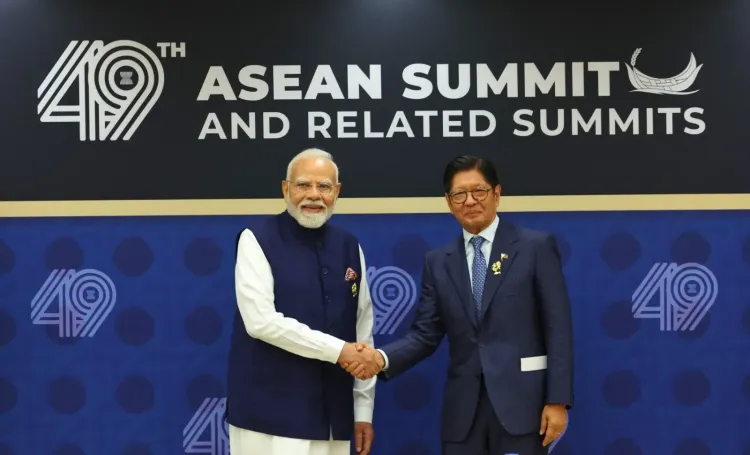
Prime Minister Narendra Modi met Philippines President Ferdinand Marcos Jr. in Manila on November 17, 2026, congratulating him on the ASEAN Chairmanship and reviewing expanded cooperation in defence, maritime security, space, technology, infrastructure, and energy under the India-Philippines Strategic Partnership.
Key Takeaways
PM Modi met President Ferdinand Marcos Jr. in Manila on November 17, 2026 .
Modi congratulated Marcos on a 'successful ASEAN Chairmanship' held by the Philippines .
Five cooperation areas were reviewed: defence and maritime security , space , technology , infrastructure , and energy .
The India-Philippines Strategic Partnership was established in 2015 under the broader Act East Policy framework.
India's Act East Policy , launched in 2014 , underpins New Delhi's deepening engagement with ASEAN nations.
The visit reinforces India's strategic interest in Indo-Pacific maritime security and aligns with Philippines' own South China Sea posture.
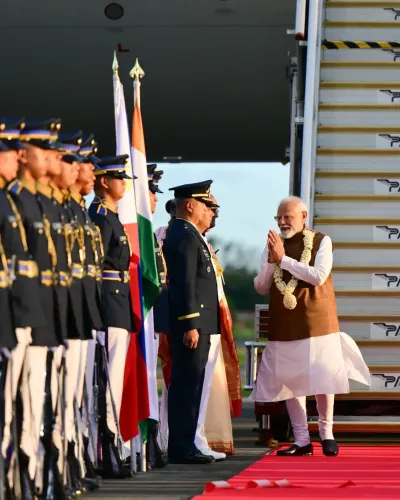
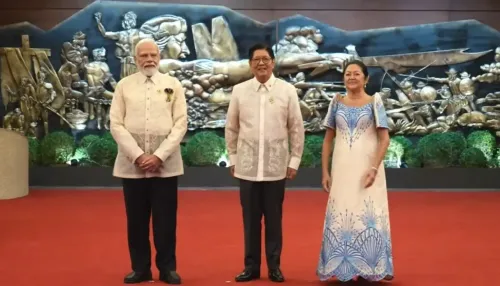
Two leaders, one city, and a partnership that has been quietly building momentum across the Indo-Pacific — Prime Minister Narendra Modi met Philippines President Ferdinand Marcos Jr. in Manila on Tuesday, November 17, 2026, reviewing a bilateral agenda that stretches from warships to satellites.
Modi congratulated Marcos — referred to warmly as 'my friend' in the Prime Minister's post — on steering a 'successful ASEAN Chairmanship,' a nod to the Philippines' role as the rotating chair of the ten-nation Association of Southeast Asian Nations bloc. The meeting covered five cooperation pillars: defence and maritime security, space, technology, infrastructure, and energy.
A Strategic Partnership now more than a decade old
The India-Philippines relationship was elevated to a formal Strategic Partnership in 2015, giving the two countries a structured framework for security and economic cooperation. That upgrade came just a year after India launched its Act East Policy in 2014 — a strategic pivot that reoriented New Delhi's engagement with ASEAN member states from a looser 'Look East' posture to deeper, deal-oriented partnerships.
The Manila visit slots neatly into that decade-long arc. India has used successive bilateral meetings with ASEAN partners to layer in defence agreements, joint exercises, and technology-transfer arrangements that collectively give New Delhi a larger footprint in the Indo-Pacific — a theatre where maritime security competition has intensified sharply in recent years.
Why defence and maritime security lead the agenda
That defence and maritime security tops the list of reviewed areas is no accident. The South China Sea — which laps against Philippine shores — remains one of the world's most contested waterways, and Manila has been vocal about asserting its sovereign rights there. India, as a major naval power with interests in freedom of navigation, shares a natural strategic alignment with the Philippines on this front.
Space and technology cooperation add a newer, high-value layer to the relationship. India's space programme, through ISRO, has increasingly been leveraged as a diplomatic tool across the Global South, and a space-cooperation component in the Philippines partnership would extend that model into Southeast Asia.
What Manila means for India's ASEAN strategy
Modi's bilateral with Marcos is part of a broader pattern of leader-level engagements that keep India's Act East commitments from fading into bureaucratic routine. By meeting the ASEAN chair directly — in Manila, not on the sidelines of a multilateral summit — New Delhi signals that the Philippines relationship merits attention in its own right, not merely as one node in a regional matrix.
The next concrete test will be whether the five cooperation pillars reviewed on Tuesday translate into signed agreements or joint working-group timelines at the next ASEAN-India Summit. Words in a readout become policy when they show up in a framework document — and that is what both capitals will be watching for.
Point of View
Issue-specific engagements with individual ASEAN states. By foregrounding defence and maritime security alongside space and technology, New Delhi is signalling that the India-Philippines relationship is now consequential enough to carry its own strategic weight, not just regional symbolism. The meeting also reflects a broader Indian diplomatic pattern of cultivating partnerships with nations that share concerns about Indo-Pacific maritime order — an alignment that benefits both countries without requiring either to name its strategic anxieties explicitly. How quickly the five reviewed pillars yield concrete deliverables will determine whether this visit is a milestone or a marker.
NationPress
17 Nov 2026
Frequently Asked Questions
Why did PM Modi visit Manila in November 2026?
PM Modi visited Manila to hold a bilateral meeting with Philippines President Ferdinand Marcos Jr., reviewing the India-Philippines Strategic Partnership across defence, space, technology, infrastructure, and energy. He also congratulated Marcos on the Philippines' ASEAN Chairmanship.
What is the India-Philippines Strategic Partnership?
The India-Philippines Strategic Partnership is a bilateral framework established in 2015 that structures cooperation between the two countries in areas including defence, maritime security, and economic affairs. It was part of India's broader Act East Policy engagement with ASEAN nations.
What is India's Act East Policy?
India's Act East Policy, launched in 2014 , replaced the earlier 'Look East' approach and deepened New Delhi's diplomatic, economic, and security engagement with ASEAN member states and the wider Indo-Pacific region.
What areas did Modi and Marcos discuss during the Manila meeting?
The two leaders reviewed cooperation opportunities in five areas: defence and maritime security , space , technology , infrastructure , and energy .
What was the Philippines' role in ASEAN that Modi acknowledged?
The Philippines held the rotating ASEAN Chairmanship at the time of the meeting. PM Modi congratulated President Marcos Jr. on what he called a 'successful' chairmanship of the ten-nation Southeast Asian bloc.