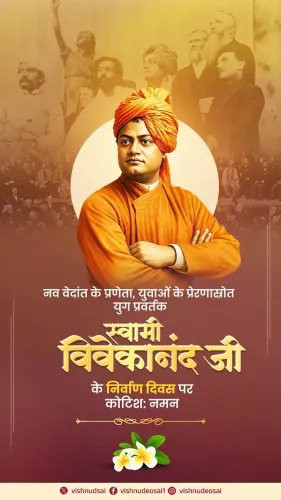
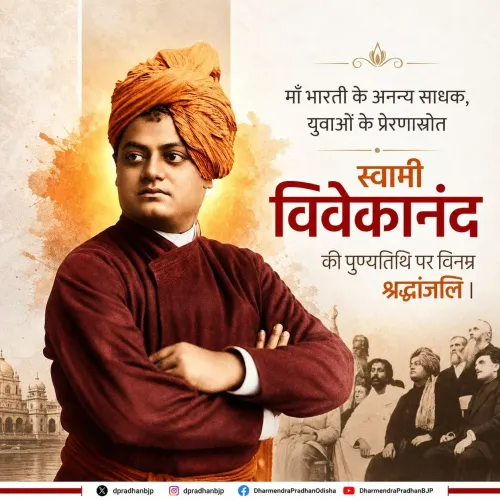
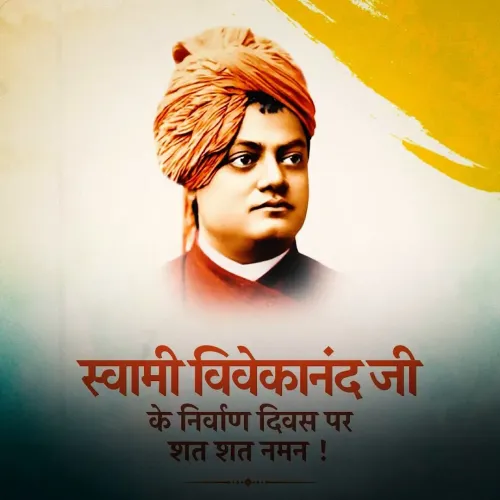
PM Modi pays tribute to Swami Vivekananda on Nirvana Day, hails his lasting legacy
Synopsis
On the 123rd anniversary of Swami Vivekananda's passing, Prime Minister Modi, Home Minister Shah, and Defence Minister Singh all invoked his legacy as a blueprint for building a 'developed India' — a convergence of spiritual heritage and contemporary national ambition that defines how the current government frames cultural memory.
Key Takeaways
PM Narendra Modi paid tribute to Swami Vivekananda on his Nirvana Day, 4 July , calling his intellect and thoughts an enduring guide for millions of youth.
Home Minister Amit Shah credited Vivekananda with founding the Ramakrishna Mission and sparking a cultural renaissance across India.
Defence Minister Rajnath Singh said Vivekananda's belief in empowered, self-confident citizens continues to inspire the vision of a self-reliant India .
Vivekananda was born Narendranath Datta on 12 January 1863 and passed away on 4 July 1902 at the age of 39 at Belur Math , near Kolkata .
His address at the World's Parliament of Religions, Chicago, 1893 brought Indian philosophy global recognition and led to the establishment of Vedanta Societies across the West.
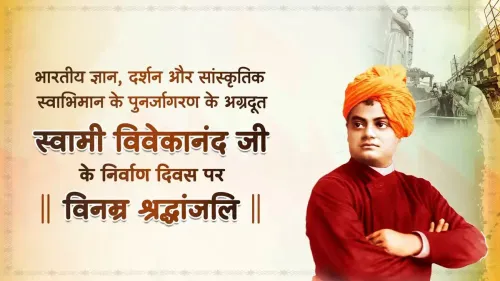
Prime Minister Narendra Modi on Saturday, 4 July paid tribute to philosopher and monk Swami Vivekananda on his Nirvana Day, offering 'millions of salutations' and underscoring the enduring relevance of Vivekananda's teachings for India's youth. The occasion marks the 123rd death anniversary of the spiritual leader, who passed away on 4 July 1902 at the age of 39.
PM Modi's Tribute on X
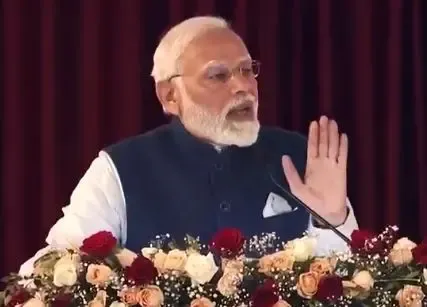
Taking to social media platform X, Prime Minister Modi wrote: 'On the occasion of Swami Vivekananda Ji's Nirvana Day, I offer him millions of salutations. His contribution to giving global recognition to Indian culture, spirituality, and national consciousness is unparalleled. His intellect and inspiring thoughts continue to guide millions of youth even today. His spiritual messages will keep providing the nation with new energy and direction in realizing the resolve to build a developed India.'
Modi's tribute framed Vivekananda not merely as a historical figure but as an active moral compass for contemporary nation-building — a recurring theme in the current government's cultural outreach.
Senior Ministers Join in Remembrance
Union Home Minister Amit Shah also paid tribute, saying Vivekananda 'reintroduced the world to Vedanta, philosophy, and the Indian tradition of knowledge' and 'kindled the spirit of character building and patriotism among the youth.' Shah credited him with founding the Ramakrishna Mission as an organised vehicle for spirituality and service, and for sounding 'the clarion call for a cultural renaissance across the length and breadth of the country.'
Defence Minister Rajnath Singh added that Vivekananda 'bestowed a new identity upon the glorious tradition of Indian culture, spirituality, and eternal ideology on the global stage,' and that he 'believed empowered, cultured, and self-confident citizens are the greatest strength of a nation.' Singh said Vivekananda's thoughts 'continuously inspire us to build a prosperous, self-reliant, and developed India.'
Who Was Swami Vivekananda
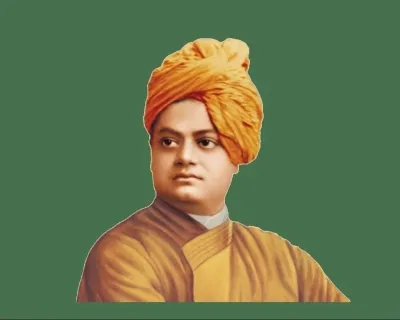
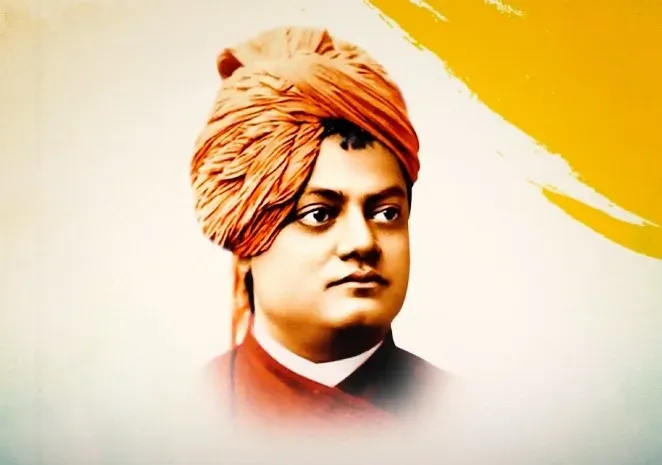
Born Narendranath Datta on 12 January 1863 in Kolkata, Swami Vivekananda was an Indian Hindu monk, philosopher, author, and religious teacher. He was the chief disciple of the mystic Ramakrishna and is widely regarded as one of the most influential spiritual leaders of modern India.
His defining moment on the world stage came at the World's Parliament of Religions in Chicago in 1893, during the World's Columbian Exposition. His opening words — 'Sisters and Brothers of America' — drew a standing ovation and earned him international recognition almost overnight. He subsequently lectured across the United States and Europe, and the many Vedanta Societies established in the West during the early twentieth century trace their roots to his teachings.
After returning to India, he founded the Ramakrishna Order at Belur, near Kolkata, in 1898. A prolific writer and poet, he composed works in Bengali, English, and Sanskrit, many of which continue to be sung at Vedanta centres worldwide. He was also notably progressive for his era, actively encouraging women and Western practitioners to take leadership roles in spreading Vedanta's teachings.
Swami Vivekananda attained Mahasamadhi on the evening of 4 July 1902 while meditating in his room at Belur Math, near Kolkata, aged 39.
Why the Anniversary Resonates Today
Vivekananda's Nirvana Day has grown into an annual occasion for political and cultural reflection in India. This year's tributes from the highest levels of the Union government reflect a broader effort to anchor the idea of a 'developed India' — a central policy slogan — in the moral and spiritual vocabulary that Vivekananda popularised. Notably, his birth anniversary on 12 January is observed as National Youth Day in India, a designation that underlines his continued symbolic importance for the country's young population.
As India's youth demographic remains one of the largest in the world, the annual remembrance serves as a reminder of the philosophical frameworks that have historically shaped Indian national identity — and of the ongoing effort to make those frameworks relevant to a rapidly changing society.
Point of View
Shah, and Singh — each issued separate statements is not incidental; it reflects a deliberate cultural signalling strategy. Vivekananda's appeal is politically versatile: he is simultaneously a symbol of Hindu revivalism, a global ambassador of Indian soft power, and a youth icon whose birth anniversary is already a state occasion. The invocation of 'developed India' alongside Vivekananda's legacy is a studied conflation — one that merits scrutiny as to whether the philosophical depth of Vivekananda's message, which included sharp critiques of social inequality, is being fully engaged or selectively curated.
NationPress
2 Oct 2026
Frequently Asked Questions
Why is 4 July observed as Swami Vivekananda's Nirvana Day?
Swami Vivekananda passed away on 4 July 1902 at Belur Math, near Kolkata, while meditating in his room. He was 39 years old. The day is observed annually as his Nirvana Day in remembrance of his death.
What did PM Modi say about Swami Vivekananda on Nirvana Day 2025?
PM Modi posted on X that Vivekananda's contribution to giving global recognition to Indian culture, spirituality, and national consciousness is 'unparalleled,' and that his 'intellect and inspiring thoughts continue to guide millions of youth even today.' He also said Vivekananda's spiritual messages will keep providing the nation with 'new energy and direction' in building a developed India.
What is Swami Vivekananda's most famous moment in history?
Vivekananda's opening address at the World's Parliament of Religions in Chicago in 1893 is his most celebrated moment. His words 'Sisters and Brothers of America' drew a standing ovation and brought him international recognition, leading to lecture tours across the United States and Europe.
What did Swami Vivekananda found and what is its significance?
Vivekananda founded the Ramakrishna Order at Belur, near Kolkata, in 1898, which gave organised form to his mission of combining spirituality with social service. The Ramakrishna Mission, as it is widely known, continues to operate educational, medical, and relief organisations across India and internationally.
Why is Swami Vivekananda's birth anniversary celebrated as National Youth Day in India?
The Government of India designated 12 January — Vivekananda's birth anniversary — as National Youth Day in recognition of his philosophy as an inspiration for young people. His emphasis on self-confidence, character building, and service to the nation is seen as a guiding framework for India's youth.