PM Modi shares Sanskrit verse on the discipline of speech
Synopsis
Prime Minister Narendra Modi shared a Sanskrit couplet on 24 September 2026 outlining the classical concept of 'vak tapas' — the austerity of speech — calling for words that are non-agitating, truthful, kind, and beneficial, paired with disciplined self-study.
Key Takeaways
PM Narendra Modi posted a Sanskrit verse on 24 September 2026 focused on the ethics and discipline of speech.
The shloka defines 'the austerity of words' as speech that is non-agitating, truthful, pleasing, and genuinely beneficial.
The fifth element of the verse emphasises svadhyaya — regular self-study — as the inner foundation of disciplined speech.
The verse is associated with classical Sanskrit scriptural tradition, including the Bhagavad Gita .
The post continues a recurring pattern of Modi sharing Sanskrit philosophical verses on social media without direct policy linkage.
A single Sanskrit couplet — ancient, precise, and quietly demanding — landed on Prime Minister Narendra Modi's timeline on Thursday, 24 September 2026, drawing attention to one of classical Indian philosophy's most enduring teachings on the ethics of language.
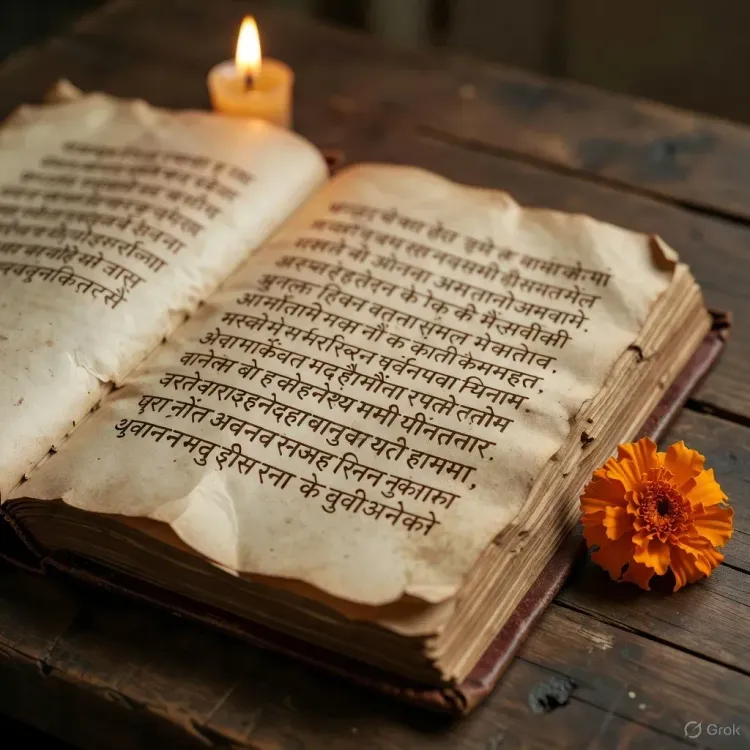
The verse, drawn from Sanskrit scriptural tradition, reads: 'अनुद्वेगकरं वाक्यं सत्यं प्रियहितं च यत् । स्वाध्यायाभ्यसनं चैव वाङ्मयं तप उच्यते ॥' — translated, it means: 'Speech that causes no agitation, that is truthful, pleasing, and beneficial — combined with the regular practice of self-study — this is called the austerity of words.' The verse is among the most cited shlokas on vak tapas, the discipline of speech, found in classical Sanskrit texts including the Bhagavad Gita.
What the verse actually demands
The couplet sets a four-part standard for right speech: it must not disturb or agitate the listener; it must be truthful; it must be kind; and it must be genuinely useful. Meeting all four simultaneously is the discipline — and that is precisely what makes the verse philosophically rigorous rather than merely decorative.
The fifth element, svadhyaya — disciplined self-study and reflection — is framed not as a separate practice but as the foundation that makes such speech possible at all. Without inner cultivation, the verse implies, the outer discipline of words cannot hold.
Modi's recurring turn to Sanskrit scripture
This post fits a well-established pattern in the Prime Minister's social media presence. Modi has periodically shared Sanskrit verses from classical Indian texts, positioning traditional philosophical and ethical teachings as living wisdom rather than archival curiosity. The posts carry no direct policy announcement — their register is cultural and contemplative, addressed to a broad public audience rather than a legislative or administrative one.
The choice of a verse specifically about speech — its truthfulness, its gentleness, its utility — carries its own quiet resonance in a high-decibel information environment. Whether that resonance is intentional commentary or simply personal reflection, the text does not say.
In an era when public discourse is measured in seconds and volume, a two-thousand-year-old checklist for how to speak may be the sharpest thing posted all week.
Point of View
This pattern of scriptural sharing has become a recognisable strand of his public persona, distinct from policy announcements, that speaks directly to a culturally literate, tradition-oriented segment of his base. Whether read as personal conviction or curated messaging, the posts consistently keep classical Indian philosophy visible in mainstream digital discourse.
NationPress
24 Sept 2026
Frequently Asked Questions
What Sanskrit verse did PM Modi post on 24 September 2026?
PM Modi posted the shloka beginning 'Anudvegakaram vakyam satyam priyahitam cha yat', which describes the austerity of speech as words that are non-agitating, truthful, pleasing, and beneficial, combined with the practice of self-study.
What does 'vak tapas' mean in Sanskrit?
'Vak tapas' means the austerity or discipline of speech. In classical Indian philosophy, it refers to the practice of speaking only what is truthful, kind, useful, and free from agitation — a form of inner self-restraint expressed through language.
Which scripture does this verse come from?
The verse is associated with classical Sanskrit scriptural tradition and is among the shlokas found in texts including the Bhagavad Gita, where it appears in the context of the three types of austerity — of body, speech, and mind.
What is svadhyaya as mentioned in the verse?
Svadhyaya refers to disciplined self-study and reflection on sacred or philosophical texts. In the verse, it is presented as an essential companion to right speech, forming the inner foundation from which ethical communication flows.
Why does PM Modi regularly post Sanskrit verses on social media?
PM Modi has maintained a recurring practice of sharing Sanskrit shlokas and classical Indian philosophical content on social media. The posts highlight traditional ethical and cultural teachings and form part of his broader public identity centred on Indian civilisational heritage.