Modi, Poland's Tusk jointly condemn terrorism, back UNSC reform at New Delhi talks
Synopsis
India and Poland went beyond diplomatic pleasantries at Hyderabad House — the joint statement named the Pahalgam attack, backed UNSC reform with an explicit Polish endorsement of India's 2028-29 seat bid, and invited Warsaw into the Indo-Pacific Oceans Initiative. It signals a meaningful tilt in India's Central European diplomatic architecture at a moment of acute global security flux.
Key Takeaways
PM Modi and Polish PM Donald Tusk met at Hyderabad House, New Delhi on 22 October 2026 for bilateral and multilateral talks.
Both leaders condemned the Pahalgam terror attack of 22 April 2025 and called for action against UNSC 1267-designated terrorist entities.
They backed early adoption of the Comprehensive Convention on International Terrorism (CCIT) at the UN and agreed to launch a counter-terrorism dialogue.
Poland explicitly endorsed India's candidature for a non-permanent UNSC seat for 2028-29 and supported an expanded Security Council.
India invited Poland to join the Indo-Pacific Oceans Initiative (IPOI) , broadening European participation in the framework.
Both sides welcomed the first India-Visegrad Group (V4) Foreign Ministers' Meeting and reaffirmed the V4+India cooperation format.
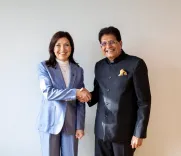
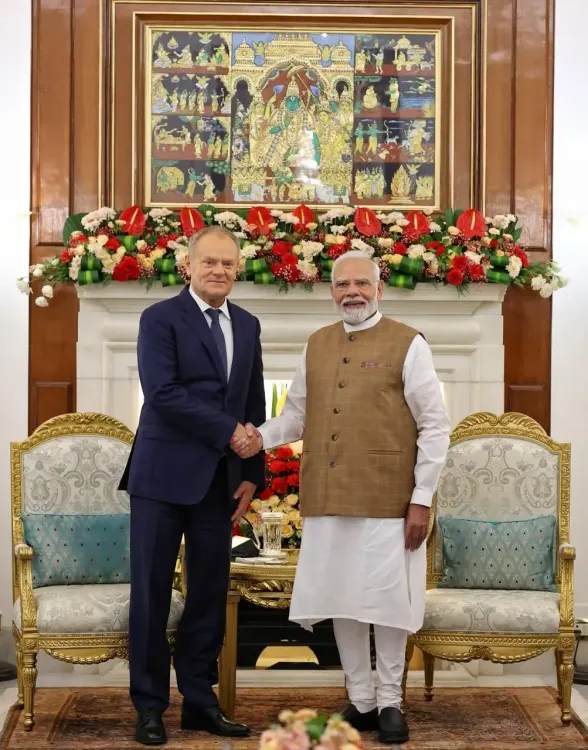
Prime Minister Narendra Modi and his Polish counterpart Donald Tusk on Thursday, 22 October 2026, jointly condemned terrorism and violent extremism in all forms, calling on the international community to dismantle terror safe havens and financing networks. The two leaders met at Hyderabad House, New Delhi, for wide-ranging talks covering bilateral ties, regional security, and global governance reform.
Strong Language on Terrorism and Pahalgam Attack
A joint statement issued after the talks described an unequivocal condemnation of terrorism 'irrespective of motivations, including cross-border terrorism,' stressing that 'there can be no justification for terrorism on any grounds.' The two sides specifically called out the terrorist attack in Pahalgam, Jammu and Kashmir on 22 April 2025, condemning it 'in the strongest terms.'
Both leaders called for 'strong and concerted action' against terrorists and entities designated by the United Nations Security Council (UNSC) 1267 sanctions committee. They also backed the early adoption of the Comprehensive Convention on International Terrorism (CCIT) at the United Nations and agreed to establish a dedicated dialogue on counter-terrorism — a notable institutional commitment between the two capitals.
Poland Backs India's Bid for UNSC Seat
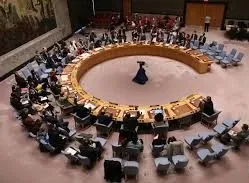
The joint statement included an explicit expression of Polish support for India's aspirations at the UN. 'The Polish side expressed its support for India's membership of a more inclusive, reformed and expanded UNSC, as well as reiterated its support for India's candidature for a non-permanent seat in the UNSC for 2028-29,' it read. Both sides also backed structural reform of the United Nations, including expansion of the Security Council in both permanent and non-permanent categories to make it 'more relevant, credible and effective.'
Ukraine War, Indo-Pacific, and the Visegrad Group
Modi and Tusk expressed 'deepest concern' over the ongoing war in Ukraine, noting its humanitarian consequences and negative impact on global food and energy security — particularly for the Global South. They reiterated the need for a 'comprehensive, just, and lasting peace' consistent with the UN Charter, international law, and the principles of sovereignty and territorial integrity.
On the Indo-Pacific, the two leaders reaffirmed the importance of a free, open, and peaceful region governed by international law, including the 1982 UN Convention on the Law of the Sea (UNCLOS). India invited Poland to join the Indo-Pacific Oceans Initiative (IPOI), a significant step in broadening the framework's European participation.
Both leaders also welcomed the first Foreign Ministers' Meeting between India and the Visegrad Group (V4) — comprising Poland, Hungary, the Czech Republic, and the Slovak Republic — and reaffirmed their commitment to deepening the V4+India cooperation format.
Multilateralism and G20 Cooperation
Modi and Tusk underlined the centrality of multilateralism anchored in the UN Charter and highlighted the G20 as a key forum for international cooperation. They expressed readiness to coordinate across G20 tracks and workstreams in which Poland participates or may be invited to join.
The meeting marks a significant diplomatic moment as India deepens its engagement with Central European partners at a time of heightened global security concerns and an evolving multilateral order.
Point of View
India's bilateral threading through Central European capitals could give New Delhi a more nuanced footprint in European geopolitics than the headline EU-India relationship alone affords.
NationPress
22 Oct 2026
Frequently Asked Questions
What did Modi and Tusk agree on regarding terrorism?
Modi and Tusk jointly condemned terrorism in all forms, including cross-border terrorism, specifically calling out the Pahalgam attack of 22 April 2025. They backed action against UNSC 1267-designated terror entities, called for dismantling terror financing networks, and agreed to establish a bilateral counter-terrorism dialogue.
What is Poland's position on India's UNSC membership?
Poland expressed support for India's membership in a reformed and expanded UN Security Council and reiterated backing for India's candidature for a non-permanent UNSC seat for 2028-29. This was formalised in the India-Poland Joint Statement released after the 22 October 2026 talks.
What is the Indo-Pacific Oceans Initiative and why was Poland invited?
The Indo-Pacific Oceans Initiative (IPOI) is an India-led framework to promote a free, open, and rules-based Indo-Pacific. India invited Poland to join the initiative during the Modi-Tusk summit, marking a significant step in extending the framework's European participation.
What is the Visegrad Group and what did India agree with it?
The Visegrad Group (V4) comprises Poland, Hungary, the Czech Republic, and the Slovak Republic. Modi and Tusk welcomed the first Foreign Ministers' Meeting between India and the V4 and reaffirmed commitment to deepening cooperation through the V4+India format.
What did the two leaders say about the Ukraine war?
Modi and Tusk expressed 'deepest concern' over the humanitarian and geopolitical consequences of the war in Ukraine, including its impact on global food and energy security for the Global South. They called for a comprehensive, just, and lasting peace consistent with the UN Charter and international law, including respect for sovereignty and territorial integrity.