Modi launches ₹2,970 crore projects in Daman: healthcare, infra, NIFT campus

Synopsis
Modi's ₹2,970 crore blitz in Daman wasn't just a ribbon-cutting exercise — it was a signal. India's 18th NIFT campus, a new Namo Hospital, postgraduate medical education, and a tenfold tourism surge frame the Union Territory as a model for federal-led development, with the Prime Minister explicitly comparing its trajectory to Singapore's.
Key Takeaways
PM Modi inaugurated and laid foundation stones for projects worth ₹2,970 crore in Daman on 5 June 2025 .
Key projects include a Namo Hospital in Daman, India's 18th NIFT campus , Namo Airport , and the Damanganga bridge .
India's GDP growth was cited at 7.7% for 2025-26, with the March quarter at 7.8% .
Ayushman Bharat and Jan Aushadhi Kendras have reportedly saved poor and middle-class families approximately ₹2.25 lakh crore in medical costs.
Child immunisation coverage has risen from 60% pre-2014 to nearly 90% , according to Modi, citing Mission Indradhanush .
Tourist footfall in the region has grown tenfold ; Dadra and Nagar Haveli described as India's man-made fibre capital.
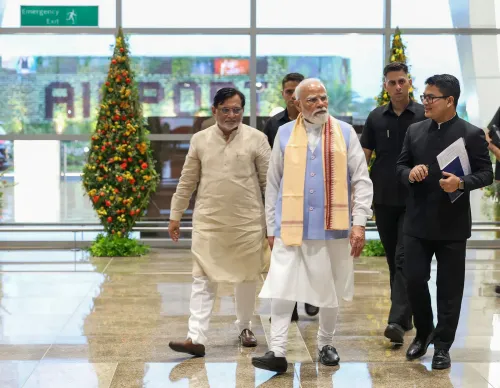
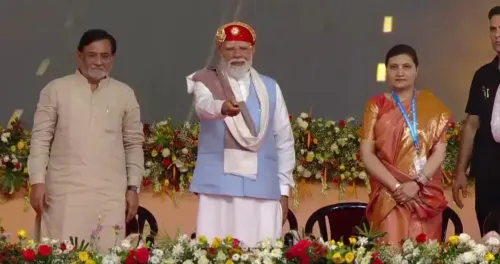
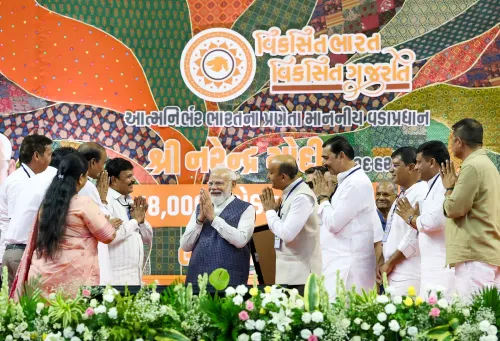
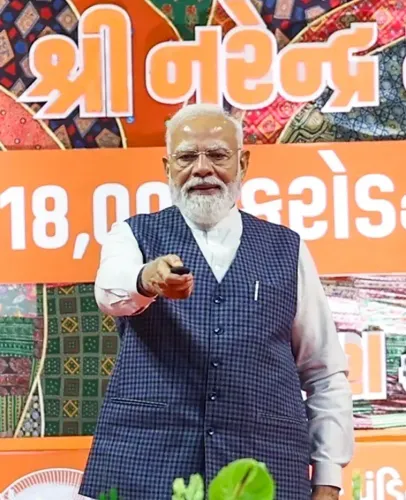
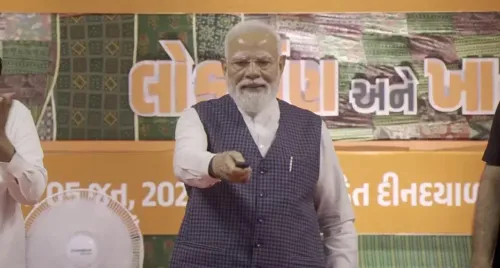
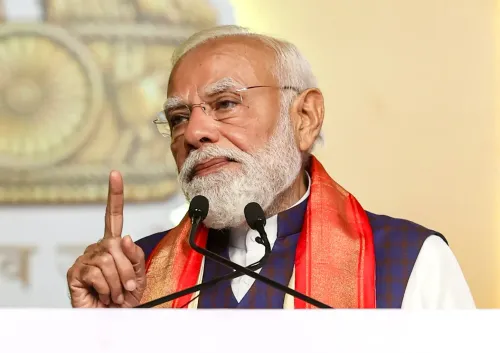
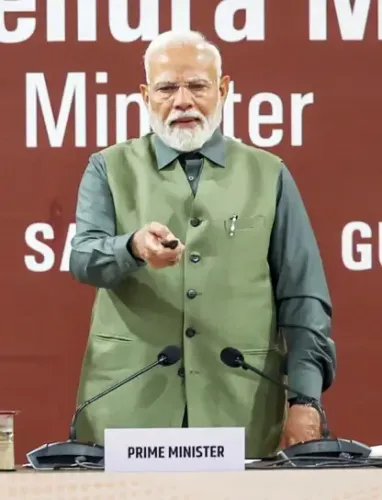
Prime Minister Narendra Modi on Friday, 5 June inaugurated and laid the foundation stone for development projects worth approximately ₹2,970 crore in Daman, covering healthcare, aviation, tourism, education, connectivity, and urban infrastructure. The wide-ranging package, announced at a public gathering in the Union Territory, is among the largest single-day investment commitments made to Daman and Diu and Dadra and Nagar Haveli in recent years.
Key Projects Unveiled
The package includes the inauguration of a Namo Hospital in Daman — mirroring an already-operational facility in Silvassa — along with the foundation stone for India's 18th National Institute of Fashion Technology (NIFT) campus. Advanced technical courses at ITI Daman were also announced. Infrastructure highlights include the Namo Airport and the Damanganga bridge, both aimed at improving regional connectivity and boosting commerce.
Healthcare at the Centre
Modi placed particular emphasis on health infrastructure, citing national data to argue that government programmes had transformed outcomes. 'Before 2014, only 60 per cent of children were fully vaccinated. Today, this statistic has climbed to nearly 90 per cent,' he said, crediting Mission Indradhanush. He also noted that more than 90 per cent of deliveries in India now take place in medical institutions, up from a significantly lower share a decade ago, according to findings from the National Family Health Survey.
On the Ayushman Bharat scheme, Modi said: 'Today Ayushman Bharat has fundamentally changed those figures, and now more than 60 per cent of families are getting this vital security.' He added that the Ayushman card and Jan Aushadhi Kendras together had saved poor and middle-class families approximately ₹2.25 lakh crore in healthcare expenses. The introduction of postgraduate medical education in the region was also flagged as a milestone.
Economy, Environment and Blue Economy
Modi cited freshly released economic data on the occasion of World Environment Day, stating that India recorded a growth rate of 7.7 per cent during 2025-26, with the quarter ending 31 March logging 7.8 per cent growth. He described the numbers as evidence of a resilient economic foundation despite global uncertainty. 'Even in this difficult phase of the global crisis, with the collective efforts of 140 crore countrymen, India is sustaining itself and striving to remain at the forefront,' he said.
Diu's achievement of powering all government buildings through solar energy was highlighted as a model, with Modi urging households to adopt rooftop solar systems and generate surplus electricity for income. He also linked the region's infrastructure investments to India's blue economy ambitions, describing the coastal Union Territory as a strategic node in the country's maritime growth strategy.
Education, Industry and Tourism
On education, Modi pointed to the Swami Vivekananda Education Hub, smart classroom rollouts, and girl-centric schemes such as the Saraswati Cycle Scheme and Saraswati Vidya Yojana as evidence of expanding access. He said alignment with sectors like information technology, renewable energy, and drone technology would strengthen India's future workforce.
Describing Dadra and Nagar Haveli as India's 'man-made fibre capital', Modi reaffirmed government support for micro, small, and medium enterprises. On tourism, he said tourist footfall in the region had increased tenfold in recent years, crediting improved infrastructure, clean beaches, and new attractions such as the Daman Night Market and Namo Path Sea-front. He compared the region's long-term potential to Singapore's development trajectory, calling infrastructure investments a 'rock-solid foundation for the great resolutions of the future.'
What Comes Next
The projects span multiple timelines — some inaugurated immediately, others at foundation-stone stage — meaning residents will see phased delivery of benefits. With postgraduate medical education, a new NIFT campus, and expanded logistics infrastructure all in the pipeline, the Union Territory's institutional capacity is set for a significant upgrade. The Centre's sustained focus on the region signals continued federal investment as Daman positions itself as a manufacturing, tourism, and healthcare hub on India's western coast.
Point of View
970 crore package for a small Union Territory is disproportionately large by any per-capita measure — and that is precisely the point. Daman, Diu, Dadra and Nagar Haveli serve as a federally controlled showcase, free from the friction of state-level politics, making them ideal canvases for the Centre's development optics. The Singapore comparison is ambitious but worth scrutinising: Singapore's model rests on rule of law, port efficiency, and financial services — not tourism footfall and man-made fibre. The more substantive question is whether the NIFT campus and postgraduate medical education can anchor a skilled talent base locally, or whether graduates will simply decamp to larger metros. If they stay, the region's trajectory could genuinely shift; if they leave, the infrastructure investment risks becoming an expensive backdrop.
NationPress
20 Oct 2026
Frequently Asked Questions
What projects did PM Modi inaugurate in Daman on 5 June 2025?
PM Modi inaugurated and laid foundation stones for development projects worth approximately ₹2,970 crore in Daman on 5 June 2025. The package spans healthcare (Namo Hospital), aviation (Namo Airport), education (India's 18th NIFT campus, ITI Daman courses), the Damanganga bridge, and urban infrastructure including Transport Nagar logistics facilities.
What is the Namo Hospital inaugurated in Daman?
The Namo Hospital in Daman is a new public healthcare facility inaugurated by PM Modi, modelled on an already-operational Namo Hospital in Silvassa. It is part of the government's push to expand healthcare access in the Union Territory and also includes the introduction of postgraduate medical education in the region.
Why did Modi mention India's GDP growth at the Daman event?
Modi cited freshly released data showing India's GDP grew at 7.7% in 2025-26 and 7.8% in the March quarter to argue that the country's economic foundation remains strong despite global uncertainty. The remarks came on World Environment Day, where he also linked development to solar energy adoption and the blue economy.
What is the significance of the 18th NIFT campus being set up in Daman?
The foundation stone for India's 18th National Institute of Fashion Technology (NIFT) campus was laid in Daman, making it the first such premier design institution in the Union Territory. Modi said it would connect local youth with global exposure and align education with employment opportunities in emerging sectors.
How has tourist footfall changed in Daman and Diu in recent years?
According to PM Modi, tourist footfall in the Daman and Diu region has increased tenfold in recent years, driven by improved infrastructure, clean beaches, and new attractions such as the Daman Night Market and Namo Path Sea-front. The government has been promoting the area under its 'Dekho Apna Desh' tourism campaign.