Sikkim orchids go global after Modi gifts them to Norway's PM Store
Synopsis
A diplomatic gift — pressed orchid paintings and paperweights made from Sikkim's Himalayan flowers — has done what years of tourism campaigns could not: put Gangtok's National Research Centre for Orchids on the global map overnight, with visitor footfall jumping up to 400% and a ₹25–30 crore income opportunity now in sight for Northeast farming families.
Key Takeaways
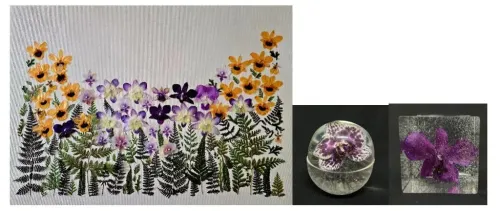
PM Modi gifted Norwegian PM Jonas Gahr Store a pressed orchid painting and orchid paperweights made from real orchids and ferns from Sikkim .
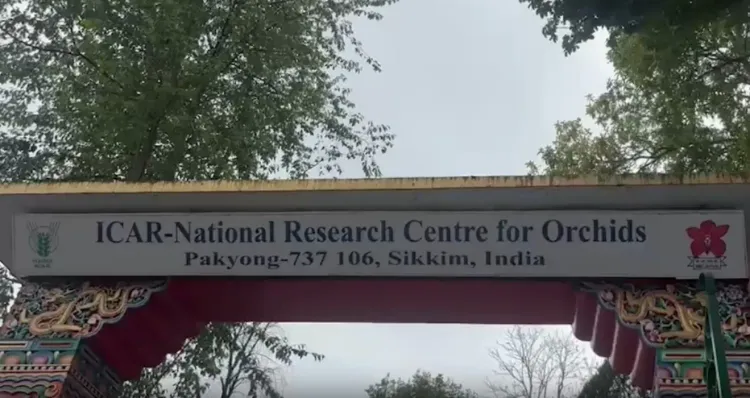
The gifts were developed at the National Research Centre for Orchids in Gangtok .
Visitor footfall at the orchid centre surged by nearly 300 to 400 per cent after the gifting.
The institute estimates orchid-based products could generate ₹25 to 30 crore in income for farming families over the next few years.
The global orchid trade is valued at nearly 700 million US dollars annually; India's share currently remains limited.
The gesture is seen as advancing India's 'Vocal for Local' and ecological soft-power agenda.
Prime Minister Narendra Modi's recent state visit to Norway has thrust the orchids of Sikkim onto the world stage, with a pair of carefully chosen gifts drawing international attention to the Himalayan state's biodiversity and artisanal heritage. Modi presented Norwegian Prime Minister Jonas Gahr Store a 'pressed Orchid painting' and orchid paperweights crafted from real orchids and ferns sourced from Sikkim's mist-covered valleys — items developed and preserved at the National Research Centre for Orchids in Gangtok.
The Gifts and Their Origins
The orchid-based products were not merely decorative. They represent months of careful cultivation and preservation work carried out at the Gangtok research centre, which collects specimens from across Sikkim's diverse highland ecosystems. The choice of these gifts is widely seen as a deliberate act of ecological and cultural diplomacy, aligning with the Centre's 'Vocal for Local' initiative by placing region-specific products before a global audience.
Shankar Prasad Das, Director of the National Research Centre for Orchids, said the gesture has become a matter of pride for Sikkim, as it highlighted India's biodiversity before the world. Das added that such gifts to global counterparts reflect India's cultural and ecological diplomacy while amplifying locally crafted products internationally.
Immediate Impact on Sikkim
The diplomatic moment has already produced measurable change on the ground. Officials reported that visitor footfall at the orchid centre in Gangtok surged by nearly 300 to 400 per cent following the Prime Minister's gifting of the orchids to the Norwegian leader. Local artists, orchid growers, and artisans are now exploring expanded commercial opportunities in orchid-based handicrafts and decorative products.
Notably, this rapid surge in interest underscores how a single high-profile diplomatic gesture can translate into tangible economic momentum for a niche regional industry — an outcome rarely seen from standard trade missions or tourism campaigns.
Economic Potential for Northeast Farmers
Experts believe orchid cultivation could become a significant income source for farming communities across India's Northeast. The research centre estimates that orchid-based products could collectively generate nearly ₹25 to 30 crore in income for farming families over the next few years.
This comes amid growing global demand for orchids. The worldwide orchid trade is estimated at nearly 700 million US dollars annually; however, India's share of that market currently remains limited. The diplomatic spotlight on Sikkim's orchids is expected to open new export avenues and strengthen the case for scaling up cultivation infrastructure in the region.
Soft Power and Biodiversity Diplomacy
The orchid gifts are part of a broader pattern in Indian diplomatic gifting — one that increasingly favours indigenous, ecology-rooted products over generic luxury items. From Darjeeling tea to Banarasi silk, Indian leaders have long used region-specific gifts to project cultural identity. The Sikkim orchid gesture, however, carries an added dimension: it spotlights a state whose entire agricultural economy is certified organic and whose biodiversity remains underrepresented in global markets.
As Sikkim's orchids travel from local greenhouses to the offices of foreign heads of government, they carry with them a story of ecological richness, artisanal skill, and a state quietly positioning itself as India's floriculture frontier. Whether the current momentum translates into sustained export growth will depend on investment in cold-chain logistics, certification, and market access — challenges the industry has long flagged.
Point of View
Done well, is also economic policy. Sikkim's floriculture sector has long sat on untapped potential — a globally certified organic state with extraordinary biodiversity and almost no export infrastructure to show for it. One diplomatic gesture has done more for the sector's visibility than years of state-level promotion. The harder question is whether the Centre and Sikkim's government will follow through with cold-chain investment, export certification, and market-linkage programmes before the spotlight fades. The ₹25–30 crore income projection is modest relative to the 700-million-dollar global orchid market India is barely present in — and that gap is a policy failure, not a natural one.
NationPress
14 Oct 2026
Frequently Asked Questions
What did PM Modi gift to Norway's Prime Minister Jonas Gahr Store?
PM Modi gifted Norwegian Prime Minister Jonas Gahr Store a 'pressed Orchid painting' and orchid paperweights crafted from real orchids and ferns collected from Sikkim's valleys. The items were developed and preserved at the National Research Centre for Orchids in Gangtok.
Where are the orchids used in Modi's diplomatic gifts from?
The orchids and ferns used in the gifts were sourced from the mist-covered valleys of Sikkim and cultivated at the National Research Centre for Orchids in Gangtok, the state capital.
What has been the impact on Sikkim's orchid centre after Modi's Norway visit?
Visitor footfall at the National Research Centre for Orchids in Gangtok increased by nearly 300 to 400 per cent following PM Modi's gifting of orchid products to the Norwegian Prime Minister. Local artisans and growers are also exploring new commercial opportunities.
How much income could orchid cultivation generate for Northeast farmers?
The National Research Centre for Orchids estimates that orchid-based products could generate nearly ₹25 to 30 crore in collective income for farming families in the region over the next few years, according to institute projections.
How big is the global orchid market and what is India's share?
The global orchid trade is estimated at nearly 700 million US dollars annually. India's share of this market currently remains limited, though the recent diplomatic attention on Sikkim's orchids is expected to open new export opportunities.