Himachal Pradesh deploys 4,228 workers to restore monsoon-hit roads

Synopsis
Himachal Pradesh has mobilised over 4,228 workers, 11,137 beldars, and 1,156 machines to battle monsoon road disruptions — one of the most detailed preparedness deployments the state's PWD has announced this season. With six Bailey bridges on standby and round-the-clock control rooms ordered, the scale signals how seriously the hill state is bracing for what could be another damaging monsoon.
Key Takeaways
4,228 multi-task workers deployed by Himachal Pradesh PWD to restore monsoon-disrupted road connectivity.
11,137 beldars and 1,156 machines, including JCBs, bulldozers, and robotic equipment, positioned statewide for round-the-clock operations.
Six Bailey bridges kept on emergency standby across the state.
Pre-monsoon work covered resurfacing of 155.95 km , patchwork on 924.94 km , and drainage clearance on 8,893.58 km of roads.
Minister Vikramaditya Singh directed round-the-clock control rooms and immediate damage reporting with photographic evidence.
Priority connectivity mandated for hospitals, police stations, schools, fire stations, and power installations.
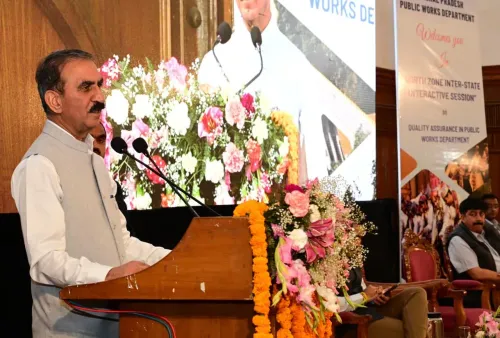
Himachal Pradesh Public Works Minister Vikramaditya Singh on Tuesday announced that 4,228 multi-task workers have been deployed across the state to restore road connectivity disrupted by the ongoing monsoon. The disclosure came during a high-level review meeting of the Public Works Department (PWD) in Shimla, where the minister assessed the department's preparedness for the season.
Scale of Deployment
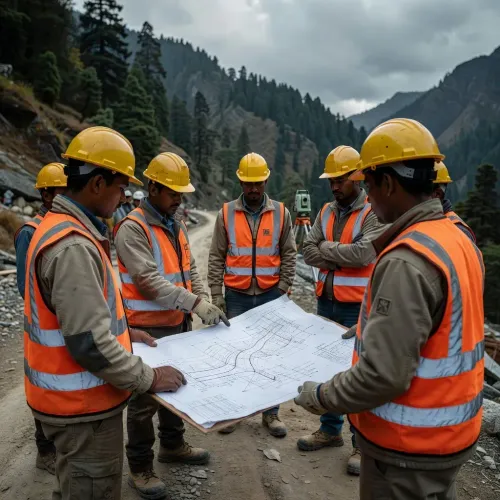
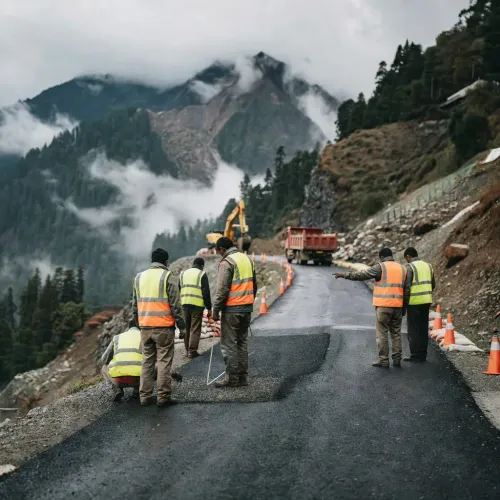
Beyond the 4,228 multi-task workers, the department has also positioned 11,137 beldars statewide to address road disruptions as they occur. A fleet of 1,156 departmental and private machines — including JCBs, bulldozers, robotic equipment, and tippers — has been deployed for round-the-clock restoration operations. Additionally, six Bailey bridges have been kept on standby for emergency deployment.
Pre-Monsoon Groundwork
Singh noted that the department had already undertaken significant preventive work before the monsoon's onset. Officials resurfaced 155.95 km of roads, carried out patchwork on 924.94 km, cleared drainage channels along 8,893.58 km, and unblocked culverts on 9,414 km of roads. The minister directed officials to continue regular drain and culvert cleaning to limit waterlogging damage through the season.
Key Directives from the Minister
Singh issued a series of operational directives at the review meeting. Officials were instructed to strategically position machinery, Bailey bridges, and construction materials at critical locations, and to complete advance tendering to ensure private machinery is available on short notice. They were also told to identify vulnerable roads, bridges, and landslide-prone zones in their jurisdictions and monitor them closely.
Priority connectivity to essential services — including hospitals, police stations, educational institutions, fire stations, pumping stations, and power installations — was flagged as non-negotiable. Officials were further directed to immediately report landslide, cloudburst, or flood damage to revenue authorities, with supporting photographs and videos for damage assessment.
Control Rooms and Emergency Response
The minister directed the department to establish round-the-clock control rooms for the duration of the monsoon to enable a swift response to emergencies. This comes amid Himachal Pradesh's recurring vulnerability to monsoon-triggered landslides and road washouts, which have historically isolated hill communities and disrupted supply chains to remote districts. The state has seen escalating infrastructure damage in recent monsoon seasons, making early preparedness reviews increasingly critical.
With the monsoon now active, the effectiveness of this deployment will be tested in the weeks ahead as rainfall intensifies across the hill state.
Point of View
000 personnel and more than 1,000 machines — reflects a pattern that has become annual in Himachal Pradesh: reactive mobilisation dressed up as preparedness. The real question is whether advance tendering and pre-positioned machinery will translate into faster restoration times this year, or whether isolated hill communities will once again wait days for road access after major cloudbursts. Himachal's infrastructure losses in recent monsoons have run into hundreds of crores; the state cannot afford another season where the response lags the damage.
NationPress
7 Jul 2026
Frequently Asked Questions
How many workers has Himachal Pradesh deployed for monsoon road restoration?
The Himachal Pradesh Public Works Department has deployed 4,228 multi-task workers along with 11,137 beldars for road restoration work disrupted by the monsoon. This was announced by Public Works Minister Vikramaditya Singh on 7 July following a departmental review meeting in Shimla.
What machinery has been positioned for road restoration in Himachal Pradesh?
A total of 1,156 departmental and private machines — including JCBs, bulldozers, robotic equipment, and tippers — have been deployed for round-the-clock operations. Additionally, six Bailey bridges have been kept ready for emergency use.
What pre-monsoon road work did Himachal Pradesh complete?
Before the monsoon arrived, the PWD resurfaced 155.95 km of roads, carried out patchwork on 924.94 km , cleaned drainage channels along 8,893.58 km , and cleared culverts on 9,414 km of roads.
Which essential services will get priority road connectivity during the monsoon?
Minister Vikramaditya Singh directed officials to ensure uninterrupted road access to hospitals, police stations, educational institutions, fire stations, pumping stations, and power installations throughout the monsoon season.
What emergency measures has the Himachal Pradesh PWD put in place for the monsoon?
The department has been directed to set up round-the-clock control rooms, identify landslide-prone and vulnerable road stretches, and immediately report damage from cloudbursts, floods, or landslides to revenue authorities with photographs and videos for assessment.