CM Sai's Mor Gaon-Mor Pani Turns Water Conservation Into Mass Movement
Synopsis
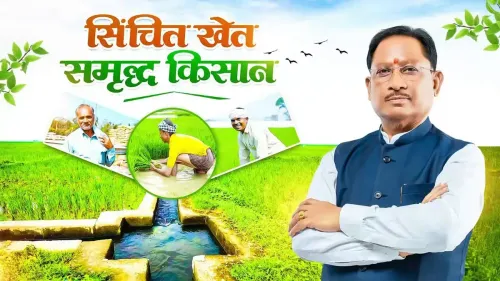
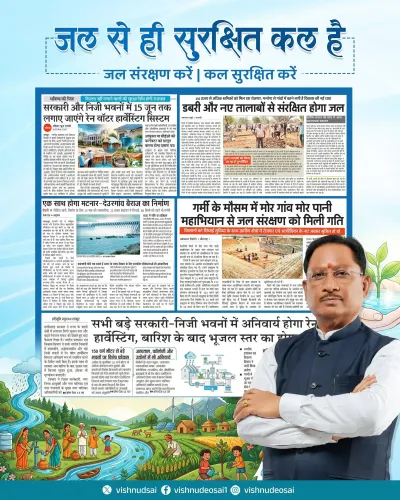
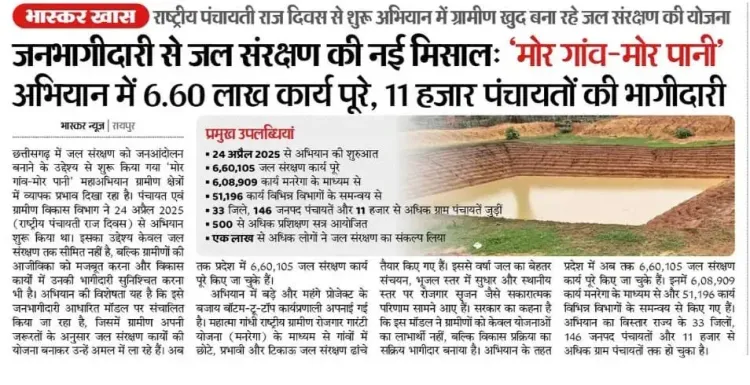
The Vishnu Deo Sai government's Mor Gaon-Mor Pani campaign has engaged over 11,000 gram panchayats in Chhattisgarh to complete more than 6.60 lakh water conservation works, framing the initiative as a community-led movement for long-term water security.
Key Takeaways
The Mor Gaon-Mor Pani campaign by the Vishnu Deo Sai government has completed over 6.60 lakh water conservation works across Chhattisgarh .
More than 11,000 gram panchayats have participated in the campaign, making it a broad community-driven initiative.
The campaign aims beyond infrastructure, targeting long-term water security for future generations .
The initiative aligns with the Union government's Jal Shakti Abhiyan (2019), which promotes panchayat-led water conservation.
Chhattisgarh's model mirrors participatory approaches adopted in Rajasthan and Maharashtra for groundwater recharge.
District-wise groundwater assessments and 2027 state budget allocations will indicate the campaign's long-term trajectory.
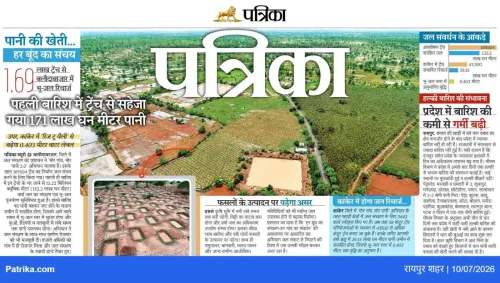
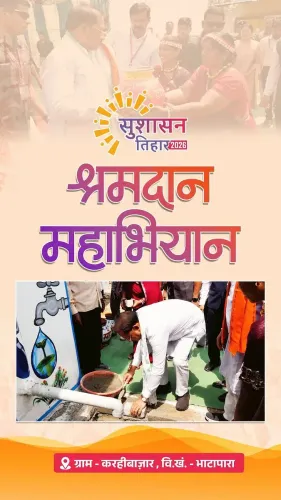
The Chief Minister's Office of Chhattisgarh announced on Monday, 20 July 2026 that the Mor Gaon-Mor Pani campaign, spearheaded by the Vishnu Deo Sai government, has mobilised more than 11,000 gram panchayats across the state to complete over 6.60 lakh water conservation works, transforming a government scheme into what officials are calling a people's movement.
Context
The CMO's post, written in Hindi, states: 'Vishnu Dev Sarkar ke Mor Gaon-Mor Pani abhiyan ne Chhattisgarh mein jal sanrakshan ko jan andolan ka swaroop diya hai' — ('The Vishnu Dev government's Mor Gaon-Mor Pani campaign has given water conservation in Chhattisgarh the form of a people's movement'). The announcement underscores that the initiative is 'not limited to the construction of water structures alone, but is a collective effort to ensure water security for future generations.'
Chhattisgarh is a central Indian state with a large rural and tribal population whose agriculture depends heavily on groundwater and seasonal monsoon rains. Recurrent drought cycles and declining water tables in rain-fed regions have made community-level water management an urgent governance priority.
Policy Backdrop
The Mor Gaon-Mor Pani campaign — which translates from Chhattisgarhi as 'My Village, My Water' — is a state government initiative promoting community-led construction of water harvesting and groundwater recharge structures in villages. Chief Minister Vishnu Deo Sai, a BJP leader who assumed office in December 2023, has positioned the campaign as a flagship of his administration's rural governance agenda.
The campaign aligns with the Union government's Jal Shakti Abhiyan, launched in 2019, which directed states to accelerate rainwater harvesting and groundwater recharge works through active panchayat involvement. Chhattisgarh's approach mirrors participatory water conservation models piloted in Rajasthan and Maharashtra, which similarly linked local panchayat action to long-term groundwater security.
Stakeholders and Impact
The primary beneficiaries of the campaign are rural communities, farmers, and tribal households across Chhattisgarh's villages. Gram Panchayats — the village-level local bodies responsible for rural development and natural resource management — have served as the institutional backbone of the initiative, with participation recorded from more than 11,000 panchayats.
Indian states have increasingly positioned water conservation as a participatory governance exercise rather than a purely engineering task. The scale of community engagement claimed under Mor Gaon-Mor Pani — 6.60 lakh completed structures — signals an intent to embed water stewardship into local self-governance, making communities co-owners of the infrastructure they help build.
What's Next
The broader test for the campaign will be whether the completed structures translate into measurable improvements in groundwater levels and agricultural water availability, particularly in drought-prone districts. The Central Ground Water Board's district-wise groundwater assessment reports will be a key indicator to watch in the coming months.
State budget allocations for 2027 are also expected to signal whether the Sai government intends to scale the campaign further or consolidate the gains already made. The framing of water conservation as a 'collective effort for future generations' suggests the administration views Mor Gaon-Mor Pani as a long-term governance commitment rather than a one-cycle programme.
Point of View
Insulating the government from blame if targets fall short while amplifying credit when they are met. The claimed scale of 11,000-plus panchayat participation, if sustained, would represent one of the more ambitious sub-state water governance exercises in central India. This fits a broader pattern of BJP-governed states using community-participation language to align state programmes with the Union government's Jal Shakti framework, creating a coherent federal narrative around water security. The real measure of success, however, will come from independent groundwater data rather than campaign metrics.
NationPress
20 Oct 2026
Frequently Asked Questions
What is the Mor Gaon-Mor Pani campaign in Chhattisgarh?
Mor Gaon-Mor Pani, meaning 'My Village, My Water,' is a Chhattisgarh government campaign under Chief Minister Vishnu Deo Sai that promotes community-led construction of water harvesting and groundwater recharge structures in villages, with gram panchayats as the primary implementing bodies.
How many water conservation works have been completed under Mor Gaon-Mor Pani?
According to the Chief Minister's Office of Chhattisgarh, more than 6.60 lakh water conservation works have been completed under the campaign as of July 2026.
How many gram panchayats are participating in the Mor Gaon-Mor Pani campaign?
More than 11,000 gram panchayats across Chhattisgarh have participated in the Mor Gaon-Mor Pani campaign, according to the state government.
Is Mor Gaon-Mor Pani linked to the central government's Jal Shakti Abhiyan?
Yes, the campaign aligns with the Union government's Jal Shakti Abhiyan launched in 2019, which directed states to accelerate rainwater harvesting and groundwater recharge works through panchayat involvement.
Who is Vishnu Deo Sai and what is his role in this campaign?
Vishnu Deo Sai is a BJP leader who became Chief Minister of Chhattisgarh in December 2023. The Mor Gaon-Mor Pani campaign is a flagship initiative of his government, aimed at making water conservation a community-driven movement across the state's villages.