MP CM Mohan Yadav Launches Helmet Drive for Farmer Motorcyclists
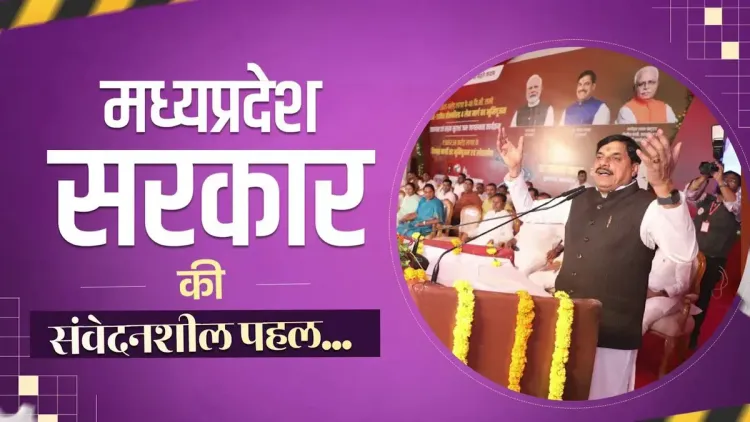
Synopsis
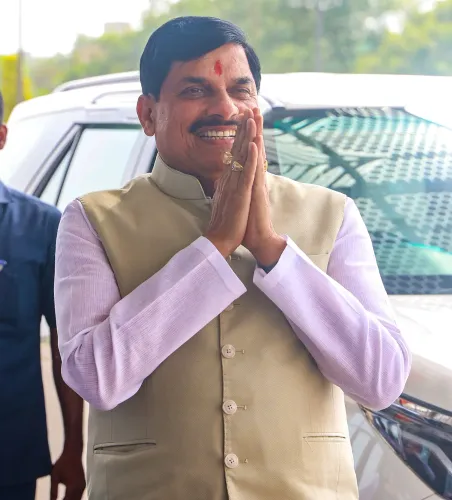
Chief Minister Dr. Mohan Yadav's office announced on 20 June 2026 that Madhya Pradesh will launch a helmet distribution campaign for farmers who ferry milk, fruits and vegetables by motorcycle — combining road safety with agricultural welfare in a targeted state initiative.
Key Takeaways
The Chief Minister's Office of Madhya Pradesh announced the helmet distribution campaign on 20 June 2026 .
The drive targets farmers who transport milk, fruits, and vegetables by motorcycle — a high-risk daily activity on rural roads.
Mohan Yadav framed the initiative as part of the government's continuous work for farmer welfare.
The campaign aligns with 2019 Motor Vehicles Act mandates that strengthened helmet requirements for two-wheeler riders.
Madhya Pradesh is a leading producer of milk, fruits and vegetables, with large numbers of small farmers dependent on motorcycles for last-mile produce transport.
Exact scale, budget and district-level rollout dates have not yet been officially announced.
The Chief Minister's Office of Madhya Pradesh announced on Saturday, 20 June 2026 that the state government has decided to launch a helmet distribution campaign specifically for farmers who transport milk, fruits, and vegetables by motorcycle — a move framed as part of the government's ongoing commitment to farmer welfare.
The announcement, attributed to Chief Minister Dr. Mohan Yadav, stated in Hindi: 'दूध, फल और सब्जियां लेकर मोटरसाइकिल से परिवहन करने वाले किसानों के लिए हेलमेट वितरण अभियान शुरू करने का निर्णय लिया गया है' — meaning, 'a decision has been taken to launch a helmet distribution campaign for farmers who transport milk, fruits and vegetables by motorcycle.'
Context
Madhya Pradesh is among India's leading producers of milk, fruits, and vegetables, with a large share of small and marginal farmers relying on two-wheelers for last-mile delivery of perishable produce to local markets and collection centres. These daily runs — often early morning, on rural roads — expose riders to significant traffic risk, frequently without helmets.
The campaign is positioned under the broader umbrella of farmer welfare, linking agricultural support with road safety in a single targeted intervention aimed at this specific working group.
Policy Backdrop
The Mukhyamantri Kisan Kalyan Yojana, operational since 2018, has served as the state's flagship vehicle for direct relief and input support to farmers. The helmet initiative extends this welfare logic into a non-financial domain — safety equipment — reflecting a pattern seen across several Indian states following the 2019 Motor Vehicles Act amendments, which strengthened two-wheeler helmet mandates and increased penalties for non-compliance.
Multiple states have since conducted road-safety drives targeting rural two-wheeler users, and Madhya Pradesh's agriculture and transport departments have previously coordinated on rural outreach programmes. The current campaign appears to sit at the intersection of those two mandates.
Stakeholders and Impact
The primary beneficiaries are small dairy farmers, vegetable growers, and fruit cultivators who use motorcycles as their primary mode of produce transport. For many, a helmet represents an out-of-pocket cost they routinely defer; a state-distributed helmet removes that barrier while simultaneously nudging compliance with traffic law.
The Department of Farmer Welfare and Agriculture Development, Madhya Pradesh, which oversees implementation of farmer-facing schemes, is expected to play a central role in rolling out the campaign at the district level. Road-safety training sessions may accompany the distribution, though no details on scale or budget have been officially confirmed.
What's Next
District-level rollout timelines, the total number of helmets to be distributed, and any linked road-safety awareness components are yet to be announced by the state government. The campaign's reach will depend on coordination between agriculture extension workers and local transport authorities across Madhya Pradesh's rural districts.
If implemented at scale, the initiative could set a template for other agriculturally active states looking to merge farmer welfare outreach with traffic-safety compliance in a single low-cost programme.
Point of View
High-visibility welfare gesture that lets the Madhya Pradesh BJP government claim both farmer welfare and road-safety credentials simultaneously — a dual dividend that is politically efficient ahead of ongoing rural outreach cycles. By targeting a very specific demographic — motorcycle-riding dairy and vegetable farmers — the initiative avoids the diffuse optics of generic safety drives and instead creates a concrete, identifiable beneficiary group. It also reflects a broader pattern in Indian state politics where incremental, tangible giveaways (equipment, kits, tools) often generate stronger grassroots goodwill than larger but less visible financial transfers. The real test will be whether the distribution reaches the last mile or remains concentrated in peri-urban clusters with easier administrative access.
NationPress
20 Jun 2026
Frequently Asked Questions
What is the helmet distribution scheme announced by the Madhya Pradesh government?
The Madhya Pradesh government has decided to launch a helmet distribution campaign for farmers who transport milk, fruits and vegetables by motorcycle, aiming to improve their road safety during daily produce runs.
Who announced the MP farmer helmet distribution campaign?
Chief Minister Dr. Mohan Yadav announced the campaign through the official Chief Minister's Office account on 20 June 2026 .
Which farmers are eligible for the helmet distribution in Madhya Pradesh?
Farmers who use motorcycles to transport perishable goods such as milk, fruits and vegetables are the targeted beneficiaries of this campaign.
How does this scheme relate to farmer welfare in Madhya Pradesh?
The initiative is positioned under the state's broader farmer welfare agenda, which includes programmes like the Mukhyamantri Kisan Kalyan Yojana , and extends that welfare logic into road safety for agricultural workers.
When will the helmet distribution campaign begin in Madhya Pradesh?
A formal start date and district-level rollout details have not yet been officially announced; the government has confirmed the decision to launch the campaign but operational specifics are pending.