MP CM Mohan Yadav Pledges Wider Kodo-Kutki Millet Procurement
Synopsis
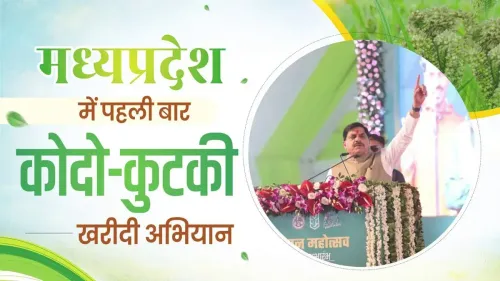
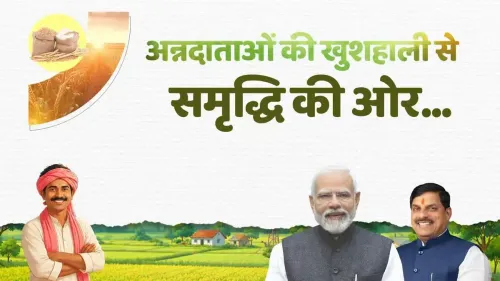
Chief Minister Mohan Yadav has pledged to scale up Madhya Pradesh's Kodo-Kutki millet procurement beyond the 3,000 hectares covered last year, aligning the state's tribal-farmer support drive with PM Modi's 'Shri Ann' global millet campaign.
Key Takeaways
Mohan Yadav announced on 1 July 2026 a commitment to expand Kodo-Kutki millet procurement in Madhya Pradesh .
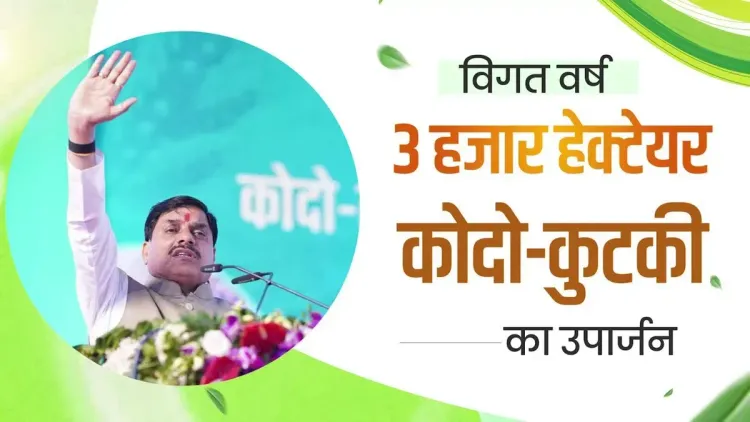
The state procured Kodo-Kutki from 3,000 hectares in the previous year, which will now be scaled up.
The initiative is framed as an extension of PM Modi 's 'Shri Ann' campaign that gave millets global recognition.
Primary beneficiaries are tribal farming communities in districts like Dindori and Mandla .
The announcement was coordinated with the Union Ministry of Agriculture and Farmers Welfare and the state agriculture department.
Possible integration of Kodo-Kutki into welfare schemes such as the Public Distribution System remains a forward policy question.
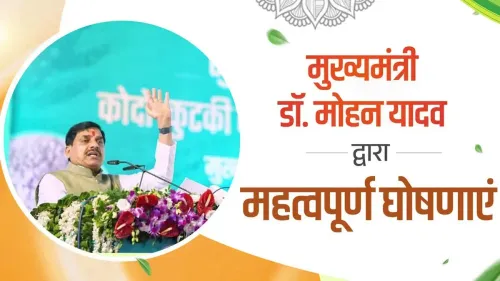
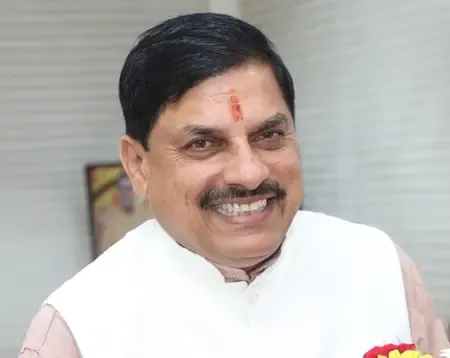
The Chief Minister's Office of Madhya Pradesh announced on Wednesday, 1 July 2026 that Chief Minister Dr. Mohan Yadav has reaffirmed the state's commitment to expanding procurement of Kodo and Kutki millets, crediting Prime Minister Narendra Modi's 'Shri Ann' initiative with elevating the grains to global recognition.
Context
In the post, CM Yadav stated — 'विगत वर्ष हमने 3 हजार हेक्टेयर कोदो-कुटकी की खरीदी की' ('Last year we procured Kodo-Kutki from 3,000 hectares') — and declared a resolve to scale this up significantly. The announcement was directed jointly at the Union Ministry of Agriculture and Farmers Welfare and the Madhya Pradesh Agriculture Department, signalling coordination between state and central agencies.
Kodo and Kutki are coarse millets grown primarily by tribal farming communities in Madhya Pradesh districts such as Dindori and Mandla. They are nutritionally dense, drought-resistant, and historically central to the food culture of the state's Adivasi belt.
Policy Backdrop
The announcement builds on the Centre's nationwide 'Shri Ann' campaign, launched in 2022-23, which repositioned millets as premium nutri-cereals following the United Nations' declaration of 2023 as the International Year of Millets — a proposal championed by India. PM Modi used the platform to brand indigenous millets under the 'Shri Ann' identity, aiming to boost domestic consumption and international exports.
Madhya Pradesh has been running state-level millet procurement under its agricultural policy since at least 2021, targeting minimum support price-linked purchases to incentivise farmers. The state is counted among India's leading producers of Kodo and Kutki, making its procurement decisions consequential for the national supply chain.
Stakeholders and Impact
The primary beneficiaries of expanded procurement are tribal millet farmers across Madhya Pradesh's central and eastern districts, who depend on government purchase guarantees to secure remunerative prices for a crop that has limited commercial market access. Wider procurement would reduce post-harvest losses and provide income stability to some of the state's most economically vulnerable agricultural communities.
Nutritionists and food-security advocates have highlighted Kodo and Kutki's potential for integration into welfare delivery mechanisms such as the Public Distribution System and mid-day meal programmes, which could simultaneously boost farmer incomes and address malnutrition in tribal regions. Alignment with central value-chain development schemes could also open export corridors for these millets.
What's Next
Attention will now turn to Madhya Pradesh's state budget provisions for 2026-27 to see whether specific hectarage or volume targets are formalised for Kodo-Kutki procurement. Possible integration of these millets into state welfare schemes remains a closely watched policy question.
The coordination tags directed at the Ministry of Agriculture and Farmers Welfare suggest the state may be seeking central support — whether financial, logistical, or through inclusion in national nutrition programmes — to underpin its expanded ambitions for these indigenous grains.
Point of View
Signalling that Madhya Pradesh intends to position itself as the flagship state for indigenous millet revival. By publicly tagging the Union agriculture ministry, the CM is also signalling a bid for central co-funding or scheme integration, which could significantly amplify the state's procurement capacity. For tribal farmers in Madhya Pradesh's Adivasi heartland, the pledge matters because government procurement is often the only reliable price-support mechanism for Kodo and Kutki. Whether the resolve translates into hard budget commitments in 2026-27 will be the real test of the state's millet ambitions.
NationPress
1 Jul 2026
Frequently Asked Questions
What is Kodo-Kutki millet and why is it important in Madhya Pradesh?
Kodo and Kutki are coarse millets grown mainly by tribal communities in Madhya Pradesh districts like Dindori and Mandla. They are drought-resistant, nutritionally rich, and a traditional staple of the state's Adivasi belt, making them central to both food security and tribal livelihoods.
What is the 'Shri Ann' campaign started by PM Modi?
'Shri Ann' is a branding initiative launched by the Government of India in 2022-23 to promote millets as premium nutri-cereals. PM Modi championed the campaign alongside India's successful proposal to the United Nations to declare 2023 the International Year of Millets.
How much Kodo-Kutki did Madhya Pradesh procure last year?
According to CM Mohan Yadav's post on 1 July 2026, the state procured Kodo-Kutki from 3,000 hectares in the previous year, and the government has now pledged to expand this on a wider scale.
Who benefits from expanded Kodo-Kutki procurement in MP?
Tribal millet farmers in Madhya Pradesh's central and eastern districts are the primary beneficiaries, as government procurement provides minimum support price guarantees for a crop that has limited access to open commercial markets.
Could Kodo-Kutki be included in India's Public Distribution System?
Integration of Kodo and Kutki into welfare delivery mechanisms like the Public Distribution System or mid-day meal programmes is a policy option being watched by food-security advocates, though no formal decision has been announced as of the 1 July 2026 statement.