Joshi: Cabinet upgrades rice quality for 80 crore PMGKAY beneficiaries
Synopsis
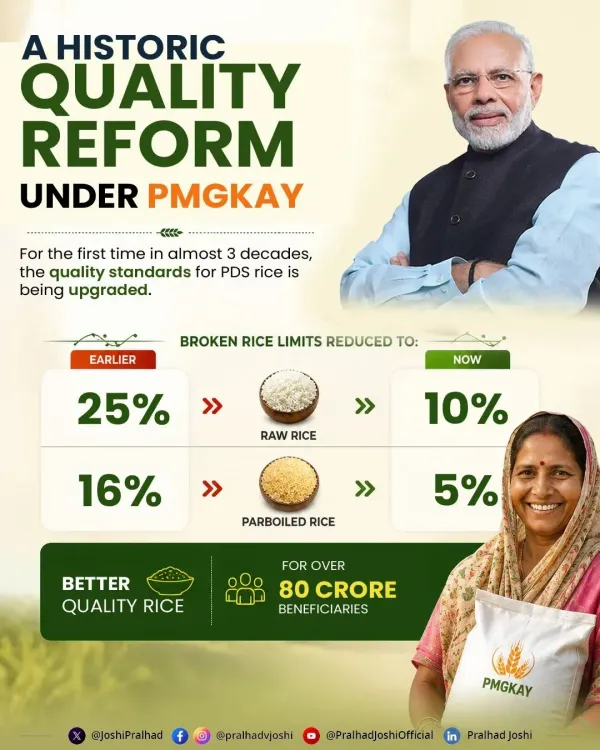
The Union Cabinet has upgraded rice quality standards under PMGKAY for the first time in nearly three decades, Minister Pralhad Joshi announced on 1 July 2026. Over 80 crore beneficiaries will receive better-quality grain at the same entitlement, with QR-based traceability and cost rationalisation embedded in the reform.
Key Takeaways
The Union Cabinet approved an upgrade to rice quality standards under PMGKAY on 1 July 2026 .
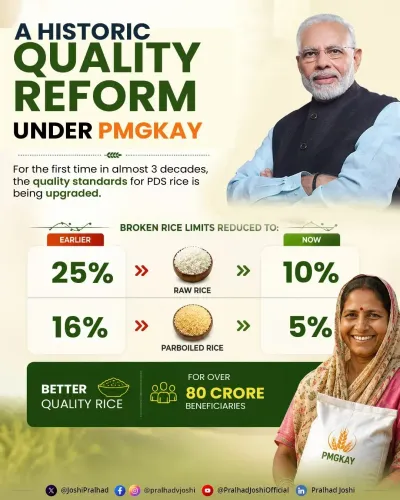
This is the first revision to rice quality norms under the public distribution system in nearly three decades .
Over 80 crore beneficiaries will receive the same entitlement quantity but with significantly improved grain quality.
QR-based traceability will be introduced to enhance transparency across the supply chain.
The reform also includes cost rationalisation measures aimed at improving efficiency within the distribution architecture.
The Food Corporation of India is the nodal agency responsible for implementing the revised procurement and distribution standards.
Union Consumer Affairs Minister Pralhad Joshi announced on Wednesday, 1 July 2026 that the Union Cabinet, under the leadership of Prime Minister Narendra Modi, has approved a significant upgrade to the quality standards for rice distributed under the Pradhan Mantri Garib Kalyan Anna Yojana (PMGKAY) — the first such revision in nearly three decades — benefiting over 80 crore food-security recipients across India.
Context
Announcing the Cabinet decision on X, Joshi described the move as 'a historic and transformative decision to further strengthen India's food security architecture.' He confirmed that every eligible family will continue to receive the same per-beneficiary entitlement under PMGKAY, but now with 'significantly improved quality.' The minister highlighted four pillars of the reform: superior grain quality, optimal utilisation, QR-based traceability, and cost rationalisation.
The last comparable revision to rice quality norms under the public distribution system is understood to date back nearly three decades, making this Cabinet decision a structural inflection point in how the government defines and enforces food-grain standards at scale.
Policy Backdrop
PMGKAY was first launched in March 2020 to provide an additional 5 kg of free food grains per person per month during the COVID-19 pandemic, and was extended multiple times through 2024. The scheme operates within the broader framework of the National Food Security Act, 2013, which legally entitles approximately two-thirds of India's population to subsidised grains through the Targeted Public Distribution System.
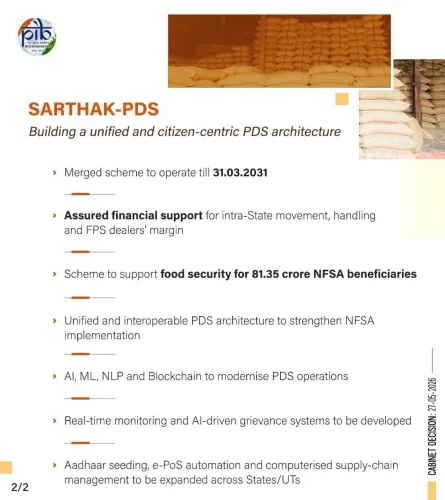
The Food Corporation of India (FCI), the central nodal agency for procurement, storage, and distribution, will be responsible for implementing the revised specifications and integrating the new QR-code traceability layer. End-to-end computerisation of the public distribution system and Aadhaar seeding of ration cards have been progressively rolled out since 2013 to reduce leakages and diversion — reforms that the current quality upgrade builds upon.
Stakeholders and Impact
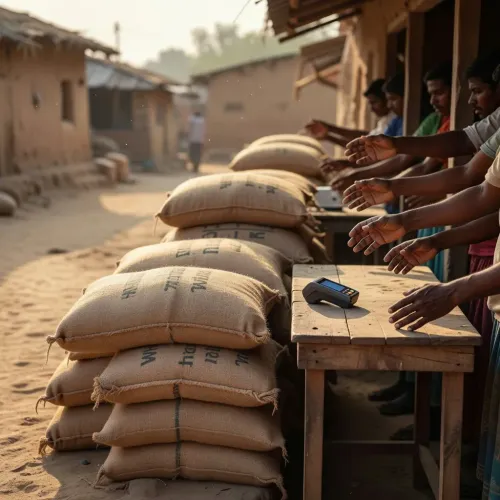
The most direct beneficiaries are the more than 80 crore individuals covered under PMGKAY, spanning urban and rural households across every state and union territory. State food departments, which manage last-mile delivery through fair-price shops, will need to align their logistics and inspection protocols with the revised central standards.
The introduction of QR-based traceability is aimed at giving both regulators and consumers a verifiable chain of custody for grain — from procurement at the mandi level through FCI warehouses to the ration-card holder's doorstep. This mirrors parallel technology-driven reforms seen in direct benefit transfer programmes and digitised government procurement across other welfare sectors.
What's Next
Attention will now shift to state-level rollout timelines for the revised rice specifications and the technical architecture of the QR-code integration system. Revised tender norms for FCI procurement and any supplementary budgetary provisions in the next fiscal cycle are expected to follow. The reform signals a broader government intent to move India's welfare delivery model from a purely quantity-based entitlement framework toward one that is quality-assured and technologically transparent — a direction likely to inform future revisions under the National Food Security Act as well.
Point of View
Quality-anchored entitlement programme. By embedding QR-based traceability, the government is extending the same accountability infrastructure it has applied to direct benefit transfers into the physical grain supply chain, a step that could significantly reduce diversion at the last mile. For Minister Joshi, the announcement consolidates his ministry's identity as a reform-oriented steward of food security rather than a passive administrator of legacy quotas. The reform's real test will be in state-level execution, where revised FCI specifications must translate into measurable quality improvements at the fair-price shop.
NationPress
1 Jul 2026
Frequently Asked Questions
What is PMGKAY and who benefits from it?
PMGKAY, or Pradhan Mantri Garib Kalyan Anna Yojana, is a central government scheme that provides free food grains to over 80 crore beneficiaries across India. It was first launched in March 2020 during the COVID-19 pandemic and has since been made a permanent feature of India's food security architecture.
What has changed about rice quality under PMGKAY after the July 2026 Cabinet decision?
The Union Cabinet approved upgraded quality standards for rice distributed under PMGKAY on 1 July 2026 — the first such revision in nearly three decades. Beneficiaries will receive the same quantity entitlement but with significantly improved grain quality, backed by QR-based traceability .
What is QR-based traceability in the public distribution system?
QR-based traceability refers to the use of QR codes to track food grains from procurement through Food Corporation of India warehouses to the final beneficiary at the fair-price shop level. It is designed to improve transparency and reduce diversion within the supply chain.
Will the quantity of free rice under PMGKAY be reduced after this reform?
No. Minister Pralhad Joshi explicitly confirmed that every eligible family will continue to receive the same entitlement under PMGKAY ; only the quality of the rice has been upgraded, not the quantity.
What role does the Food Corporation of India play in PMGKAY?
The Food Corporation of India (FCI) is the central nodal agency responsible for procuring, storing, and distributing rice and wheat under the public distribution system. It will be tasked with implementing the revised rice quality specifications and integrating the new QR-code traceability system following the Cabinet decision.