Joshi: Cabinet upgrades PMGKAY rice quality for 80 cr beneficiaries
Synopsis
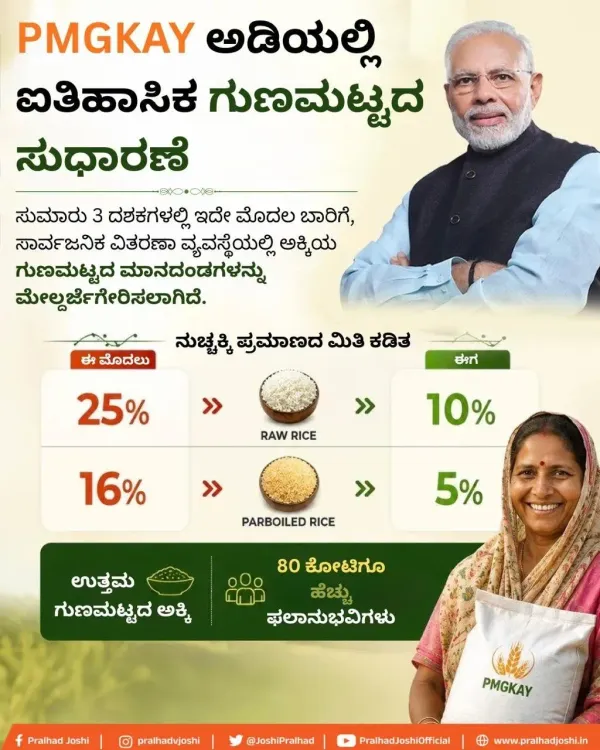
The Union Cabinet has upgraded rice quality standards under PMGKAY for the first time in nearly three decades, Union Minister Pralhad Joshi announced on 1 July 2026. The reform introduces QR-based traceability and higher grain specifications for over 80 crore beneficiaries, while keeping entitlement quantities unchanged.
Key Takeaways
The Union Cabinet approved an upgrade to rice quality standards under PMGKAY , announced by Minister Pralhad Joshi on 1 July 2026 .
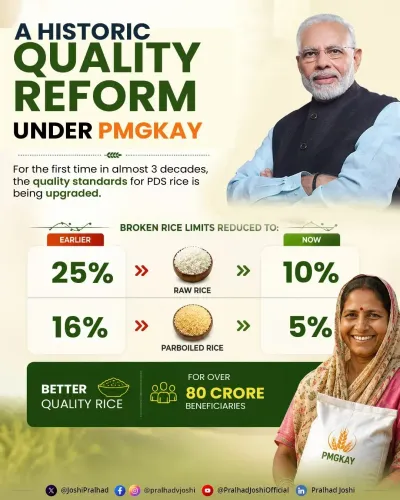
Minister Joshi described this as the first revision to rice quality benchmarks in nearly three decades .
More than 80 crore NFSA beneficiaries will receive higher-quality grain without any reduction in their entitlement quantity.
QR-code-based traceability will be introduced across the supply chain to improve transparency and reduce diversion.
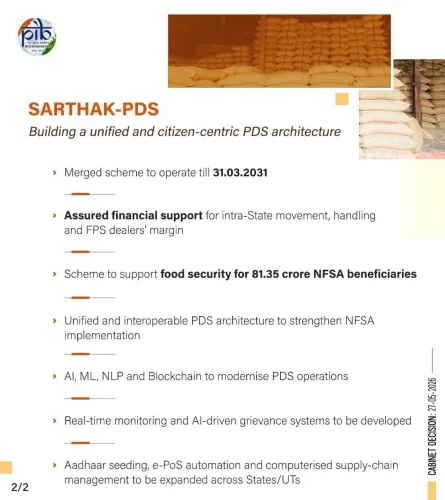
The reform builds on earlier PDS digitisation efforts including Aadhaar-seeding and One Nation One Ration Card portability.
Rollout timelines for revised specifications at FCI godowns and Fair Price Shops are expected to follow via operational guidelines.
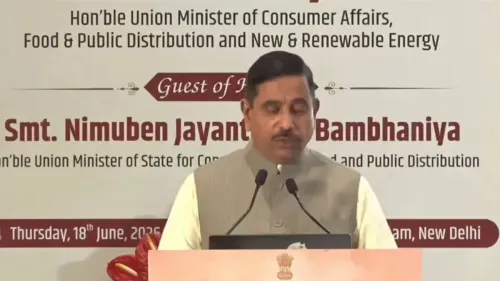
Union Consumer Affairs Minister Pralhad Joshi announced on Wednesday, 1 July 2026 that the Union Cabinet, under Prime Minister Narendra Modi, has approved an upgrade to the rice quality standards distributed under the Pradhan Mantri Garib Kalyan Anna Yojana (PMGKAY) — a move the minister described as 'historic and transformative' for India's food security architecture, benefiting more than 80 crore beneficiaries across the country.
Context
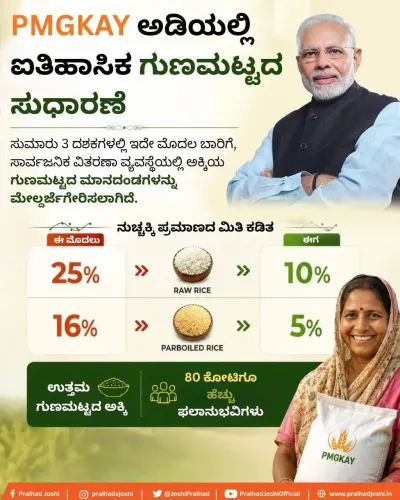
Posting in Kannada on X, Minister Joshi stated that this is the first time in nearly three decades that the quality benchmarks for rice distributed under the scheme have been revised upward. 'ಕಳೆದ ಸುಮಾರು ಮೂರು ದಶಕಗಳಲ್ಲಿ ಇದೇ ಮೊದಲ ಬಾರಿಗೆ' ['for the first time in nearly three decades'], the minister wrote, signalling that the revision is not merely administrative but marks a generational shift in the quality of grain reaching the poorest households. He added that every eligible family will continue to receive the same quantity of foodgrain as before, but the grain will now meet higher quality specifications.
The Cabinet decision also introduces QR-code-based traceability across the supply chain, enabling end-to-end tracking of grain from procurement to delivery at Fair Price Shops. Joshi described the reform as reflecting the government's commitment to 'delivering better quality food, ensuring maximum utilisation of every grain, enhancing transparency through QR-based traceability, and improving efficiency through systematic cost management.'
Policy Backdrop
PMGKAY was originally launched in March 2020 as an emergency COVID-19 relief measure, providing 5 kg of free foodgrains per person per month to National Food Security Act (NFSA) beneficiaries, over and above their regular entitlements. The scheme was extended repeatedly and eventually consolidated into the mainstream NFSA framework, making free grain distribution a permanent feature for over 80 crore people — roughly two-thirds of India's population.
The National Food Security Act, 2013, which underpins the Targeted Public Distribution System, set quantity and quality norms for subsidised grain. However, critics and beneficiary groups have long flagged that the actual quality of grain reaching Fair Price Shops frequently fell below even those prescribed standards. The latest Cabinet decision is framed as an effort to close that gap and go further — moving the system from a quantity-first to a quality-and-accountability model.
Stakeholders and Impact
The most direct beneficiaries are the more than 80 crore NFSA cardholders — predominantly low-income rural and urban households — who depend on the Public Distribution System as a primary source of staple food. For this population, an improvement in grain quality translates directly into better nutrition outcomes, reduced wastage, and greater household food security without any additional cost burden.
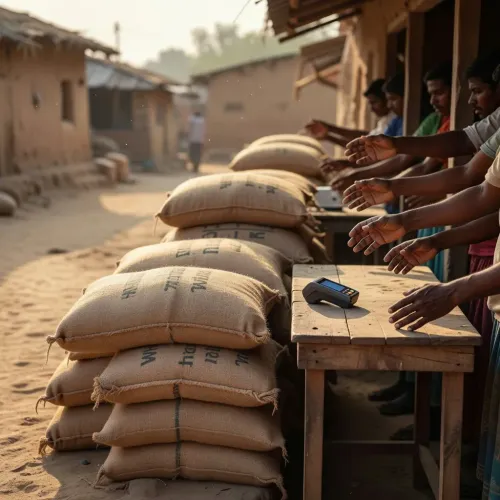
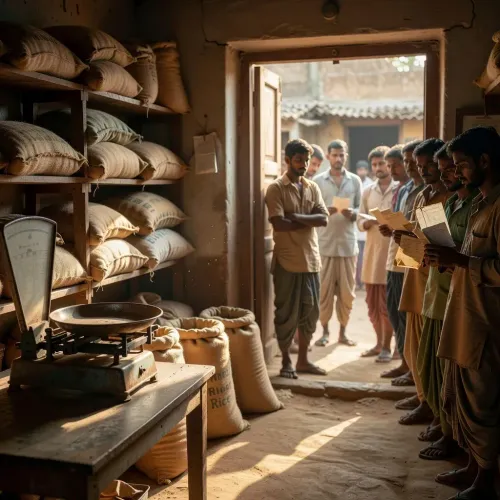
Fair Price Shop dealers and Food Corporation of India (FCI) procurement and storage operations will need to align with the revised specifications. The introduction of QR-based traceability is expected to add an accountability layer that could help reduce diversion and adulteration — longstanding vulnerabilities in the PDS supply chain. The reform builds on earlier digitisation efforts including Aadhaar-seeding of ration cards and One Nation One Ration Card portability.
What's Next
The immediate focus will be on rolling out the revised rice specifications at FCI godowns and across the network of Fair Price Shops nationwide. The government is expected to issue operational guidelines detailing the new quality parameters, procurement timelines, and the technical framework for QR-code-based tracking. Analysts will also watch whether additional allocations to support the quality upgrade are reflected in the next Union Budget.
The reform signals a broader ambition: to shift India's massive food welfare architecture away from a system defined primarily by quantity and coverage toward one that also guarantees nutritional adequacy and supply-chain integrity — a significant evolution for a programme that feeds more people than the population of most countries.
Point of View
The government is signalling that accountability and nutritional quality are now as central to the welfare agenda as headcount. For the BJP, the announcement is also politically significant — it allows the party to claim a tangible improvement for its largest single welfare constituency ahead of state election cycles. The real test, however, will be implementation: whether the revised specifications hold through FCI procurement, storage, and last-mile delivery at Fair Price Shops.
NationPress
1 Jul 2026
Frequently Asked Questions
What is the PMGKAY rice quality upgrade announced in July 2026?
The Union Cabinet approved revised and higher quality standards for rice distributed under the Pradhan Mantri Garib Kalyan Anna Yojana (PMGKAY), described by Minister Pralhad Joshi as the first such upgrade in nearly three decades. The change applies to over 80 crore beneficiaries and introduces QR-code-based traceability in the supply chain.
Will PMGKAY beneficiaries receive less grain after the quality upgrade?
No. Minister Joshi explicitly stated that every eligible family will continue to receive the same quantity of foodgrain as before under PMGKAY — the change is only to the quality specifications of the rice, not the entitlement quantity.
What is QR-based traceability in the Public Distribution System?
QR-based traceability means each consignment of grain will carry a QR code that allows authorities and, potentially, beneficiaries to track the grain from FCI godowns through the supply chain to Fair Price Shops, improving transparency and reducing the risk of diversion or adulteration.
How many people benefit from PMGKAY?
More than 80 crore (800 million) people across India are covered under PMGKAY, making it one of the largest food welfare programmes in the world. Beneficiaries are identified under the National Food Security Act, 2013.
When was PMGKAY launched and what is its purpose?
PMGKAY was launched in March 2020 as an emergency COVID-19 relief measure to provide free foodgrains to NFSA beneficiaries. It was extended multiple times and eventually made a permanent scheme, providing 5 kg of free grain per person per month to eligible households.